
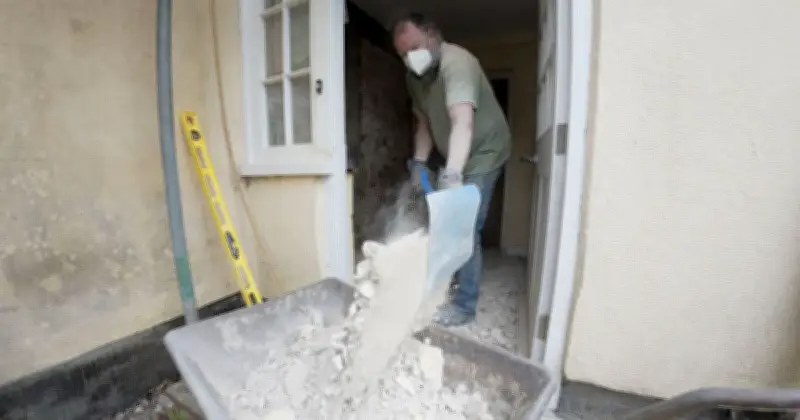
Home improvements are a fact of life, but if building work is too dusty, noisy, dirty or causing you problems, there are things you can do. By Steffan Rhys PUBLISHED: 04:15, Sat, Jun 20, 2026
Living with Neighbours' Home Improvements
Living with your neighbours' home improvements, whether small or large, is a fact of life for most of us. Mostly, this work, whether internal or external, DIY or professional, passes without incident. But what happens if your neighbour's work is causing you problems? What if it's too loud, too dusty, too messy or lasting too long? Or in more serious situations, what if it's damaging or encroaching on your land? Is there anything you can do, or do you just have to live with it?
I consulted several lawyers and property experts for their advice. They were all remarkably consistent — including a first step they all agreed on.
What Are My Rights If Neighbour's Work Is Causing Me Problems?
Karl McArdle, co-founder of The Property Buying Company, said: "It's a common misconception from many homeowners that they simply have to tolerate disruption caused by noisy neighbours with ongoing building work. There's a big difference between reasonable short-term inconvenience and what the law considers excessive or unreasonable disruption. If building work is creating persistent noise, excessive dust, vibrations or debris that substantially affects someone's ability to enjoy their home, it can potentially fall under statutory nuisance rules, meaning councils have powers to investigate and intervene. Don't just assume that because work has planning permission, neighbours automatically lose their rights."
Joanne Ellis, partner and specialist in dispute resolution at the law firm Stephensons, said: "While they may have the right to carry out improvements, there are clear legal limits on how that work is carried out and how it affects those living next door. There are legal protections in place, particularly where works affect shared walls or boundaries."
Freeths property litigation partner Jill Carey said: "The court will try to balance the rights of one neighbour to a quiet and peaceful life with the rights of the other neighbour to carry out works to the property so that maintenance and redevelopment are not stifled. The test, as is so often the case with legal issues, is one of reasonableness. The party carrying out the works must take neighbouring properties into account… the party living near the site is expected to understand that builders make noise, and to have a reasonable degree of tolerance."
How Bad Does It Have to Be to Count as a Nuisance?
Katarina Morgan, a partner and mediator at the law firm Taylor Walton, said dust and noise "can be stressful and can be considered a nuisance in law" but would need to be "persistent". She said: "One or two noisy periods or dust or small amounts of rubble falling into a neighbour's garden causing no damage is unlikely to merit a nuisance."
Clare Good, property litigation partner at Knights, said: "Even where the works themselves are lawful, they should still be carried out lawfully. The law allows a degree of tolerance, but excessive noise, dust or debris (especially if continuous) can cross the line into a legal nuisance if it interferes with your enjoyment of your home. Where disruption becomes excessive, local authorities can step in. Environmental health teams have powers to investigate noise, dust and other statutory nuisances. However, they will often be slow to act and known to simply advise that it is a civil matter."
Are There Time Limits to Doing Work During Evenings or Weekends?
Jill Carey said the person doing the work must "ensure steps are taken such as keeping noisy works to within council-approved hours". These may vary, but she said these would "usually" be considered to be 8am-6pm Monday to Friday and 8am-1pm on Saturdays. Katarina Morgan added: "It should be remembered that home owners are broadly permitted to make a noise from anywhere from 7am to 11pm." Check your local council's website to see if they specify times neighbours can expect to not have to deal with noise.
What Is the First Thing You Should Do?
All the experts gave the same advice. Chris Barber, solicitor and mediator at Robertsons Solicitors, said: "The first step is always to try to resolve the matter directly and amicably with your neighbour. Most people underestimate how effective a calm, documented conversation can be. If this is unsuccessful, you should think about gathering evidence like photographs or a diary of noise incidents and timings, which you may then want to pass to your council to investigate."
What If Work Involves a Boundary Wall?
If the works affect a shared boundary or wall, then the Party Wall Act may apply. Clare Good said: "There is a formal process which is designed to manage exactly this type of neighbour impact. Advice should be sought quickly if you think that a shared wall is involved and the neighbour has not served party wall notices." Loft or basement extensions in terraced and semi-detached properties will often involve a party wall. Katarina Morgan said: "Here, it is important to serve party wall notices under the law, and if necessary, enter into a party wall agreement before works are undertaken to prevent disputes arising in the future. Your architects or structural engineers should flag this with you."
Party wall agreements are "well-established legal agreements" between affected property owners that usually state what repair work will need to be undertaken, said Katarina, such as making good a neighbour's roof after a loft conversion. If there is no party wall agreement, any damage to a neighbouring property can leave homeowners exposed to legal action. If your neighbour is legally required to serve you notice under the Party Wall Act before the work begins but doesn't, you have the right to appoint a party wall surveyor at their cost. Chris Barber said: "This is one of the most commonly overlooked legal obligations in residential building work and gives neighbours significant rights they are often unaware of."
What Laws Exist to Stop Excessive Noise and Disturbance?
Jill Carey said there are several legal obligations that may assist the parties to determine if the disturbance is unreasonable, including: Control of Pollution Act 1974 – allows local authorities the power to restrict construction, working hours, and demand the use of noise control equipment. Environmental Protection Act 1990 – if noise is frequent and excessive, it may constitute a statutory nuisance and councils have enforcement powers like noise abatement notices. Party Wall Act 1996 – if the works are sufficiently close to the neighbouring property and include items such as basement excavations, loft conversions or structural changes. Planning permission – if planning permission was required, it may be subject to certain conditions.
When Should I Consult a Lawyer?
Katarina Morgan said: "Legal action should always be the last resort - it is costly and time consuming. Any dispute with neighbours has to be declared should you choose to sell your home — and that can impact its value and prospects of achieving a sale." Patrick Ansell, legal head of litigation at Taylor Rose, said: "If the matter cannot be resolved, it may then progress through the courts. Neighbour and boundary disputes are typically lengthy, often taking two years or more to reach trial. They are also highly fact-specific, which means they can require extensive evidence gathering, professional input and legal argument. As a result, costs can escalate quickly and are often disproportionate to the value of the land or issue in dispute."
In Summary
- Talk to your neighbour about your concerns in a friendly and respectful manner
- If problems continue, document them
- Contact your council about the issue
- Consider legal advice




