Little-known relics of operatic superstar Adelina Patti, long synonymous with Swansea, have been brought into the spotlight by city explorer Jay Curtis. He found a pair of shoes belonging to Patti tucked away inside a Welsh church and tracked down a remarkable Victorian railway carriage linked to her, more than 200 miles away.
The discoveries come as Mr Curtis has made a new film marking 107 years since the death of Adelina, whose name lives on in the city, including at the Patti Pavilion, one of its best-known entertainment venues. Once one of the most famous and highly paid singers in the world, Patti died at her beloved Craig-y-Nos Castle in the Swansea Valley on September 27, 1919, aged 76.
Personal artefacts in the Swansea Valley
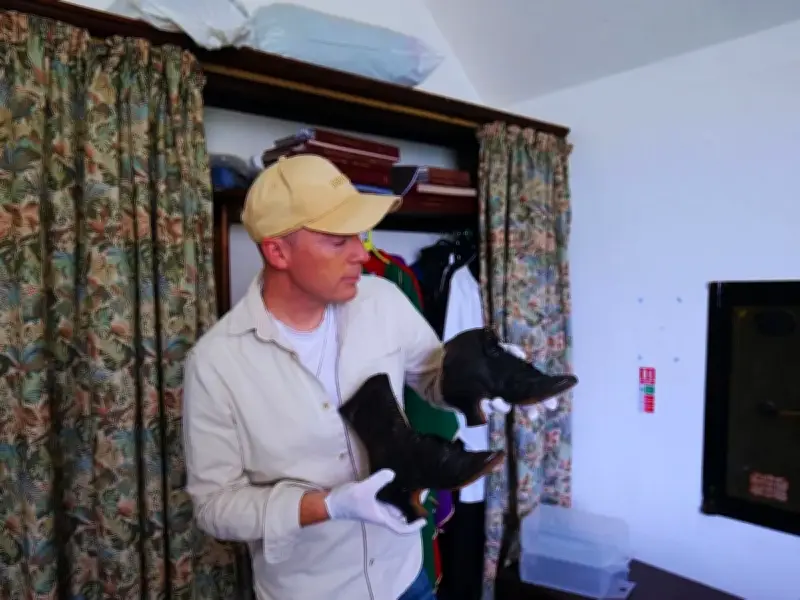
Swansea content creator and broadcaster Mr Curtis, a former radio presenter behind travel and exploration page JC Explores, has followed the trail of the Victorian superstar to uncover fascinating and little-known pieces of her world that still survive today. Among them is a pair of shoes linked to Patti preserved at St Cynog’s Church in Ystradgynlais.
Mr Curtis believes relatively few people realise such a personal artefact connected to the international star still survives in the Swansea Valley. During filming, even some members of the church congregation said they were totally unaware of their existence.
Victorian railway carriage discovered in Cornwall
His journey also took him more than 200 miles to Bodmin in Cornwall, where he tracked down another remarkable survivor, the GWR Special Saloon No. 9044, a luxurious Victorian railway carriage used by Patti on her journeys to and from her Welsh home. The historic saloon, originally built in 1881, survived being condemned in the 1960s before undergoing decades of restoration.
Mr Curtis said: “Patti was a genuine international superstar, yet 107 years after her death so many pieces of her life are still scattered around us. A tip-off during filming led me to her shoes at St Cynog’s and then hundreds of miles away to the incredible railway carriage she once used, still surviving in Bodmin. Still being able to physically touch those things brought such a personal connection to one of the world’s biggest Victorian stars and I wanted to share that sense of discovery with others. Essentially, this film became a journey to find those pieces and put them back together.”
Exploring Craig-y-Nos and the Patti Pavilion
The new film follows Mr Curtis across Wales and beyond as he pieces together Patti's extraordinary story and the physical traces she left behind. At Craig-y-Nos Castle, he explores the lavish home Patti created after arriving in the Swansea Valley in 1878, including her private theatre, pioneering use of electricity and some of the castle's more mysterious ghostly stories and alleged paranormal activity.
At St Cynog's Church, alongside Patti's shoes, Mr Curtis investigates the curious remains of a staircase leading to a bricked-up doorway connected with the church bell tower Patti had promised to help build, but which was never completed following a reported disagreement with the rector.
The journey also follows Patti's railway connections and the former station serving Craig-y-Nos before travelling to Bodmin to step inside Saloon 9044, described in the film as effectively the “private jet of its day” for wealthy and prestigious Victorian travellers. Back in Swansea, Mr Curtis also explores the Patti Pavilion in Victoria Park, which has its origins in the Winter Garden that once stood within the grounds of Craig-y-Nos.