
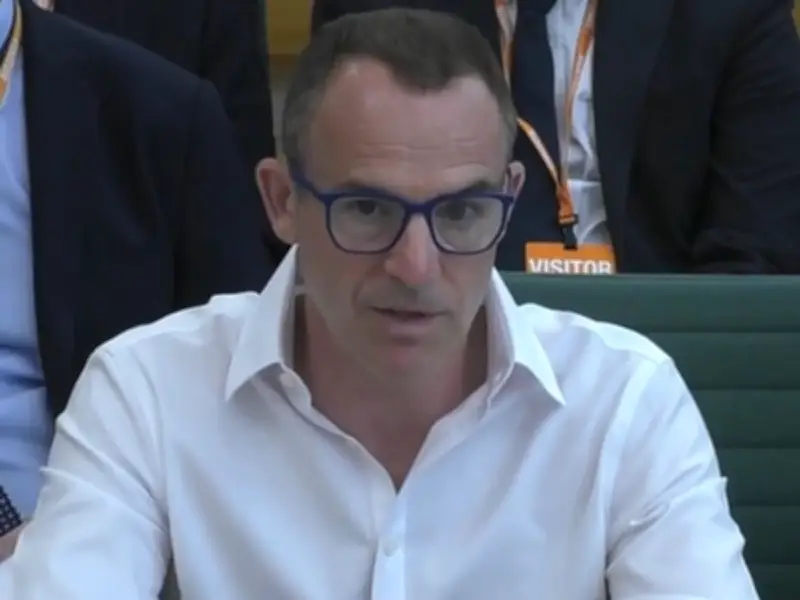
Martin Lewis, founder of MoneySavingExpert.com, has called for reform of the UK's energy standing charge system, telling MPs that the issue 'drives people mad the most'. Appearing before the public accounts committee last week, Lewis said that standing charges account for 'two thirds of my mailbag' in relation to energy complaints.
What Are Standing Charges?
Standing charges are daily fees that energy customers must pay regardless of how much energy they use. Lewis likened the system to a bookshop charging customers simply for stepping through the door, rather than only when they make a purchase. 'The moral hazard is that you have to pay £315 a year just to have the facility of having gas and electricity,' he said. 'We have older people who do not use gas for two thirds of the year still have to pay a daily charge for it, and if people who are lower users reduce their usage, it does not make any difference, because they are still paying the standing charge. That is, by far and away, the thing that drives people mad the most.'
Comparison with Bookshop Model
Lewis elaborated on his analogy: 'If I go to buy a book from a bookshop, they do not say, "sorry, but you have to be a member of the club and pay us each month in order to buy a book, because we have fixed costs." I do not have to pay for that, because the fixed costs are factored into the price of the book. Why do we have to have fixed costs factored into a daily charge and variable costs factored into a unit rate?'
Ofgem's Justification
Ofgem, the energy regulator, explains that 'the standing charge is used to recover the costs required to provide energy company services, including providing and maintaining the wires, pipes and cables that deliver power to a customer's door, through to the staff and buildings required for the energy business to function.' According to the House of Commons Library, average standing charges under the April to June 2026 direct debit energy price cap are 57.2p per day for electricity, 29.1p per day for gas, and 86.2p per day for dual fuel customers. Companies such as British Gas and OVO Energy use standing charges.
Lewis's Proposed Solution
Lewis has long campaigned for a dual price cap system with a low standing charge and higher unit rate, alongside the normal standing charge and lower unit rate. He told the hearing: 'The shift could be done. I was very hopeful with Ofgem. We had long conversations about it bringing in a dual price cap... In my view, people who are on the price cap should be automatically shifted to whichever one was beneficial for them based on their prior year's usage, with an opt-out basis if they chose not to.' However, that proposal was stopped and replaced with a system mandating switchers' tariffs with a lower standing charge. Lewis criticized this: 'My big problem is that that does not help anybody who is vulnerable, because they are the people who do not switch, whom the price cap was set up to protect in the first place, so switchers' tariffs do not help. And then we heard, "we're going to trial switchers' tariffs, and they will be coming in spring." We have not seen any yet.'
Regional Variation
Standing charges vary by location, based on factors including the amount of energy the supplier needs to buy, how many people live in the region, the cost of building and improving the energy network, and how much energy is used in the region on average. Further details are available on the Ofgem website.




