
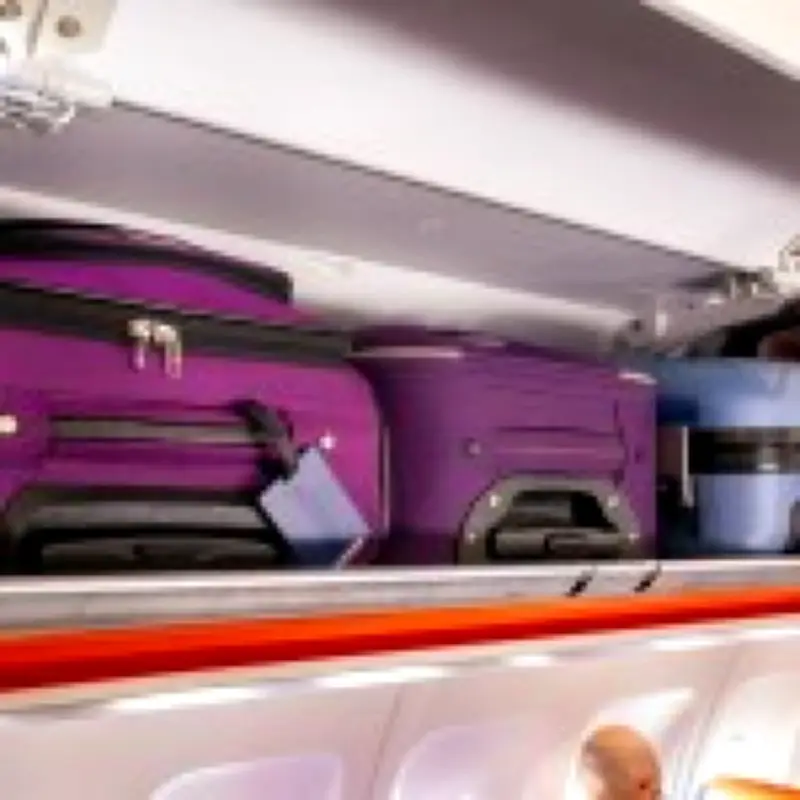
The European Union has finalised a landmark agreement to require airlines to include a free carry-on bag in standard ticket prices, ending years of extra fees for hand luggage. However, British travellers face a significant catch: the new rules will not automatically apply to flights departing from the UK.
What the New EU Hand Luggage Rule Means
After 13 years of negotiations, the European Council and European Parliament have agreed that from 2027, passengers on EU airlines will be entitled to bring one piece of hand luggage measuring up to 40cm x 30cm x 15cm free of charge, in addition to a smaller personal item that fits under the seat. Airlines must display fares that include this allowance by default before the booking process begins, making price comparisons easier.
The Council of the EU stated: 'To create price transparency, air fares including allowance for a piece of hand baggage shall be displayed by default before the start of any booking process to facilitate fare comparisons between airlines.' Airlines may still offer cheaper tickets to passengers who voluntarily choose to travel without hand luggage.
This is the first major update to airline passenger rights in Europe since 2004, when Regulation EU261 established minimum rights for compensation, refunds, and assistance for flight cancellations, long delays, or denied boarding.
The Catch for UK Travellers
Despite the UK adopting EU261 after Brexit, the new hand luggage amendment has not been incorporated into UK law. According to Rhys Jones, Aviation Editor at Head for Points, 'Passengers flying on EU airlines will be able to take advantage of [the change] in both directions.' However, non-EU airlines such as Jet2 or easyJet would only be bound by these regulations on flights from the EU back to the UK.
For example, a passenger flying easyJet from Mallorca to London would get free hand luggage, but the same passenger departing from London to Mallorca would not. British Airways, despite being owned by Spanish holding company International Airlines Group, is considered a UK airline as its operating licence is issued by the UK. Jones added: 'Whilst the original 2004 EU264 legislation was copied to UK law as part of Brexit, this does not automatically mean that future amendments in the EU are adopted. It would be up to the Civil Aviation Authority to make any future changes to UK law, not the EU.'
Which Airlines Are Most Affected?
Ultra-low-cost carriers such as Ryanair, easyJet, and Wizz Air will be most impacted because they currently do not include trolley bags in their lowest fares. From 2027, they must show a default price that includes a cabin trolley bag, though passengers can opt out for a lower fare. This levels the playing field with full-service airlines like British Airways and Air France, where trolley bags are already included.
Ryanair's Strong Opposition
Ryanair boss Michael O'Leary has been vocal in his criticism, calling the agreement 'gobbledygook' and 'more bureaucratic bunkum from the EU Parliament and Council.' He argued that the regulations 'require airlines to falsely advertise higher air fares, making EU airlines even less competitive.' O'Leary noted that over 50% of Ryanair customers choose fares that exclude a second cabin bag, and claimed the rules discourage EU airlines from advertising their lowest fares. In 2024, Ryanair made €4.7 billion from extra fees, including baggage costs.
Other Passenger Rights Updated
The amended regulations also clarify several contentious issues. Airlines must now electronically inform passengers within 96 hours if they are eligible for delay compensation. The claiming process has been streamlined with a 30-day window for airlines to either pay up or decline the request. However, compensation amounts for delays remain unchanged: passengers can still claim €250, €400, or €600 depending on flight length if delayed by three hours or more.




