
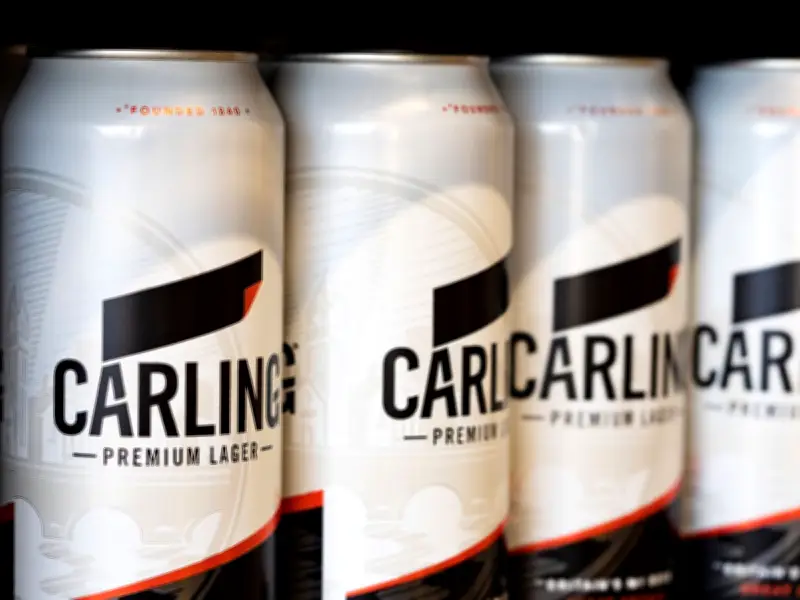
Carling is cutting the alcohol percentage in its beers to save money on tax. The brand is reducing the Alcohol By Volume (ABV) in its flagship lager from 4% down to 3.4%, making the beer weaker.
Tax savings drive change
The move follows a 2023 shake-up in beer duties in the UK. Beers with an ABV between 1.3% and 3.4% are taxed at £9.96 per litre of pure alcohol, while those between 3.5% and 8.4% face a higher rate of £22.58 per litre. The reduction will only apply to the UK market; Carling beers in Ireland will not be affected.
Carling owner Molson Coors stated that the beers will retain their “perfectly balanced and refreshing” taste. The firm claimed taste testing found drinkers preferred the weaker lager over the original. A spokesman said: “Extensive consumer testing has shown that the 3.4% liquid delivers the taste consumers expect from Carling – with the 3.4% lager ranking higher for overall taste.”
Declining sales and new choices
Carling has faced declining sales as shoppers shift to foreign alternatives. Ryan McLaughlin, brand director for Carling at Molson Coors, said: “Carling has always been about bringing people together – whether that’s watching the football, catching up with mates or simply enjoying a beer responsibly at home. By evolving our range and investing behind the brand, we’re making sure Carling continues to offer something for different tastes and occasions, while keeping the great refreshment people know and love. Alongside the launch of Carling Black Label, this gives our fans more choice than ever before within the Carling family.”
Broader 'drinkflation' trend
The change is part of a trend dubbed “drinkflation”. A Daily Star investigation found that brands like Fosters, Amstel, John Smith’s and Sol now contain less alcohol than a few years ago, with some dropping from 5% to 3.4%.
Campaigners have accused big breweries of exploiting tax breaks without passing savings to consumers. Tim Webb of the Campaign For Real Ale (CAMRA) said: “Beer tax in the UK is absurdly high, and we support the principle that a lower ABV should mean a lower tax rate. Global brewing giants, however, have diluted their recipes to hit the lower tax band, without reducing prices, and sometimes hiking them. This is something that independent brewers simply can’t afford to do or won’t do because it will compromise quality.
“Giant brewing corporations can get away with this, because the UK allows them to control too much of the beer market, excluding the smaller independent brewers that brew most of the UK’s more interesting beers. We know that choices the Government has made on business rates and taxes are pushing up prices for consumers. But here, it’s in the gift of the global brewers to keep prices steady for consumers, but they don’t seem to care.”
Webb urged the Government to use an “Access to Market Review” to reform the dominance of global giants in the beer and pub trade, allowing independent brewers fairer access and fostering competition.




