
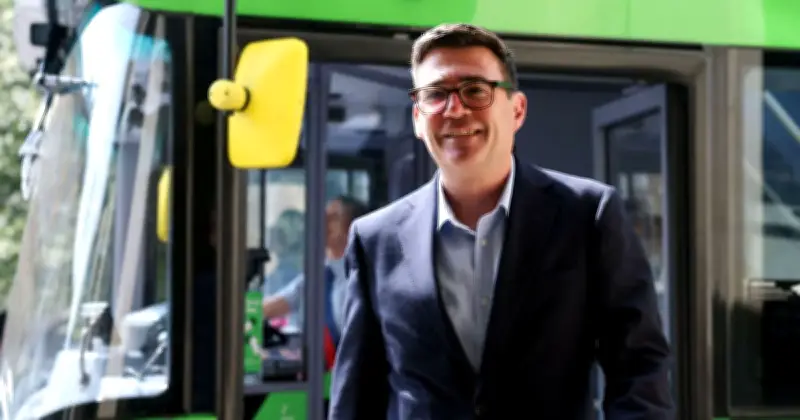
Prime Minister Andy Burnham has announced that single bus fares across England will be capped at £2. Millions of bus passengers across England will see travel costs fall next year as the new cap on single fares is introduced.
The £2 bus fare cap is one of the first policy actions Andy Burnham has implemented since becoming Prime Minister on Monday, July 20, 2026. This is the second major policy he has launched in his first week, as part of what he refers to as a "cost-of-living blitz".
Government confirms price cap for 2027
The government confirmed today, July 22, that the price cap will remain in effect for several months in 2027. The price change is hoped to make it cheaper for people to get to work, school, and appointments.
This new limit replaces the current £3 cap. The change is part of a plan to help with the rising cost of living, especially for those in rural areas who often have to pay much higher prices for longer journeys.
Where will it apply?
The £2 cap will apply to most local bus routes across England, though London is not included because it already has its own flat fare of £1.75. In places like Scotland, Wales, and Northern Ireland, local governments will decide whether to set up similar schemes using extra funding from the UK government.
Which buses are included?
Although the final list of operators for 2027 hasn't been confirmed yet, the scheme follows the same voluntary framework as previous fare caps. In earlier years, over 140 bus companies, representing more than 90% of the bus network in England, chose to participate.
Most major bus companies are expected to take part, these most likely will include: Stagecoach, Arriva, First Bus, Go-Ahead Group, National Express West Midlands. Other prominent regional and local operators include: Blackpool Transport, BorderBus, Carousel Buses and Thames Travel (part of the Oxford Bus Group), Central Connect Transport, Centrebus, Coach Services, Dews Coaches, East Yorkshire Buses, Grant Palmer, Ipswich Buses, Nottingham City Transport (NCT), The Big Lemon, Transdev (including The Harrogate Company, Keighley Bus Company, and Burnley Bus Company), Trentbarton.
It is important to remember that the cap only applies to single, one-way tickets. It doesn't cover long-distance coaches, school buses, or specialised airport shuttles. Other tickets, like day passes or weekly bundles, will stay at their normal prices. The cap only applies to one-way point-to-point tickets. Return tickets, day passes, weekly tickets, and multi-operator seasonal bundles are not subject to this cap.
Additionally, among the participating companies, a few schools, premium express services, or cross-border routes are excluded. A comprehensive and up-to-date database of specific routes and local operators is maintained directly through the official GOV.UK Bus Fare Cap Guidance.
Government's wider bus investment
Today’s £2 bus fare announcement sits alongside the government’s wider investment in buses. A statement by Lord Hendy of Richmond Hill CBE on Gov.uk reads: “Earlier this year, we announced over £100 million of additional support for the bus sector, including free bus travel for children aged 5 to 15 on participating services in August as part of the Great British Summer Savings Scheme.
“This investment also includes funding for local transport authorities and bus operators to address rising costs in the sector, helping to maintain services and keep fares affordable. We have today confirmed the individual allocations local transport authorities will receive. The government recognises that affordable fares are only one part of delivering better bus services.
“We have already committed more than £3 billion for buses over the next 3 years, alongside significant reforms through the Bus Services Act 2025. These reforms give local transport authorities greater powers and flexibility to shape bus services around the needs of their communities, whether through franchising, enhanced partnerships or other locally led approaches.”




