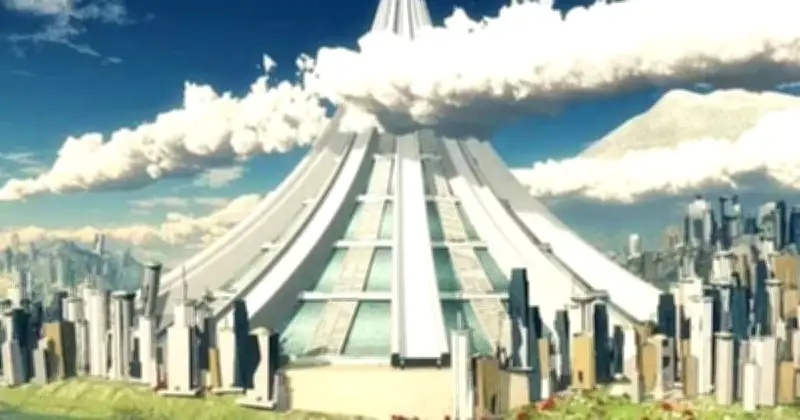
The X-Seed 4000, a skyscraper concept first revealed in 1995, would soar 4km (13,123ft or 2.5 miles) into the sky, making it nearly half the height of Mount Everest and five times taller than Dubai's Burj Khalifa, the current tallest building in the world.
A Concept from the 1990s
The Japanese construction firm Taisei Corporation reportedly envisaged the tower sitting atop Tokyo Bay, with several other Asian locations also mooted as potential sites. The design planned to house between 500,000 and one million residents across its 800 floors.
Plans included hundreds of thousands of homes, offices, shops, leisure facilities, green spaces and transport links, alongside renewable energy technology. The architects envisioned it as a self-sustaining artificial island supported by floating caissons, operating as a fully-fledged city with business districts, retail areas, entertainment venues and scientific institutions.
Engineering Challenges
Bringing the ambitious design to life would present huge challenges. Tokyo's earthquake risk, extreme winds at such heights and the engineering required to support a four-kilometre structure would make construction incredibly difficult. The enormous cost, alongside the challenges of regulating temperature, air pressure and transport, would also prove major obstacles.
An estimated 3,000,000 tons of steel would have been required for the mammoth undertaking, with internal air pressure systems factored in to safeguard people from altitude-related health complications.
Inspiration and Purpose
Previously examined on LinkedIn, the floating metropolis, measuring 6km in width, was scrutinised by Reuben Petty who illuminated the vision that ultimately failed to come to fruition.
He explained: "Its form was inspired by Mount Fuji, featuring a broad, stable base gradually tapering to a majestic peak. This pyramidal shape was not purely aesthetic; it was intended to provide structural stability against the forces of the ocean and potential seismic activity, a significant concern in the Tokyo Bay area."
Rumours surfaced in 2007 that Taisei intended to advance with the audacious project, but these claims were swiftly refuted. George Blinder, managing director of Buildings and Data, revealed at the time: "It was never meant to be built. The purpose of the plan was to earn some recognition for the firm, and it worked."
Confirming that the tower was no longer being pursued, Shohei Ogawa, a planning manager at Taisei, stated X-Seed 4000 was "on the shelf now". He added: "It was our dream proposal for the technological advances we thought that could happen in the future."
Cost and Public Reaction
Erik Howeler, an architect and author of Skyscraper: Vertical Now, told Architectural Record that constructing such a towering structure was "possible" from an engineering standpoint. However, from a practical perspective, he felt the projected $1 trillion cost would present significant hurdles, along with obtaining permission to build such a monumental structure. He added: "Tall buildings create a downdraft at their bases, and cast long shadows."
The scheme, which has ignited debates over safety and environmental impact, proved a hot topic on Reddit. One user likened it to a video game, writing: "This literally looks like the city seen in high charity mission in Halo 2." Another drew comparisons with a blockbuster film, remarking: "That's genuinely just the star harvester from Transformers 2." A third raised concerns over its feasibility, commenting: "Imagine the elevator not working and you live on the 657th floor."