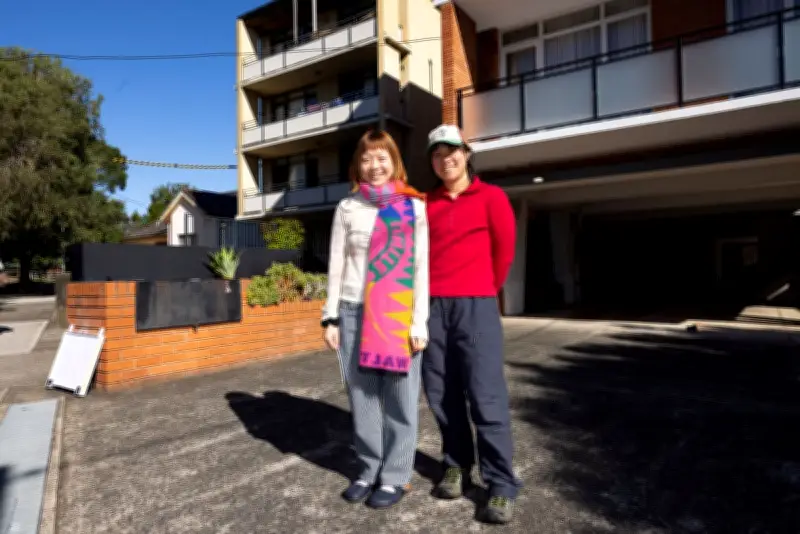
Australia's housing market is showing signs of cooling, but for first-time buyers like Lena and Linly, the dream of homeownership remains expensive. The couple recently purchased a two-bedroom flat in Ashfield, Sydney, for $922,000 — a $28,000 discount from the reserve price, thanks in part to a lack of investor competition.
Despite the discount, the property is far from perfect. 'The shower is completely broken, the windows hardly even open … and we’re still paying almost a million dollars … it’s wild,' Lena said. Linly added: 'Even with all the investors being scared off, we’re still being squeezed. Negative gearing has squeezed us into a place that’s pretty punishing. It should never have come in.'
The couple relied on multiple sources of support to enter the market: steady incomes, help from Linly's parents, the federal 5% deposit scheme, and New South Wales' stamp duty discount. Their experience highlights the challenges facing first-home buyers even as the market shifts.

Market Cooling and Investor Retreat
Real estate experts attribute the recent cooldown to federal budget tax reforms that discourage investors. The changes to negative gearing and capital gains tax concessions have reduced investor activity, with investor mortgage applications dropping 23% in May, according to brokerage Loan Market. First-home buyer numbers fell by a smaller 12%.
Auction clearance rates have also declined. In the last week of May, most homes listed for auction failed to sell, and preliminary sales fell further in early June, according to Cotality. In Melbourne's inner north, a two-bedroom unit in Brunswick East sold below the vendor's reserve after a lengthy negotiation.
Treasurer Jim Chalmers welcomed the trend, stating: 'If we are making it easier for first home buyers to get a fair crack at auctions, then that’s a good thing.' Labor MPs, including Senator Michelle Ananda-Rajah, have campaigned on the cooldown, highlighting headlines of renters becoming homeowners.
Price Predictions and Future Outlook
Morgan Stanley forecasts a national price decline of 5% to 10% in the short term, with Sydney, Melbourne, and Canberra already seeing prices fall. However, even a 10% drop would only return prices to early 2025 levels. Commonwealth Bank analysts predict prices could rebound by 2028, with Perth, Brisbane, and Adelaide potentially avoiding declines entirely.
For now, buyers like Jeremy Walsh-Rossi, who has been searching for a family home for two years, remain hopeful but cautious. At a Marrickville auction, he bid up to his $1.6m budget but was outbid by another couple. 'I need a bargain,' he said. 'I don’t want to over-extend myself and have to pay back a massive mortgage.'
As the market adjusts, the impact of tax reforms on housing affordability remains a key focus. While investors retreat, first-home buyers continue to face high prices and stiff competition, underscoring the complexity of Australia's housing challenges.