The death of 87-year-old María del Carmen Abascal, just a fortnight after her eviction from the Madrid flat where she had lived most of her life, has sharpened attention on Spain's housing crisis ahead of a snap general election called for the end of November.
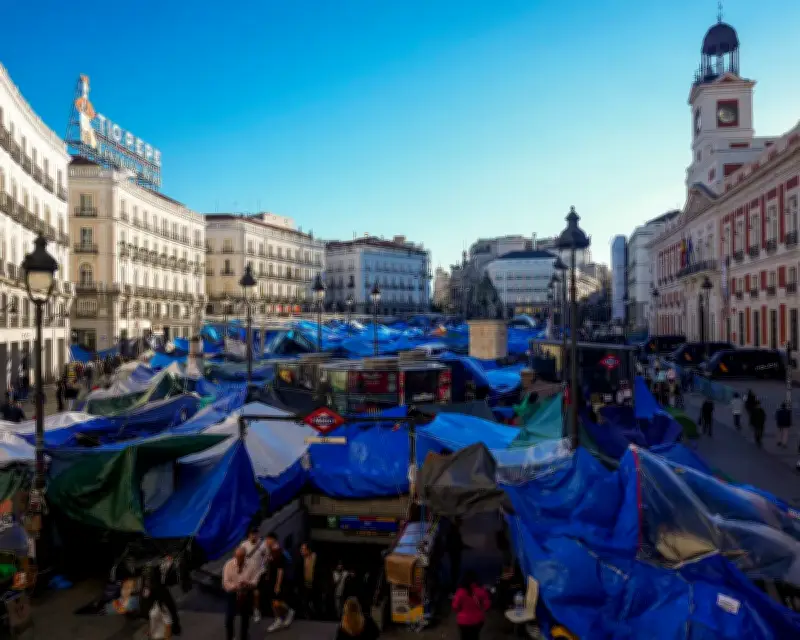
Abascal, who died on Wednesday night, had already become the enduring face of the crisis, her plight having led to street demonstrations, a protest camp in Puerta del Sol, and emergency measures proposed by the socialist-led government to facilitate and protect access to housing. When rightwing and far-right parties voted down those measures in congress last week, Prime Minister Pedro Sánchez responded by announcing the snap election.
Eviction's impact on health
Abascal's death now looks set to focus even more attention on housing in the run-up to the election, particularly on what her lawyer called “the shameful violence of these types of evictions and the evident impact and consequences they can have on people's health”.
With more than 42% of Spaniards identifying access to housing as their main worry and rents having risen by 80% over the past decade, the question arises of why it took the eviction of an octogenarian and the accompanying protests to shake Spain's political class into action. The answer could be that, despite years of protests against overtourism and gentrification, the tipping point had not been reached until now.
On Thursday, Spain's state centre for sociological research published polling showing that 76.3% of those surveyed favoured state intervention in the market “as much as necessary to guarantee everyone's access to housing”, while 79% believed housing should be prioritised as a constitutional right.
Emergency measures and political response
Sánchez's government is keen to persuade voters that it is the only political force that cares about rents and tenants' rights, hence the emergency measures, which have been redrafted into two new decrees after their defeat in parliament. The 21 measures include facilitating renting or buying a new home, extending eviction protections for vulnerable residents, prohibiting speculative real estate purchases, and granting tax breaks to property owners and tenants who pay on time.
“These are measures that, if I may say so, are a matter of simple common sense; a matter of humanity,” the prime minister said on Tuesday. “They unite small property owners and tenants while standing up to vulture funds, precisely because they target only those who view housing merely as a commodity for speculation.”
The measures come almost three years after Sánchez promised to build 184,000 affordable public rental homes. His government has also introduced a law allowing authorities to cap “disproportionate” rent prices in some areas.
Sánchez said those who voted down last week's decrees had done so despite studies showing the measures enjoyed “cross-cutting support that transcends ideology”, adding that the public favoured regulating “a dysfunctional market”. He is hoping that at least one of the decrees will be passed by congress's permanent council, a special body that operates when parliament is not in session.
Opposition promises and criticism
Alberto Núñez Feijóo, leader of the conservative People's party (PP), which voted down the measures, said it was a bit late for Sánchez, prime minister since 2018, to suddenly appoint himself Spain's housing champion. “Housing has been the big failure of this government but will be the success story of the one that follows it,” he said on Monday. Feijóo, whose party is leading the polls, added: “When a prime minister has been in power for eight years, it's hard to blame others for what he's failed to do.” The PP has promised to build 200,000 homes a year, lower taxes, and cut bureaucracy.
However, the PP's decision to side with the far-right Vox party and the rightwing Catalan pro-independence Junts party to fell the measures has left it looking less committed to the issue. Sánchez and his allies will hope voters notice as the election campaign kicks off and trade unions prepare a general strike over housing for 11 November.
Feijóo called for people not to manipulate Abascal's death for their own purposes. “No campaigning, no political parties, no partisan ends, no more bricks in the wall,” he said on Wednesday night. “When a person dies there should be nothing but respect.”
Despite housing's primacy as an issue, Feijóo opted to start his campaign in Ceuta, Spain's North African territory, where at least 141 people died as tens of thousands tried to cross from Morocco at the end of July. The government's handling of the mass crossing, which saw about 80,000 people enter Ceuta, has been criticised at home and abroad. Speaking there on Wednesday, Feijóo promised that its safety would be at the “top of [the] in-tray” if he became prime minister.
Vox responded to Abascal's death by posting footage of a TV interview in which she said she held Sánchez responsible for what had happened to her. The far-right party accused the socialists of using “the suffering of an elderly person to stage a campaign to hide the government's responsibility in the housing disaster”. It also suggested Sánchez had visited “ruin and death” on Spain in the form of floods that killed 230 people in Valencia two years ago, last year's nationwide power cut, a deadly train crash in southern Spain in January, and recent events in Ceuta.