
As Londoners endure successive heatwaves this summer, the allure of coastal living with sea breezes and lunchtime dips grows stronger. Even for those returning to the office part-time, the seaside dream remains attainable. Exclusive data from Savills, analysed by Homes & Property, identifies five coastal locations within 90 minutes or less by train to central London, catering to priorities such as low-cost housing, swift commutes, or strong property markets.
Portslade, East Sussex: Best for Schools
Average house price: £527,400. Fastest train to central London: 70 minutes. Season ticket cost: £5,680. Bordering smart Hove to the west, Portslade attracts upsizing families seeking more space without leaving the catchment area for popular schools like King's, Blatchington Mill, and Hove Park, according to Samim Nabizada, senior sales consultant at Jacobs Steel estate agents. House prices have surged 19.9 per cent over five years, compared to Brighton's 4.2 per cent increase. “A property in Portslade could cost you £500,000 for the same square footage you would pay £600,000 for in Hove. As mortgage rates have risen over the past three years, that has seen Portslade’s popularity increase,” says Nabizada. Independent businesses thrive, the high street is improving, and the area is family-oriented, also popular with downsizers from Hove. Streets bordering Benfield Valley are prized for large detached houses near the South Downs. Downsides: Limited bars, restaurants, and cafés; some pockets remain gritty and underserved by public transport.
Margate, Kent: Best for Culture
Average house price: £290,100. Fastest train to central London: 87 minutes. Season ticket cost: £7,220. Fifteen years after the Turner Contemporary gallery opened, Margate's arts-led regeneration continues, with house price growth of 16.8 per cent in five years. Madonna called the creative community her “idea of heaven.” Georgina Wilson-Powell, 45, who moved from south-east London seven years ago with her wife Beth, says, “Margate is a really special town. It’s full of people wanting to do their own thing who aren’t afraid to have a go. Everybody just seems to support people; the community comes together.” She adds, “There’s always so much happening. We really punch above our weight in terms of culture, art and music. We have amazing independent shopping and very few chains.” Cliftonville is the “Hackney-on-Sea” area where DFLs (Down From Londoners) tend to buy, only five or ten minutes from the sea. The area near the station is also growing in popularity. Downsides: Weeknights can be quiet, and winter offers a slower pace, but Wilson-Powell notes, “once you’ve experienced a few summers here it can be really lovely to have the beach to yourself.”
Canvey Island, Essex: Best for Shortest Commute
Average house price: £447,250. Fastest train to central London: 37 minutes. Season ticket cost: £4,492. Known as the Thames Delta, Canvey Island historically housed East End transplants and now includes a Hasidic Jewish community. “We’ve got so many different cultures on Canvey and people get on really well. It’s a very welcoming, accessible area and people come together over local issues,” says Hayden Connolly, senior sales consultant at Anthony Quirk & Co. Many first-time buyers are attracted by affordability: a three-bedroom bungalow costs about £375,000, compared to £550,000 in Leigh-on-Sea. Most buyers are local or from outer east London. Prized areas are on the seafront from Thorney Bay around the Eastern and Western Esplanades. Post-war properties with larger plots command up to £800,000. New building is limited due to land below sea level; Connolly recommends local conveyancers and surveyors for flood risk interpretation. Local hotspot Labworth Café, designed by engineer Ove Arup, has plans for a year-round hub, and a new splash park is set to open next summer at The Paddocks Community Centre. Street & Co coffee shop overlooks Thorney Bay, and tribute bands play at Jimmy Mac’s diner. Downsides: Traffic on and off the island is punishing during rush hour and school runs, making it popular with lorry drivers, odd-hour workers, and hybrid workers.
Folkestone, Kent: Best for Short Commute
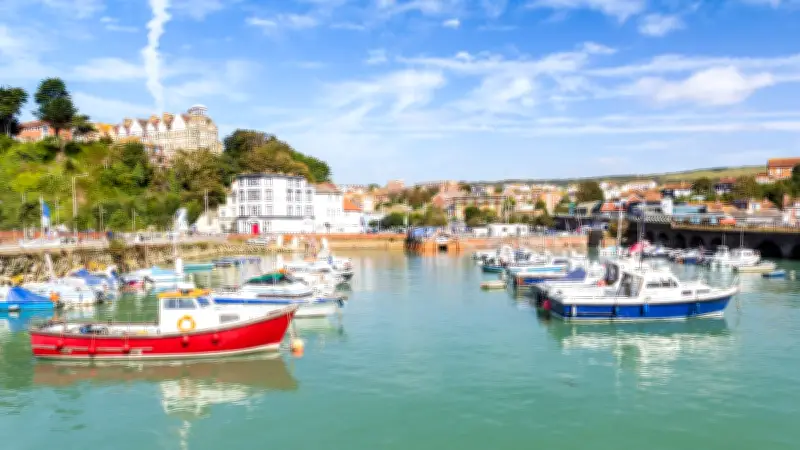
Average house price: £299,400. Fastest train to central London: 54 minutes. Season ticket cost: £7,180. “It’s very easy to be outside and in nature here and it’s very beautiful. There are lots of hidden paths, we’re five minutes from the sea and we can ride our bikes to work,” says Jade Pooley, 41, who has lived there for six years with her husband and daughter. Pooley runs Yoke yoga studio on Guildhall Street, which is “like Hackney before it got gentrified.” Her husband runs the café upstairs. Locals recommend walking away from daytrippers, visiting Massimo's for ice cream, shopping at The Potting Shed, or walking in The Warren or along The Leas clifftop. The arts scene thrives under Creative Folkestone, which runs the Folkestone Triennial and a book festival. Pooley is happy with school choices, including forest schools, state options, and grammar schools. The Shoreline development offers flats from £375,000. Downsides: Sewage leaks into the sea have angered locals.
Dover, Kent: Best for Lowest House Prices
Average house price: £215,900. Fastest train to central London: 65 minutes. Season ticket cost: £7,220. Harry Johnson, 38, executive chef at Keppels at The Grand in Folkestone, recently bought a two-bedroom flat in Dover for £96,000. “In part I bought in Dover because it’s a bit cheaper than Folkestone but mainly it’s because I have friends over there and there is a real sense of possibility there,” he says. “It feels like it’s been quite neglected for a number of years but there’s a nascent group of people trying to do quite creative, entrepreneurial things,” citing Art Club co-working space, Breakwater Brewery, and The Hoptimist taproom. He highlights the strong history: Dover Castle from the 1060s, a Roman villa, medieval churches, and Georgian architecture. “It surprises you when you get beyond the received notions of Dover being deprived and druggy. It has this cultural richness. It’s only an hour from London and you can hop on a ferry and be in Calais in two hours.” Downsides: Some areas remain very deprived.




