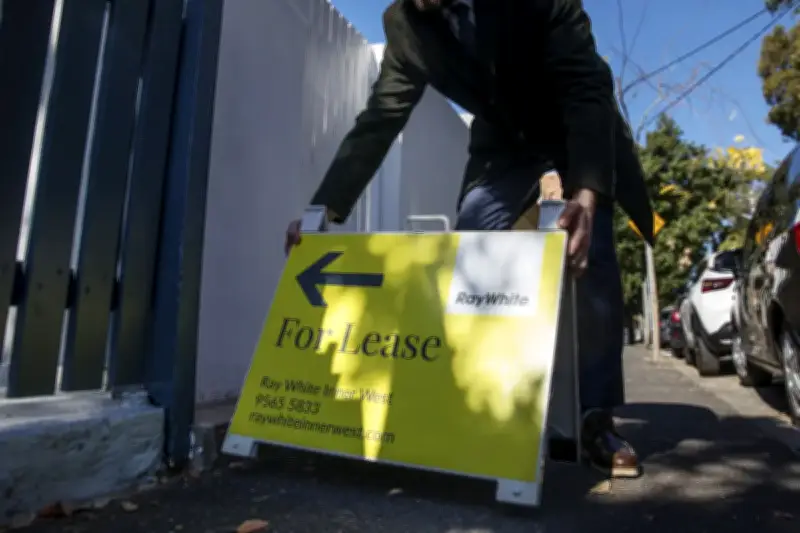
Headlines have claimed rents in Australia will surge due to Labor's property tax reforms, but property experts at National Australia Bank and Ray White say their analysis has been misunderstood. Critics have argued that property investors have no choice but to hike rents by 30%, but the experts say their analysis has been misused.
Will rents rise as much as 30% in Australia?
Not likely. Media reports have suggested rents may rise by almost a third in response to Labor's tax changes, citing analysis from National Australia Bank and, separately, Ray White. The bank and property group have since clarified that their models are not warnings of an Armageddon scenario for renters.
Instead, both analysed the reforms' effect on landlords' yields, which are the post-tax, post-negative gearing income they get from an investment, compared to what it cost to buy. They have found property is now less attractive to new investors, who will not enjoy the same negative gearing benefits as those who purchased before the May budget reforms.
The 30% figure merely represents the theoretical rental increase required to restore yields for new investors if property prices remained static. In reality, properties that previously appealed to investors primarily due to negative gearing benefits will either be purchased by owner-occupiers or fall in price until they provide a viable return for new investors.
Will landlords punish renters for tax changes?
Critics have suggested new investors, without negative gearing benefits, will bump up prices to make their investment profitable. Tim Wilson, the shadow treasurer, told News24 on Wednesday: “We’ve now had Ray White say … ‘Yep, this all stacks up. Get ready, if you’re a renter, to pay higher rents because of Anthony Albanese and Jim Chalmers.’”
While a landlord's individual circumstances can influence what rent they chase, ultimately the market decides what price they get. Landlords will likely raise their rent if they can find tenants who will pay, regardless of tax settings, interest rates or other financial pressures.
Cameron Kusher, an independent property economist, says rents are already near the maximum tenants are willing to pay. “Landlords can want to put up rents 30%, but who are they going to be able to find that can pay a 30% higher rent than they’re already charging?” Kusher says.
Renters' budgets are already strained by high inflation, falling real incomes and recent rapid rent increases. Tenants faced with heavy rent increases are likely to move into shared housing with friends or family, or move to more affordable areas. Others, aided by recent property price falls in some areas, may become owner-occupiers.
What will happen to rents?
While the tax changes are not likely to spark a 30% surge in rents, there are other pressures pushing prices higher. In the last 10 years, 2.4% of rental homes have typically been vacant, according to Cotality. Vacancy rates have fallen over the last year to a very tight 1.7%.
Kusher expects low vacancy rates could see advertised rents rise by up to 7.5% over the next year. Cotality estimates the median rent is $705 a week, so that would represent a $52 increase. He says cheaper areas in capital cities will likely see faster increases as rent hikes price tenants out of more expensive areas, forcing them to move.
There have been concerns raised that the tax changes will lead to even fewer available rentals as investors hold off buying homes. That line of thinking has been dismissed by economists including Saul Eslake, who point out that investors buying existing homes don't add a single new property to the market. Rather, they tend to outbid prospective buyers, forcing more people to remain renters. The tax changes include incentives to invest in new homes, which does add to supply.
What are the main rent drivers?
The long-term rental crisis stems from a fundamental mismatch between surging demand and limited supply, exacerbated by a decades-long decline in home ownership, which is the very thing the tax changes are seeking to address. Demand is easing as net overseas migration falls, but governments' efforts to boost housing supply are yet to bear fruit.
Housing advocates have called for more social and affordable housing to help low-income households struggling to compete in the tight rental market. Tom Alves, the acting managing director at the Australian Housing and Urban Research Institute, says the tax changes are addressing structural problems in the market, and are not a cause of rental stress.
“One of the important things has been to remove some of that incentive for people to purchase homes as an investment, and therefore compete with would-be owner-occupiers and drive up the price of home purchases,” says Alves. “It is a necessary structural change to achieve a longer term goal of arresting the decline in home ownership in Australia, and trying to turn that around.”