
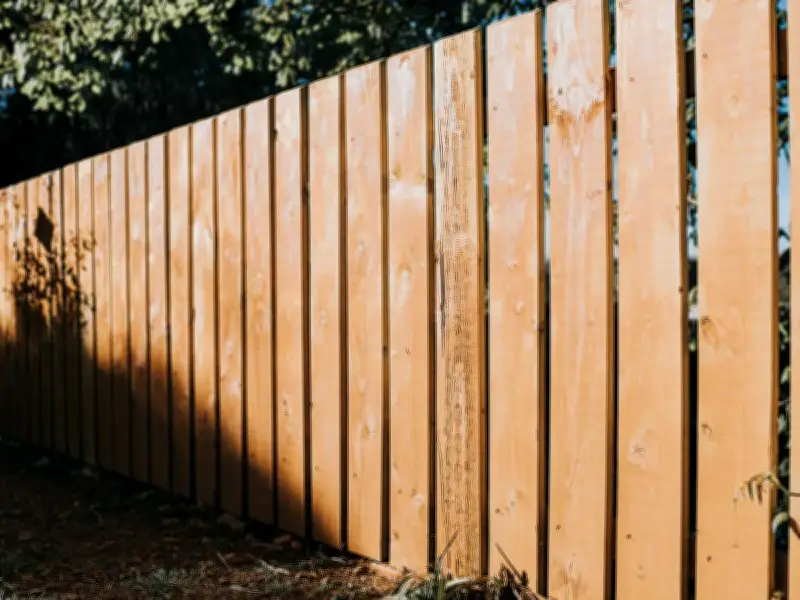
Determining which garden fence belongs to you can prevent neighbourly disputes, and a property lawyer has outlined the most reliable method for establishing ownership. The key is often found in your title deeds, not in a general rule about left or right sides.
The 'T' mark on title deeds
Goughs Solicitors clarified: "There is no general rule about whether you own the fence on the left or the fence on the right of your property. The first place to look to see which boundaries you own and are responsible for maintaining is your title deeds."
Kate Fowler, senior associate solicitor at law firm BRM, told Platinum Spas that the standard method for establishing ownership is by identifying a particular symbol within the title deeds. She said: "Plans attached to title deeds sometimes include a 'T' mark to show who owns a boundary structure or is responsible for repairing and maintaining it. If the 'T' mark points inwards onto your land, it usually means that the responsibility is yours. This should be confirmed in the body of the relevant title deed."
When deeds are unclear
Some deeds won't show this, so Kate added: "If the deeds are unclear as to who owns a boundary feature, there is no legal presumption that determines ownership. Instead, it may be necessary to look at other evidence. For example, information provided on the purchase of the property, knowledge as to who erected the boundary feature, or any long-standing agreement between neighbours."
If it is still unclear, the solicitor explained that neighbours can reach a mutual agreement. She said: "Where ownership or the responsibility for maintenance remains unclear, and the fence is on the boundary line, the parties may decide that the feature is a shared boundary. In this case, repairs or replacement should be agreed jointly, with costs shared. It is also possible to formalise arrangements through a boundary agreement, which can be registered at HM Land Registry."
Can you make your neighbour fix the fence?
A fence within your garden may belong to a neighbour, meaning the responsibility for its upkeep falls to them. However, that may be easier said than done. Fortunately, there are methods to reach a resolution. Kate said: "If your neighbour is responsible for the repair and maintenance of a fence, but refuses to do so, a solicitor can assist you by determining whether you may have a contractual claim for damages, or a potential claim in private nuisance, depending on the facts."




