

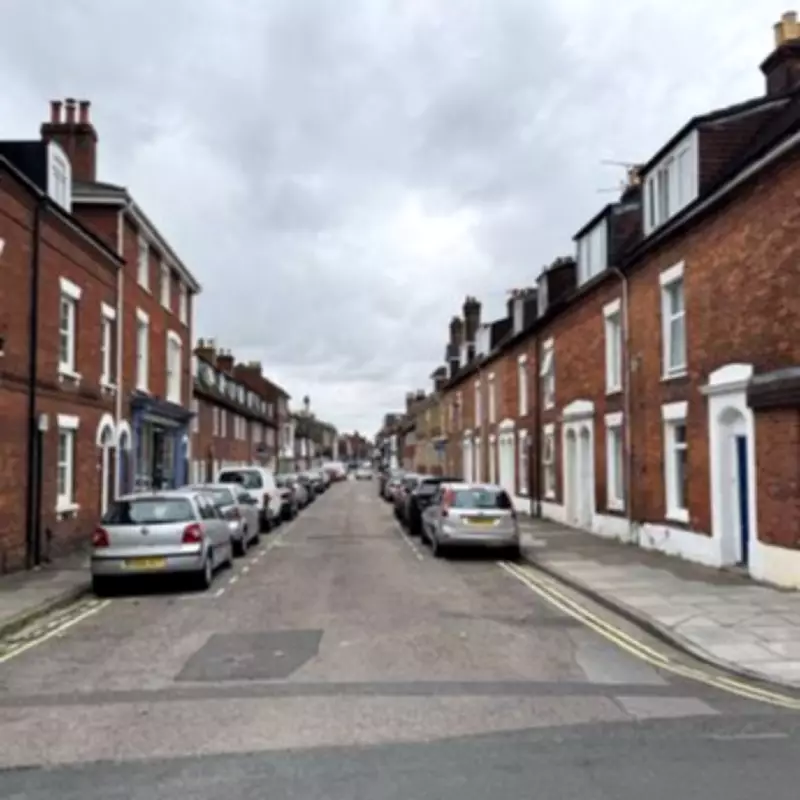
Couple Discovers Blunt Eight-Word Note After Parking Outside New Neighbour's Home
A couple who recently relocated to a new terraced house found themselves embroiled in an unexpected neighbourhood conflict after discovering a sharply worded note left on their car windscreen. The incident occurred when they parked their vehicle on the public street outside a neighbour's property, highlighting the intense territorial disputes that frequently arise over on-street parking spaces in residential areas across the United Kingdom.
The Confrontational Note That Sparked Widespread Debate
According to the couple's detailed account shared on social media platform Reddit, they had initially been asked to move their car by a neighbour who claimed their partner was returning home. The driver complied immediately, reversing to accommodate the request. However, the following morning, they discovered a handwritten note placed directly on their windscreen in the very parking spot where they had been instructed to relocate. The message contained just eight unambiguous words: "Do not park outside this house again. Thanks."
The Reddit poster expressed both confusion and frustration about the situation, noting that their new street offers only on-street parking with no specific restrictions or reserved spaces. "I really can't be bothered dealing with the pettiness that is likely to come," they wrote, "but I also don't care as there's no restrictions and it's first come first served. I don't understand why some people care so much?"

Legal Reality Versus Perceived Parking Entitlements
Despite common assumptions among residents, UK law provides homeowners with no legal right to park directly outside their own properties on public roads. According to official guidance from the RAC Foundation, "It is perfectly legal to park outside someone's house, unless the vehicle is blocking a driveway or a wheel is over a dropped kerb. Where no parking controls exist, drivers do not have an 'automatic spot' for parking outside their homes."
This legal reality frequently clashes with deeply ingrained territorial behaviours, where residents develop strong attachments to specific parking locations near their homes. Parking disputes have become commonplace sources of tension between neighbours, encompassing issues ranging from unauthorised driveway use and blocked access to perceived property damage and space reservation tactics.
Community Reactions and Widespread Parking Strategies
The online discussion generated substantial engagement, with numerous Reddit users sharing similar experiences from their own neighbourhoods. One commenter described a neighbour who systematically moves their car off their driveway to reserve street parking when their partner goes out. Another reported witnessing residents placing wheelie bins illegally on the road to save spaces, or asking friends to park strategically until they return home.
"I just park where there's a gap and walk," one practical respondent noted. "I don't know why the neighbours find that so difficult." However, alternative perspectives emerged, with some suggesting consideration for neighbours' convenience. "I'm no fan of weirdos that think they own the road," one commenter acknowledged, "but I do admit I'd roll my eyes if someone was routinely parking down the street in front of my house when the space in front of their own house was available."
The Broader Context of Residential Parking Conflicts
This incident reflects a widespread phenomenon across British residential areas where limited parking availability intersects with psychological territoriality. Many residents develop habitual parking patterns and become genuinely upset when other motorists occupy what they consider "their" designated spaces, despite the absence of legal backing for such claims.
The couple involved in this particular dispute explained that they typically avoid parking directly outside their own home due to practical considerations. "My car can barely handle reversing on the 10+% gradient," they noted, "and I don't want to risk bumping anybody." This practical approach contrasts sharply with their neighbour's territorial response, illustrating how different perspectives on shared public space can lead to significant interpersonal friction.

As urban density increases and vehicle ownership remains prevalent, such parking conflicts are likely to continue generating neighbourhood tensions unless communities develop clearer communication strategies and mutual understanding about the shared nature of public road space.





