
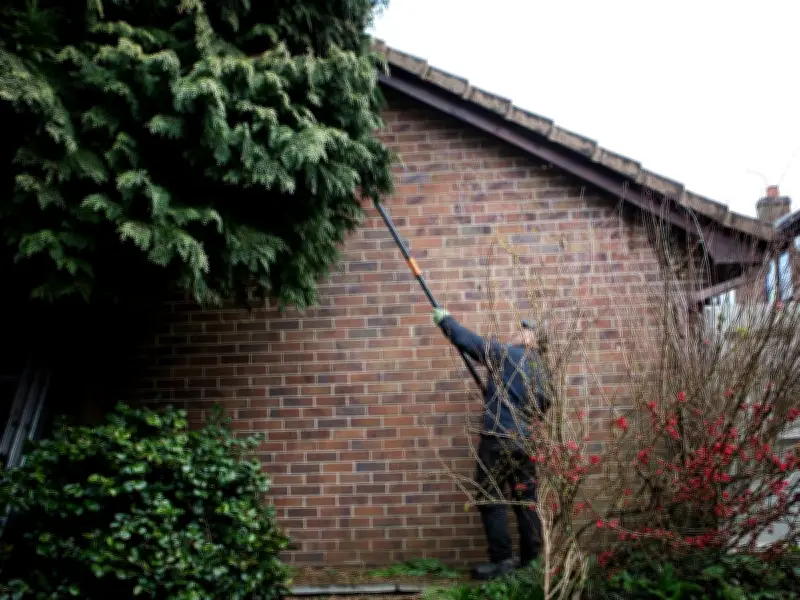
Barrister Daniel Barnett, who is based at Outer Temple Chambers and hosts LBC's Legal Hour, has outlined the legal options when a neighbour's tree or hedge blocks "the enjoyment of your home or garden".
Before any legal action, he recommends speaking to the neighbour first. A "calm" approach can often stop things turning "ugly", and a "respectful letter" may resolve the issue.
Right to light after 20 years
If a home has received light through its windows for 20 years or more, it probably has an easement of a right to light under the Prescription Act 1832, he said.
"An easement is a right that benefits your land, requiring something to be done or not done on adjoining land. Where plants from neighbouring land mean that light is inadequate, you could go to court to force the owner to prune plants back or remove them."
The key legal test
Establishing what counts as "sufficient light" is difficult. It is not enough to show that there is less light than before the tree was planted or grew, and there is no precise "scientific method" for deciding whether a window gets enough light.
The "key test", set out in case law such as Ough v King, asks: "Is there such a deprivation of light to render the house or building less fit than it was before?" The court judges this "in accordance with the ordinary ideas of ordinary people", and the obstruction must "interfere with ordinary occupations of life".
Excessively tall hedges
The Anti-social Behaviour Act 2003 also bans some "excessively tall hedges". Daniel explained the conditions: "First, the hedge has to be, quote, 'A barrier to light or access'. Second, the hedge has to be formed wholly or predominantly by a line of two or more evergreens, including trees, shrubs and semi-evergreens."
"Third, it must be over two metres above ground level. If the existence of gaps at a height of over two metres significantly affects its overall effect as a barrier, then it may still be permitted. Finally, it has to adversely affect your reasonable enjoyment of your home or garden because of its height."
If those conditions apply, the claimant can ask their local council to issue a "remedial notice" requiring the hedge to be trimmed. The council can reject the request if the claimant has not taken adequate steps to resolve the complaint themselves. There may be a fee of more than £400, though it can be lower for people on a low income.




