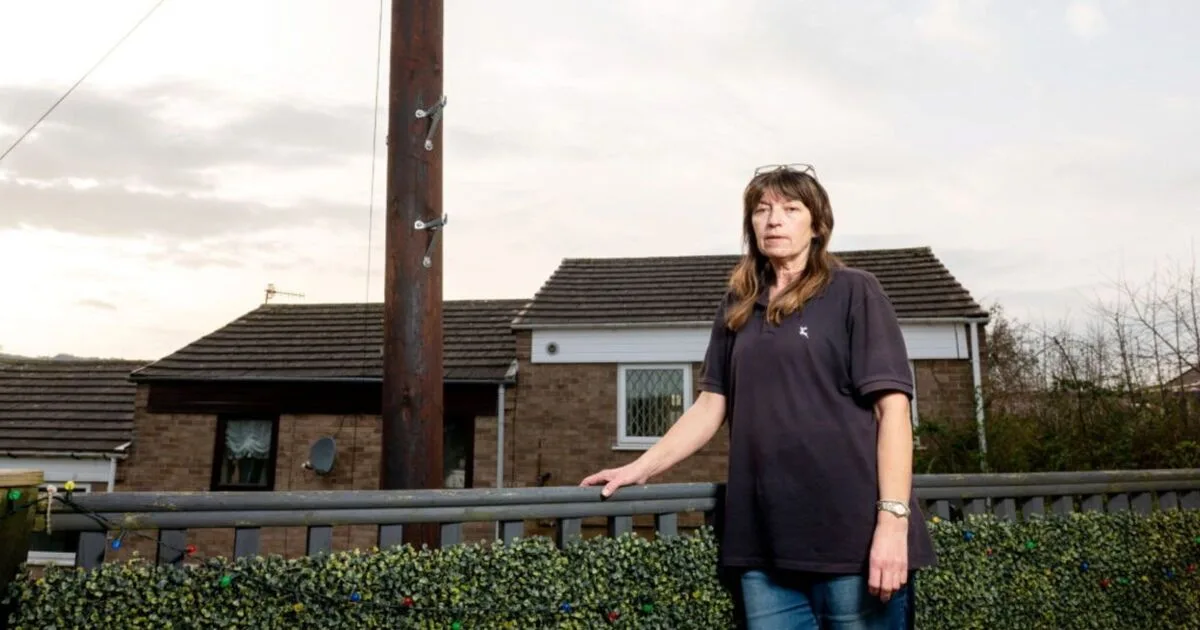
Derbyshire Mother's Fury as BT Pole 'Eyesore' Towers Over Her Home
A Derbyshire mother has been left outraged and distressed after a massive telegraph pole was erected just two metres from her living room window, describing it as an "eyesore" that has ruined her enjoyment of her long-term family home.
Tracey Crarer, 51, has resided in her property in Matlock, Derbyshire, for three decades but now wishes to sell up and leave due to the imposing 8-metre BT Openreach structure that now dominates her outdoor space and views.
Sudden Installation Without Warning
The mother-of-two was stunned to return home from work one day in June last year to discover workmen had removed a fence panel and begun installing the pole without any prior consultation or notification.
"I loved our house, we've been here since 1995, but now I hate it and I no longer want to be here anymore," Ms Crarer lamented. "But who is going to buy it now?"
The wraparound decking at the rear of her property now almost touches the new pole, while she has been left with wires stretching across her back garden, creating what she describes as a "spider's web" effect around her home.
Multiple Impacts on Daily Life
The installation has created numerous practical and aesthetic problems for the family. Ms Crarer can no longer enjoy her outdoor space due to spoiled views across to historic Riber Castle, combined with the powerful smell of creosote emanating from the treated wooden pole.
"I can't open up my windows anymore due to the horrendous smell of creosote coming from it," she explained. "And I don't want to open my living room curtains so all I can see is that pole."
The situation has even affected her livelihood as she provides laundry services for holiday lets. Birds perching on the overhanging wires have been fouling the sheets she needs to clean for work, creating both hygiene and business challenges.
Frustrating Response from BT Openreach
When Ms Crarer complained to BT Openreach, she was reportedly told that if she wanted the pole moved, she would have to pay for it herself - a cost expected to run into thousands of pounds.
She was further frustrated by the company's response that notifications had been displayed in the area, which she insists never happened, and their refusal to send engineers to inspect the situation in person.
"They have basically said, 'you don't matter, we don't care, we can do what we want and you can't do anything about it'," she recounted of her communications with the telecommunications giant.
Planning Permission Controversy
Ms Crarer expressed bewilderment that the installation proceeded with planning permission despite no consultation with neighbouring properties. She highlighted the irony that homeowners face strict regulations for minor modifications while BT Openreach appears to operate with greater freedom.
"If I want to build a bigger fence I can't without planning permission and they will make you trim your hedges if they are a few inches too high - yet BT Openreach appear to be able to do whatever they want," she noted.
Community Support and Alternative Locations
One neighbour, who wished to remain anonymous, expressed sympathy: "It's a bit of an eyesore and I really feel for her with it being so close to her home. There's plenty of other places they could have put that monstrosity."
Ms Crarer pointed out that the pole serves five other properties for wi-fi connectivity, none of which are her own, and suggested multiple alternative locations including a nearby alley or the ends of longer gardens that would have been less intrusive.
Official Response and Planning Concerns
Derbyshire county councillor Sue Burfoot, who is supporting Ms Crarer's case, criticised the approach: "It is just bad practice. There is a clear loss of residential amenity, as we would say in planning terms."
An Openreach spokesperson responded: "We're sorry to hear about the concerns raised and we're looking into the situation. We keep new poles to a minimum, but occasionally they're needed to make sure people can be connected. We always follow local planning rules and we try to work considerately in all of our communities."
The case highlights ongoing tensions between infrastructure development and residential rights, with Ms Crarer's three-decade connection to her home now overshadowed by what she describes as a "monstrosity" that has fundamentally altered her living environment.




