
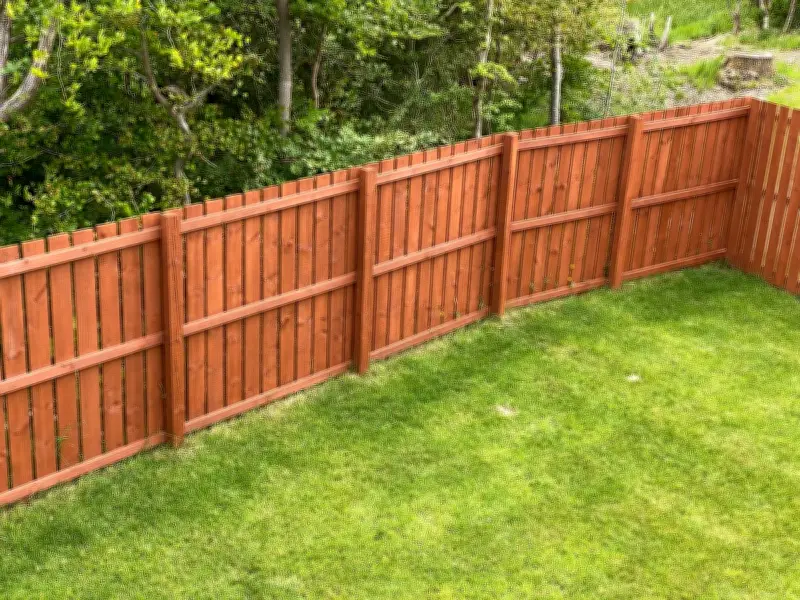
Many UK households share a boundary fence with a neighbour, and at some point these fences will need replacing. It's a tiresome business that few people relish dealing with. But what are your legal rights when it comes to it, and who bears responsibility for the replacement?
Property specialists Hamptons warn that fencing disputes can swiftly sour even the most friendly neighbourly relationships. Whether you're planning to put up a new fence, dealing with one that's fallen into disrepair, or simply trying to establish who owns what, having a clear understanding of your legal standing is absolutely essential.
Key rules for boundary fences
In England and Wales, there is no automatic obligation to put up or maintain a boundary fence. However, where one already exists, a specific set of rules comes into play. From height restrictions to planning permission, and from establishing ownership to settling disagreements, there are numerous legal considerations to navigate.
Hamptons says: "Disputes over fence ownership are one of the most common and often confusing issues between neighbours. If you've ever wondered who owns the fence between two houses or which side is yours to maintain, you're not alone."
Establishing ownership
Establishing fence ownership matters because it decides who is responsible for repairs, replacements or any alterations. While it might seem minor, making the wrong assumption can lead to legal problems, added costs and friction with your neighbour.
Hamptons advise: "To clarify the situation, examine your title deeds and look for 'T' marks. A T positioned on one side of the boundary line typically indicates that the property owner on that side is responsible for the fence. A double T, forming an H, often shows joint responsibility. Review the title plan. If it's unclear or silent about the fence, you may need advice from a solicitor or to instruct a boundary surveyor."
Common misconceptions
Many homeowners believe they are responsible for the fence on a particular side, often the left when looking from the back of the house. This is a common misconception and not supported by UK law.
Citizens Advice says: "Look at the legal documents for your home. They might say you have to keep the wall or fence that you're disagreeing about in a good state of repair. You should also check if the wall or fence is safe - if it isn't, your neighbour or the council could take action against you. If the wall or fence is safe and there's nothing about repairing it in your legal documents, it's up to you whether you do what your neighbour's asking."
Shared responsibility and informal agreements
Estate agents Jones Robinson note that where the title plan displays an H mark (two T marks joined together), responsibility for the fence is shared equally between both neighbouring properties.
They also note that where one neighbour has looked after a boundary feature informally for a long time, that history can become legally relevant. Even an undocumented arrangement like this could affect how a dispute is resolved if it ends up in court.




