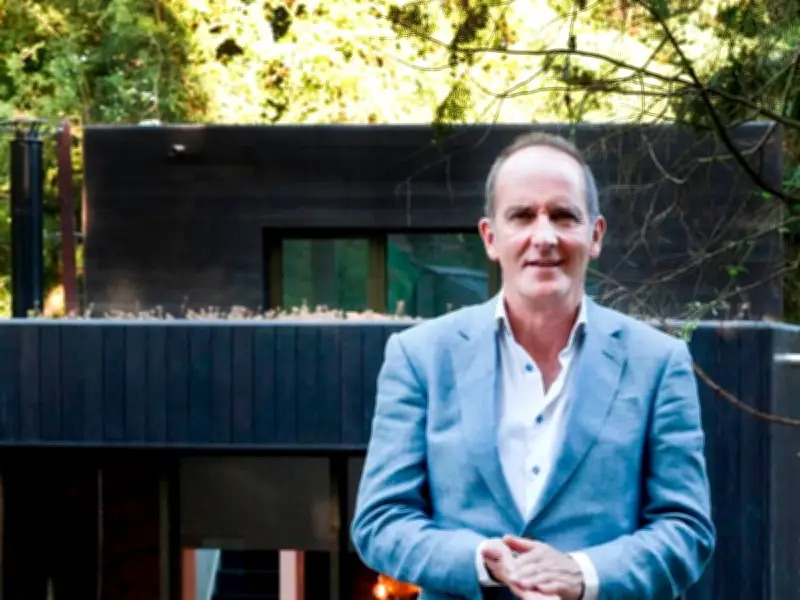
Kevin McCloud, presenter of Channel 4's Grand Designs since 1999, has identified sacrificing outdoor space as "one of the worst things" homeowners can do, warning it can reduce a property's value by breaking the relationship between a building and its surroundings.
Speaking in an exclusive interview, the British designer highlighted a decision that can lead to homeowners losing the "relationship between the building and aesthetic", regardless of the size of their property, as every building possesses "some kind of context".
Overdevelopment and Lost Context
Kevin explained: "I think in a way, one of the worst things we can all do is to sacrifice outdoor space."
He continued: "So you could theoretically build the front of your house right up to the pavement and the back of your house to cover the back garden. You could overdevelop, build extensions, keep going, add more bedrooms, but in doing so, you sort of lose the relationship between the building and aesthetic. It doesn't matter how small the setting is; every building has some kind of context."
He added: "And losing a relationship with it, whether it's industrial or whether it's built up and suburban, whether it's a flat with no garden at all, but just a balcony or whether it's a semi-detached, a key part of the architecture is the front garden and the back garden."
Space Given to Cars
Kevin also expressed regret while travelling through urban areas at the considerable space we "give to the car", suggesting it has reached a stage where individuals position their vehicles "in front of their sitting rooms". He quipped that maybe people do this to "admire their own car".
He disclosed that he enjoys witnessing the movement of sunlight across a room and doesn't want it to be "blocked out by a 4x4", as he prefers to observe trees, foliage and "something dancing" beyond the glass.
Light, Pattern, and Movement
Kevin went on to discuss what he characterised as one of his "favourite experiences in the world".
He added: "One of my favourite experiences in the world is using a net curtain, you know, seeing the effects of a breeze on a tree with sunlight on to a net curtain, on to a floor, and you see the dancing patterns, or to see the effect of sunlight reflected off a pond onto a ceiling of a room."
Kevin stated these are "magical experiences" and lie at the "core" of both architecture and the architectural experience, emphasising that it's light, pattern, and movement in time - elements you can't purchase in a tin, on a shop floor, or online.
He concluded: "It's something which is precious, and is, you know, if you see it happen in a building, you wanna kinda just figure out why because you want to hold on to that, and so it's free in a way. It can be free, not cost you anything."