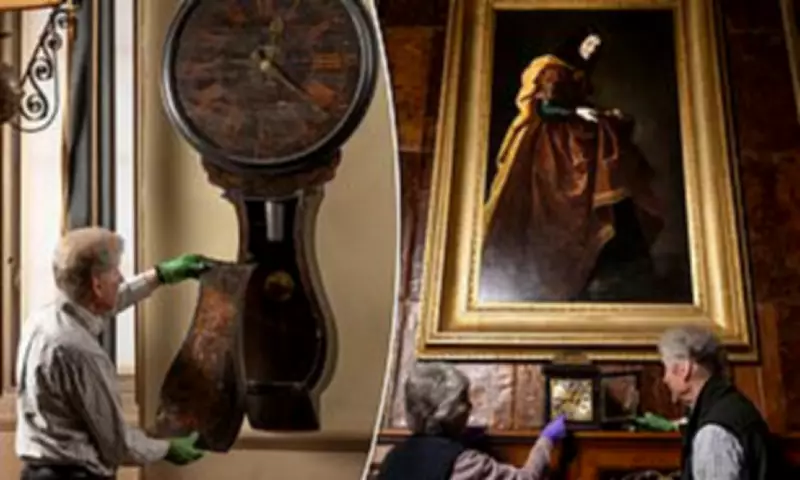
As the United Kingdom prepares to welcome the onset of summer this weekend, volunteers at a historic 17th-century country house have meticulously adjusted a collection of antique timepieces in anticipation of the clocks moving forward. This annual ritual marks the shift from Greenwich Mean Time (GMT) to British Summer Time (BST), bringing lighter evenings and darker mornings across the nation.
Preserving Time at Kingston Lacy
The Grade I-listed mansion Kingston Lacy, situated near Wimborne Minster in Dorset, boasts an extensive inventory of historic clocks. Among these is the impressive 'eight day' Tavern clock, crafted in 1780 by the clockmaker John Hardy. This timepiece is a rare survivor from its era, as many similar clocks perished due to their unreliability. It resides in the Servants Hall, which dates back to the property's construction around 1663.
Volunteers have also set a small 'repeater' clock, which dates to 1688 and was made by the 17th-century clockmaker Francis Raynsford. This unique clock requires its cord to be pulled to strike the previous hour. It is located in the Spanish Room and has been part of the manor since it was the home of the Bankes family, who lived there for over three centuries. Today, the country house is owned and maintained by the National Trust.

The Annual Time Change
Each year, the clocks go forward by one hour at 1am GMT on the last Sunday of March, transitioning from GMT to BST. This change, also known as moving from standard time to Daylight Saving Time, shifts an hour of daylight from the mornings to the evenings. Consequently, sunrises and sunsets occur an hour later, heralding the start of longer days as the countdown begins to the summer solstice—the longest day of the year.
By June, UK citizens will enjoy more than 16 hours of daylight daily, with the sun rising before 5am and setting after 9pm. This adjustment not only impacts daily routines but also enhances opportunities for outdoor activities and energy conservation.
Historical Origins of Daylight Saving
The concept of shifting time dates back to 1907, when builder William Willett proposed the idea in a pamphlet titled The Waste of Daylight. Allegedly inspired during his early morning horse rides, Willett noticed many people were still asleep despite the sun having risen. He campaigned for time to be moved forward by four 20-minute increments during April.
Willett, who is the great-great-grandfather of Coldplay frontman Chris Martin, saw his proposal gain momentum, though it was stalled by the outbreak of World War I. The Summer Time Act was eventually introduced in 1916, establishing that between spring and autumn, legal time would be an hour ahead of GMT. This measure was implemented during the war to utilise daylight and preserve coal resources.
Evolution of British Time Zones
Since 1916, the British time zone has undergone two significant changes. During World War II, British Double Summer Time was introduced to boost productivity, with clocks going forward two hours in summer while winter clocks remained an hour ahead of GMT from 1939 to 1945.
Later, former Prime Minister Harold Wilson trialled British Standard Time between 1968 and 1971, where clocks went forward but did not revert back. This move was overruled after a free vote in the House of Commons, reinstating the biannual transition that continues today.
The careful adjustment of clocks at Kingston Lacy not only preserves these historic artifacts but also connects modern practices to a rich legacy of timekeeping and seasonal adaptation in the UK.