

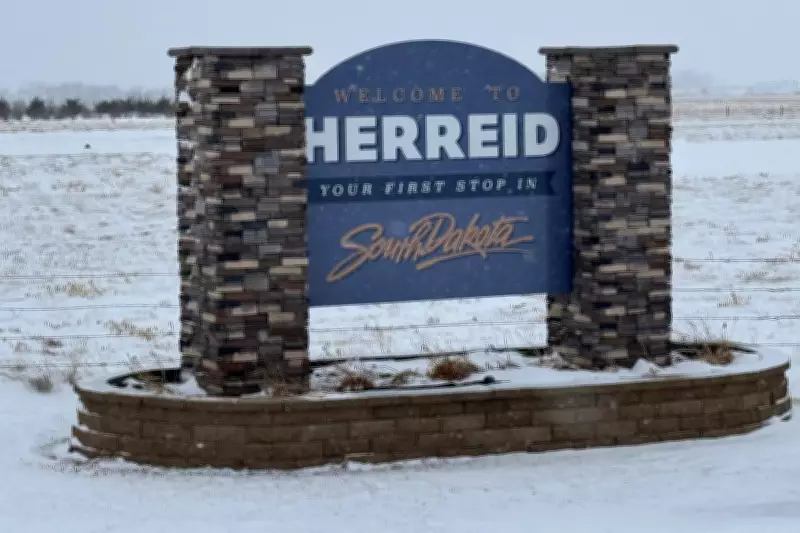
Herreid's Housing-Led Revival: How a 400-Person Town Sparked Growth
In the northern reaches of South Dakota, the tiny agricultural community of Herreid is staging a remarkable comeback. With a population hovering around 400, this town has defied decades of decline by treating housing as the cornerstone of its survival strategy.
A Visionary Drive Through Transformation
Dick Werner, a 68-year-old retired banking executive, navigates his pickup through Herreid's quiet streets, pausing frequently to highlight new houses and apartments that have emerged in recent years. Herreid, situated just 7 miles south of the North Dakota border along U.S. Highway 83, may be small, but Werner's enthusiasm for its rebirth is immense. He recounts how local leaders have ignited a resurgence in population and economy by adding housing, enhancing municipal amenities, and fostering new businesses.
Werner, who grew up in Herreid but spent much of his adulthood elsewhere, returned in 2016 to a troubling scene: the local grocery store was closed, and school enrollment stood at 109, perilously close to the state-mandated threshold for dissolution. "If you lose your school and your grocery store, your town is in trouble," Werner observed. Census data reveals Herreid's population peaked at 767 in 1960, dwindling to 416 by 2020, with school numbers mirroring this decline as families with children became scarce.

Funding the Future: Grants and Grassroots Support
Recognizing that housing is the critical first step to attracting families and workers, Werner, as president of the volunteer-run Herreid Area Housing Development (HAHD), spearheaded efforts to rebuild the town's housing stock. "We were really hurting for homes because without places to live, there’s no way people can move here to work or raise a family," he explained.
Since private developers often bypass remote communities like Herreid due to narrow profit margins and logistical challenges, the town turned to a unique funding model. Over the past decade, Werner secured $2.2 million in grants from diverse sources, including:
- South Dakota Housing Authority
- U.S. Department of Agriculture Rural Development
- Land, Water and Conservation Fund
- Grow South Dakota
- South Dakota Community Foundation
- Various local banks and foundations
Additionally, HAHD raised about $180,000 through loans from 30 local residents and over $250,000 from fundraising events, such as a Queen of Diamonds raffle at a tavern. "You just have to know where to get the money," Werner noted. "You’ve got to have connections and partnerships, but it’s important to know that there are resources across the state to help your community."
Tangible Results: New Homes and Community Growth
The funding has translated into concrete progress. HAHD has developed five speculative homes, all sold before completion, bringing 25 new residents to Herreid. It has assisted with single-family and twin homes through the state Governor’s House program, which utilizes prison inmate labor for construction. The organization also acquired 16 fully occupied apartment units and plans a new three-unit building with $700,000 in recently secured grants. Improvements have been made to 18 existing homes, and eight lots north of downtown are being offered for just $7,000 each, with support to keep construction costs low.
"We want to get people into homes, to own them and have pride of ownership," Werner emphasized.
Economic Engine: Businesses and Amenities Flourish
Housing has served as a platform for broader economic development, driven by collaboration among town leaders, HAHD, and the Herreid Economic Development Corp. Melinda Neeley, president of the development corporation, stated that housing expansion has stabilized the local economy, enabling new businesses and residents to thrive.
Despite its small size, Herreid now boasts:

- A thriving grocery store, medical clinic, pharmacy, and bank
- Day care, livestock yard, diesel repair shop, and hardware store
- A $200,000 sports complex, $145,000 playground upgrade, and $1.1 million pool renovation
- Pickleball courts and a $4 million school addition
"I feel like we’re on an upward trajectory," Neeley said. "It takes the help of people from all of these different groups to not just maintain what we have but to grow the services we have here." Employers like Pig Improvement Co. and Agtegra Cooperative have been attracted or strengthened, providing good jobs in agriculture and related sectors.
The economic development group owns land and buildings offered at low cost to businesses, facilitating entry and sustainability. Succession plans for retiring owners further ensure continuity. "If they had to purchase the building, the cost would be much greater," Neeley explained. "The loss of a single business could make a huge impact on our sales tax collection and the housing progress we’ve made."
Challenges and Future Prospects
Kayla Huber, a nurse who opened Fresh Start Market grocery store seven years ago, exemplifies the town's entrepreneurial spirit. She and her husband initially faced limited housing options, renovating a double-wide trailer. "We got lucky when we moved back because there weren’t many options," she recalled. While she praises housing efforts, she sees room for more growth: "More people want to get out of cities and big-city life, and this is a great place to raise a family. We’ve had some younger couples move back, and I know a few more that would move back if there were more places to live."
Werner predicts Herreid's population will increase in the 2030 census, marking the first rise in 70 years, with school enrollment expected to hit 150 in four years. Growth has included about 40 Hispanic residents on work visas and several Hutterite families, highlighting the importance of diversity. "If you’re in small, rural communities in South Dakota, and you’re not willing to accept diversity, you’re not going to grow," Werner asserted.
He stresses that rural revitalization requires committed individuals and perseverance. "Housing development is a marathon, not a sprint, and you’ve got to have people who are committed," he said. "There’s been all these naysayers out there on all these projects, but once they see the results, the naysayers all go away." Reflecting on his efforts, Werner finds the work immensely rewarding: "Probably the toughest thing you can do is to develop a property. I’ve run banks, groups of banks and managed dozens of employees, and this is the toughest thing I’ve ever done. But it’s also the most rewarding."
This story, originally published by South Dakota News Watch and distributed through The Associated Press, showcases how strategic focus on housing can breathe new life into even the smallest communities.





