
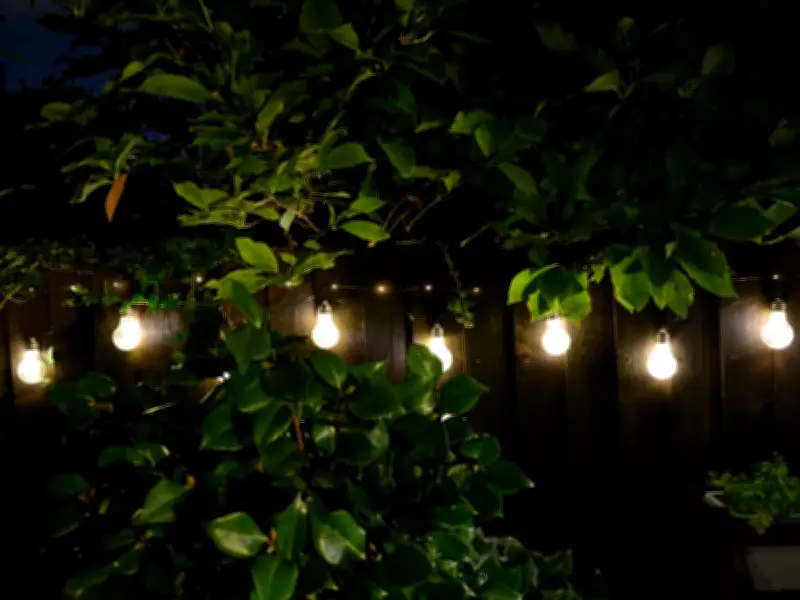
Homeowners are being warned to follow garden lighting rules this summer to avoid disputes with neighbours. With more people spending time outdoors during the UK heatwave, many are putting up lights to enjoy longer evenings.
Experts at LightingLegends.com say that making changes to fences, such as drilling holes for screws, can cause issues if the fence is owned by neighbours. Homeowners are urged to check who is responsible for boundary fences before hanging lights.
Ask permission before attaching lights
If a fence belongs to a neighbouring property, you should ask for permission before making any changes. Causing damage, such as drilling holes, could become a problem if the fence is not yours. If decorations cause damage, the neighbour may claim the cost of repairs.
Those unsure of their boundary responsibility should check property deeds. A 'T' mark may indicate responsibility, but this is not always included. If deeds are unclear, guidance on boundary disputes is available on GOV.UK, or legal advice may be sought.
Alternative lighting options
Jon Saeed, managing director of LightingLegends.com, said: “Decorating your garden and creating an inviting space for yourself and your guests to enjoy is one of the great benefits of having an outdoor area, and hanging lights or other decorations from a fence can be a simple yet effective way to enhance the space.
“It’s just important to remember that if the fence doesn’t belong to you, it’s important to speak with the neighbour who owns it before attaching anything. Having that conversation first can help prevent misunderstandings and avoid disputes that could result in you having to pay for any damage caused.
“If your neighbour isn’t comfortable with you hanging lights from their fence, it doesn’t mean you have to miss out. There are plenty of alternative solutions like hanging lights on trellises and trees to brighten up your outdoor space without causing any tension.
“It’s also important to remember that any lights used on a fence should be specifically designed for outdoor use, with suitable weather protection. Homeowners should also avoid using staples, nails or fixings that could pierce or damage the cable, and any mains-powered outdoor lighting should ideally be connected through RCD protection.”
Positioning and energy use
Instead of fencing, freestanding lighting poles, trellises, pergolas, or wrapping lights around trees and bushes are options. Outdoor lighting should be positioned so it doesn’t shine directly into a neighbour’s window.
Using a timer or smart socket can prevent lights from being left on unnecessarily overnight, reducing disruption and energy use.




