
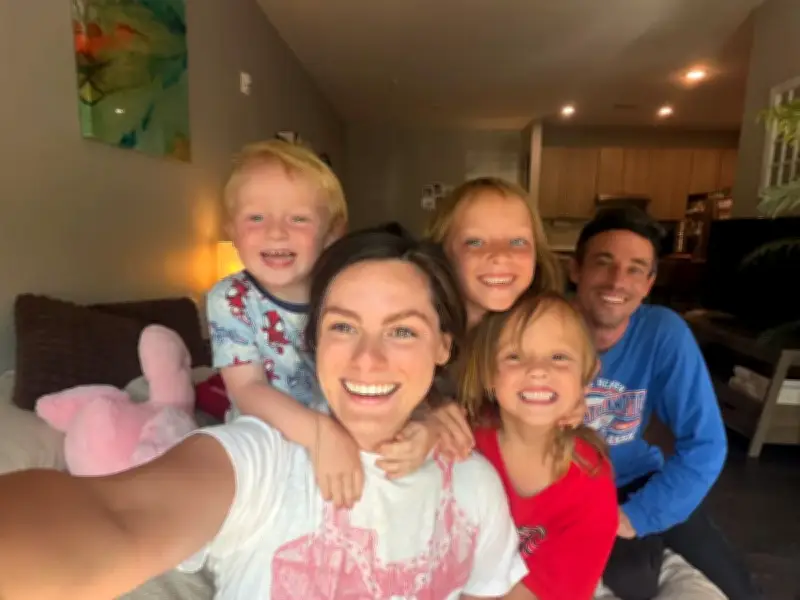
A family of five say they’re happier than ever nearly two years after downsizing from a large family home to a one-bedroom apartment to save money. What started as a temporary solution when mum, Megan Hawkins, went for brain surgery has become a way of life, although it has not always been easy.
Sacrifice for long-term stability
The three children, aged seven, four and one, “genuinely love” their living arrangements according to mum, as she explained to creatorzine.com: “This lifestyle was never the dream. It's the sacrifice to get there. It’s not perfect, but it works, and the closeness has brought us together in ways we did not expect.”
Thanks to their tiny living arrangements, the family have saved around £700 a month for the last nearly two years and plan to put the money towards building a family compound on land they have already purchased.
From brain surgery to a new way of living
The 35-year-old mum and her family were living in a larger family home nearly two years ago when she was diagnosed with a rare brain condition, an arteriovenous malformation (AVM), and underwent life-changing brain surgery. Megan, from North Carolina, woke up partially paralysed on her left side and had to relearn how to walk after the surgery. Her lengthy recovery and mounting medical bills made the family realise their way of living was becoming physically and financially unbearable.
Megan said: “Living in a larger home started to feel overwhelming. There was constant maintenance, unused rooms, and money flowing out faster than it was coming in. We weren’t saving, and mentally it felt like we were always behind. Renting out our home and moving into a one-bedroom apartment was meant to be temporary, just one year to reset financially.”
Unexpected benefits of small living
With less space to clean and maintain, the stay-at-home mum has been able to put more energy and care towards her children. But the smaller accommodation has also had some more unexpected benefits. She said: “This lifestyle also allows for more flexibility. Last-minute trips, summer adventures, and spontaneous plans are easier when we are not tied to a house that constantly needs something.”
In the one-bedroom apartment, the two older children share the bedroom which is mostly taken up by bunk beds and a desk for dad Emmet when he works from home. The couple themselves sleep on a king-sized bed in the living room and the youngest plays "musical beds" deciding whether to cosleep or take to their own pull-out bed stored in a utility room.
Megan added: “Our apartment complex has bike paths, a common green space, and a pool. (The children) have learned how to share, problem-solve, and get creative with play. It’s reminded us that kids don’t need more space, they need presence, safety, and joy.”
Challenges and mindful living
However, living in such tight spaces does get difficult in winter when the three energetic children are forced indoors. There is also no space for any unnecessary waste or items which has changed the family’s perspective on a few things. Megan continued: “Everything has to be rotated, purged, and thought through. Toys, clothes, school supplies, and routines all require constant attention. There is very little room for spontaneous mess. At the same time, this lifestyle has forced us to slow down and be more mindful about how we use our space and time. We rely heavily on routines and multi-purpose areas.”
The only thing the family truly miss from their larger accommodation is a kitchen table, as they’ve spent the last two years eating from the kitchen bar where at least one family member is left standing.
Megan took her family’s story online to share advice for other people living in small spaces, and while the reactions have been “mixed”, the mum is assured it’s the best step for her family’s future. She added: “Saying no to normal life so we can say yes to long-term stability is hard. Watching other people upgrade while we downsize is hard. But staying stuck forever is harder. I never want my kids stressing about housing the way we did. I want them to always have a place to land, a safety net and a home base. Maybe one day they will not even want to live there and that is fine but they will always have land, options and something solid to fall back on. This lifestyle was never the dream. It's the sacrifice to get there.”




