The Department for Work and Pensions has issued a new update on the State Pension, revealing that most pensioners still receive the Basic State Pension rather than the New State Pension introduced in 2016.
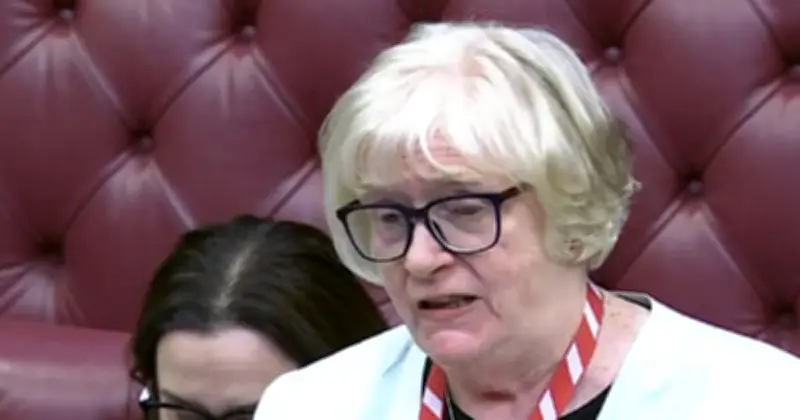
In a response to a question from Conservative Life peer Baroness Coffey, Baroness Sherlock, Minister of State at the Department for Work and Pensions, said: "In the quarter ending March 2026, around 5.4 million people (41%) who were receiving State Pension were receiving the New State Pension, while around 7.9 million people (59%) were receiving the Basic State Pension. The total State Pension caseload was approximately 13.3 million people."
Two State Pension schemes in operation
The State Pension underwent significant changes for those reaching State Pension age from 6 April 2016 onwards - specifically men born on or after 6 April 1951 and women born on or after 6 April 1953.
The government acknowledged that the previous system, which encompassed both the basic State Pension and additional State Pension, was overly complicated, making it difficult for individuals to calculate their entitlement until they were approaching retirement age. The new State Pension was designed to allow people to understand their likely payments from a far earlier stage in life, providing a firm foundation for savings and retirement planning.
Introduced in 2016 to replace the basic State Pension, the new scheme will eventually see its predecessor phased out entirely.
Weekly rates for 2026/27
The full new State Pension currently stands at £241.30 per week (2026 to 2027 rate), while the full basic State Pension amounts to £184.90 per week. Adding further complexity, the Additional State Pension provides an extra sum on top of the basic State Pension for men born before 6 April 1951 or women born before 6 April 1953.
Those eligible for the new State Pension will receive a full weekly amount of £241.30 for the 2026/27 tax year (increased from £230.25 in 2025/26). People who reached State Pension age before April 2016 and draw the basic State Pension will receive a full weekly amount of £184.90 for the 2026/27 tax year (increased from £176.45 in 2025/26).
Qualifying years and State Pension age
The new State Pension is calculated on the basis of individuals' National Insurance records. Those with no National Insurance record before 6 April 2016 need 35 qualifying years to receive the full new State Pension upon reaching State Pension age.
However, the gov.uk website states that most people will have made, or been credited with, National Insurance contributions before 6 April 2016. In the majority of cases, when individuals reach State Pension age, their new State Pension will factor in their National Insurance record both before and after 6 April 2016.
Officials say that the revised rules ensure that the State Pension amount received for contributions made up to 6 April 2016 is no less under the new system than it would have been under the old arrangements, provided the 10-year minimum qualifying period is met.
To receive any new State Pension at all, claimants will ordinarily need a minimum of 10 'qualifying years' on their National Insurance record. These can be from before or after 6 April 2016, and need not be 10 consecutive years.
Those born between 6 October 1954 and 5 April 1960 can claim their State Pension upon reaching 66 years of age. For those born on or after 6 April 1960, this threshold progressively rises to 67. People born on or after 5 April 1977 will see the State Pension age go up to 68 during the period 2044 to 2046. The Government conducts a review of the State Pension age no less than once every five years.
The People's Pension website says that during the 2026/27 tax year, the State Pension rose by 4.8 per cent. This aligns with inflation as measured by the Consumer Price Index in September 2025.