Retired Couple Faces Staggering £3.7 Million Legal Bill After High Court Victory
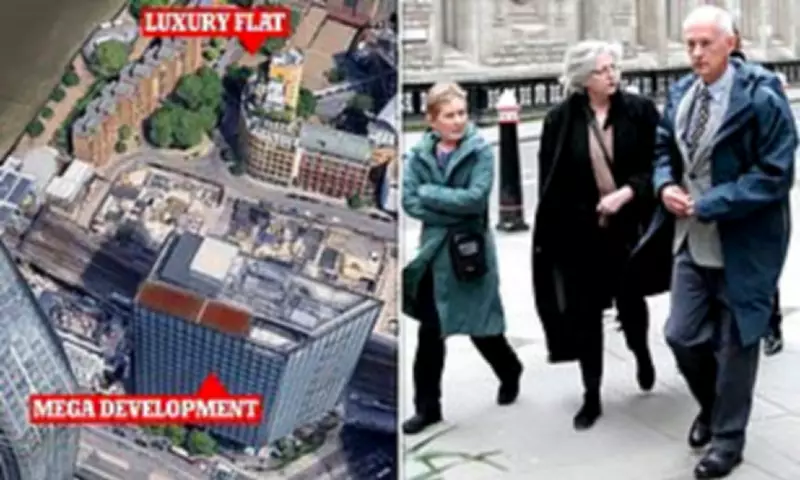
A retired couple who successfully sued developers over a 17-storey office tower that plunged their London home into darkness now confront a staggering £3.7 million legal bill, despite winning their case and receiving substantial damages. Stephen and Jennifer Powell had complained that the Arbor tower, part of the £2 billion Bankside Yards development, "substantially" reduced natural light entering their sixth-floor apartment in the adjacent Bankside Lofts building on London's South Bank.
The Development and Legal Battle
Bankside Yards is eventually set to consist of eight towers, including "mega-structures" reaching 50 storeys high, with Arbor being the first building completed in September 2021. The project encountered significant trouble when the Powells and their seventh-floor neighbour, Kevin Cooper, initiated legal action. They sought an injunction to protect their rights of light, threatening the nearly £35 million tower with potential demolition.
During the trial, the court heard that the Powells have resided in their iconic yellow ochre Bankside Lofts flat for over 20 years, having moved in 2002, while property finance professional Mr Cooper purchased his seventh-floor flat in 2021. Their barrister, Tim Calland, argued to Mr Justice Fancourt that the development's marketing material boasted of "exceptional natural light," which the claimants maintained was wrongfully achieved at the expense of their own light.

Court Ruling and Damages Award
Mr Justice Fancourt, ruling at the High Court, found that the couple's flat was "substantially affected" by the loss of light. He ordered the co-developer, Ludgate House Ltd, to pay the Powells £500,000 in damages, plus £350,000 to Mr Cooper. The judge stated that parts of both flats were left with light levels "insufficient for the ordinary use and enjoyment of those rooms."
However, he refused to grant an injunction requiring Arbor to be altered or demolished. The judge highlighted that over £200 million would be wasted in demolition and rebuilding, with massive associated "environmental damage." This decision has now triggered a fierce dispute over legal costs.
The Costs Dispute
In a fresh hearing this week, John Mcghee KC, representing the developer, argued that the Powells and Mr Cooper should pay the £3.7 million legal costs. He contended that the developer was the "overall successful party" because it successfully resisted the claimants' bid for injunctive relief, which was the primary purpose of their claims.
Mr Mcghee stated: "These claims were not about monetary compensation, but rather about whether the claimants could obtain an order requiring the defendant to modify its development. The claimants did not achieve what was the 'the purpose of their claims'. The defendant is the winner in this litigation as it can maintain its development unhampered."He noted that the damages awarded were "only a small fraction" of the sums initially sought by the claimants, describing their monetary claims as "ridiculously over-inflated," amounting to more than three times the value of their respective flats. The barrister added that if the judge did not order full payment, the householders should pay 75% of the developer's costs.
Claimants' Counter-Argument
Tim Calland, representing the neighbours, strongly disagreed, asserting that the claimants were the successful party. He pointed out that the court awarded them substantial damages, with the Powells receiving the largest sum ever recorded in a reported rights-of-light case.

The developers also claim that Mr Cooper failed to beat a pre-trial settlement offer, but his lawyers argue the offer was invalid as it included matters beyond the litigation. The ruling on costs will be delivered at a later date, leaving the retired couple and their neighbour in a precarious financial position despite their legal victory.
Broader Implications
This case highlights the complex interplay between property development, individual rights, and environmental considerations in urban planning. The judge's refusal to grant an injunction, citing the enormous financial waste and environmental damage of demolition, underscores the challenges in balancing private grievances with public interest in large-scale developments.
The outcome of the costs ruling could set a significant precedent for future rights-of-light cases, potentially deterring homeowners from pursuing similar claims due to the risk of enormous legal bills, even when they succeed in proving infringement and obtaining damages.