China's Real Estate Ghost Towns: The Burst Bubble's Stark Legacy
The dramatic collapse of China's real estate bubble has left a haunting landscape of abandoned housing developments across the nation, serving as a powerful testament to the perils of debt-fuelled property speculation. Among the most poignant examples is the "Life in Venice" residential complex on China's east coast, a sprawling ghost town that stands as a stark reminder of the sector's precipitous downturn.
A Luxurious Dream Turned Desolate
Conceived as an opulent, resort-like escape just ninety minutes from Shanghai's bustling commercial heart, "Life in Venice" was once marketed as Shanghai's very own garden by the sea. Inspired by its Italian namesake, the development boasted European-style sculptures and buildings interconnected by picturesque canals and bridges, promising residents a luxurious lifestyle by the water.
However, this ambitious vision soured dramatically as property prices plummeted several years ago. The developer, Evergrande, ultimately declared bankruptcy in 2024, leaving the complex in financial ruin. Today, "Life in Venice" is a desolate ghost town with a sea view, its numerous units remaining largely unsold and uninhabited, a silent symbol of the burst bubble.

Bargain Prices and a New Reality
Home prices in the complex have more than halved since its heyday, with many villas abandoned as mere husks of concrete and alabaster, their private docks left unused. A three-bedroom apartment can now be rented for just 800 yuan, approximately $116 per month, attracting a small community seeking a laid-back, low-cost alternative to the hypercompetitive rat race of China's megacities.
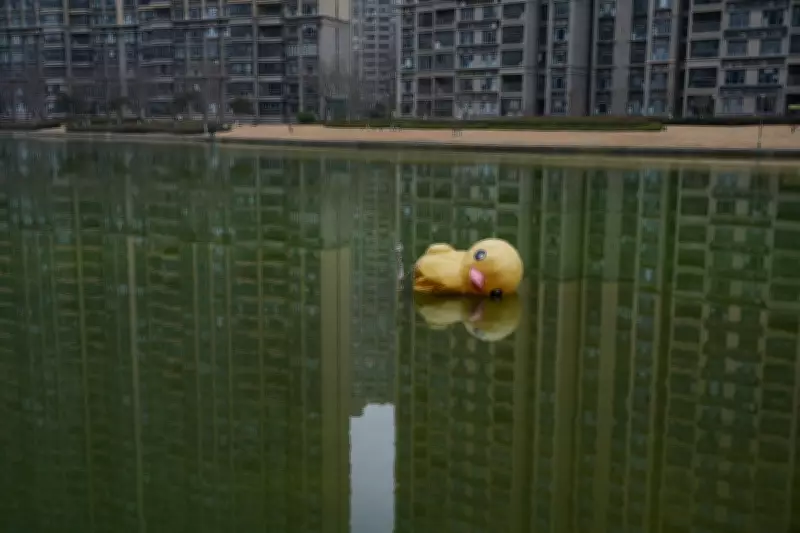
A few grocery stores, some restaurants, and a package delivery station provide basic amenities for those who have chosen to move here. During the winter months, the complex is largely quiet, with residents enjoying a slower pace of life. Scenes include men fishing next to a deflated rubber ducky in artificial canals, children's clothes hung out to dry in public spaces, and a lone individual swaying on a swing on an empty beach, gazing out at an abandoned pier.
Broader Economic Headwinds and Political Context
China's much-touted progress in developing a modern, high-tech economy, exemplified by advanced robotics and autonomous vehicles, is now confronting significant challenges. A prolonged downturn in the housing market, struggling small businesses, and widespread youth unemployment are taking a severe toll on economic stability.
This stark divergence between Chinese leader Xi Jinping's ambitious vision for an AI-driven future and the harsh realities of slowing growth forms the critical backdrop for the annual meeting of the National People's Congress, the country's largely ceremonial national legislature, which commences on Thursday. The ghost towns like "Life in Venice" underscore the urgent need for policy responses to address these deepening economic fissures.