

Black Farmer Founder Declares War on Shoplifting Epidemic
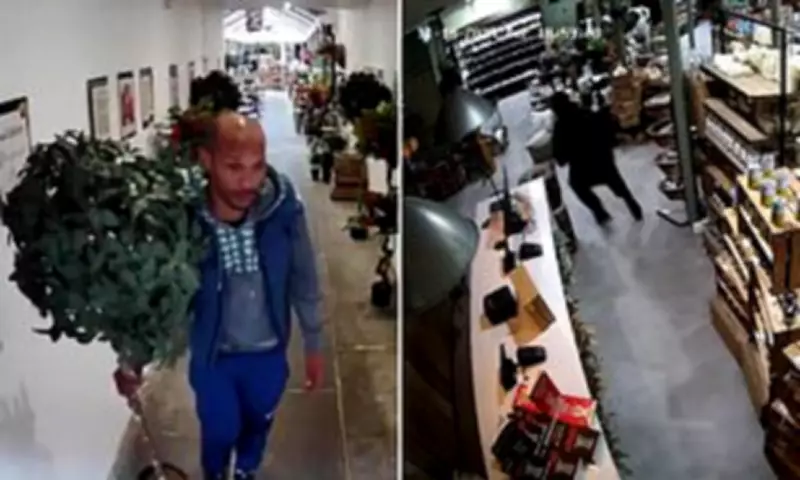
Artificial bay trees decorating a farm shop's walls might seem an unlikely target for thieves, but this week's bizarre theft of two such decorative plants represents just the latest in a series of brazen daylight crimes plaguing The Black Farmer stores across London. For exasperated founder Wilfred Emmanuel-Jones, these incidents have become an almost daily occurrence that he bluntly describes as "doing my head in."
Public Shaming as Defense Strategy
The 68-year-old Windrush generation farmer reached his tipping point this week, deciding to fight back by publicly posting CCTV footage of the latest theft and shaming the two individuals who swiped artificial trees from his Brixton location. The footage shows tentative thieves examining plant tags before quickly carrying their unusual bounty from the shop.
"This week's raid is tame in comparison to previous incidents," Emmanuel-Jones revealed, describing situations where fleeing criminals have threatened to knife staff members who attempted intervention. Shockingly, employees have even had their personal phones stolen during these confrontations.

Middle-Class Theft and Escalating Patterns
The problem extends beyond typical shoplifting demographics, with Emmanuel-Jones noting that "middle-class" individuals are also targeting his stores. One "well-groomed" shopper was caught pocketing a £20 toy sheep, demonstrating the widespread nature of the issue.
The Jamaican-British entrepreneur reported that thefts at his Brixton and White City locations have increased significantly over the past year, occurring every other day on average. CCTV footage obtained by media outlets shows thieves stuffing alcohol bottles into trousers and concealing them under jackets, with some sprinting away while others exit casually.
Police Response and Systemic Failures
Emmanuel-Jones places partial blame on law enforcement, accusing officers of allowing criminals to get away with what he compares to "extortion." He draws parallels between Britain's shoplifting epidemic and mafia tactics, stating: "I feel there's a form of extortion going on at the moment where people come in and target your store, knowing that there's nothing you can do about it."
The farmer of more than two decades wants British police to adopt New York's hardline approach, which contributed to a 13 percent year-on-year decline in retail thefts through a dedicated $40 million police task force. He has even proposed that convicted shoplifters wear ankle tags that would alert staff when they enter stores.
Financial Strain on Independent Retailers
The financial impact has forced difficult decisions. Security guards previously stationed at entrances were removed because Emmanuel-Jones could no longer afford the £4,500 monthly cost. Additionally, bottles of spirits have been removed from open display after repeated targeting.
"We're not in a position to tag things or afford security," he explained, "because the cost means we just wouldn't be profitable. This has gone to a point of craziness."
Broader Retail Crime Statistics
Britain faces a significant theft epidemic, with police recording 810 shoplifting crimes daily last year. Analysis reveals that 295,589 shoplifting cases were closed without identifying suspects in 2024-25—equivalent to 34 offences shelved hourly. Shoplifting has doubled since the pandemic and increased by 20 percent since the current government took power.
Fewer than one in five shoplifting cases (19 percent) led to charges last year, while 55 percent were closed without suspect identification. Separate Office for National Statistics figures show police recorded 530,643 shoplifting offences between April 2024 and March 2025—approximately one per minute.
Calls for Policy Change and Support
Emmanuel-Jones argues that retail has been abandoned to criminals in some London areas, with insufficient government understanding or support. "Retail is really important to the local community," he emphasized, "but police really do not put it high on their agenda."
He believes a prominent figure similar to Jeremy Clarkson is needed to advocate for retailers with policymakers. "There's a lot of injustice going on out here," he stated, "and no one is seeing the pain that we are going through."

While large retailers have infrastructure and security budgets, Emmanuel-Jones stressed that "small independents are the ones that really, really, really struggle" with these challenges.
Police Response and Technological Solutions
Met Police Chief Inspector Rav Pathania, the force's lead on tackling retail crime, responded: "Tackling shoplifting continues to be a priority for the Met. We are focused on tackling repeat offenders who create fear for retail workers and harm communities."
Pathania noted increased collaboration with retailers to improve reporting and evidence gathering, along with greater use of technology like facial recognition that has helped solve double the number of shoplifting cases.
Despite a four percent reduction in London shoplifting between April 2025 and March 2026 compared to the previous year, and a 44 percent increase in arrests during 2025, Emmanuel-Jones maintains that more decisive action is needed to protect small businesses from what he describes as a legitimized culture of theft.





