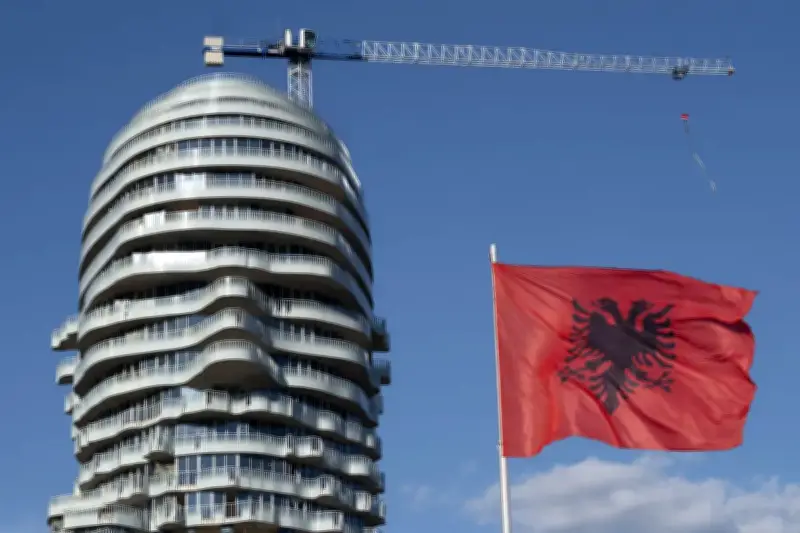
Sixty top architecture firms from around the world have proposed over 500 eye-catching projects across Albania, a building boom now celebrated in an 800-page book that critics have dubbed a 'smoking gun'. The publication, The Albanian Files, documents the rapid transformation of the former communist country under Prime Minister Edi Rama, who has been in power since 2013.
The projects include twisting towers in Tirana, prize-winning public spaces, and coastal resorts. Coordination has partly occurred through a WhatsApp group called 'Albanian ArchArmy', which includes some of the world's most famous architects. In his foreword, Rama describes the book as 'a precious behind-the-scenes record' of a process that is 'lifting Albania in a way that nobody saw coming'.
Critics and Protests
To Rama's critics, the book is an 800-page, 2.2kg dossier of evidence. They point to the opacity of decision-making, the destruction of heritage, forced evictions, and the trampling of protected landscapes. One opposition MP has called it the 'smoking gun', although there is no suggestion that the architects have been involved in any wrongdoing.
Most of the projects are news to the local population, which has reacted with fury. In June, a noisy protest outside a venue in Tirana, where many architects gathered for an exclusive event, featured placards reading 'Starchitects go home!' and 'Where is the public?'. Tickets for the architecture festival, titled Landscapes of Abundance, cost up to €200, in a country where the median monthly wage is €700.
The protests came just weeks after huge national demonstrations were ignited by multibillion-dollar plans to develop the Zvërnec nature reserve and the nearby island of Sazan into a luxury resort, backed by the Trump family. Dubbed the flamingo revolution, the protests have now continued for over 120 days, with calls for Rama's resignation.
Architects' Perspectives
Lorin Kadiu, director of Citizens.al, an investigative news platform tracking construction projects since 2018, says: 'It feels like living in an autocratic kingdom. Not just the lack of transparency, but the fact that we must all be subjected to the aesthetic tastes of one person.'
An open letter handed out at the protests denounced the 'art-washing of bulldozer politics' and asked architects if they enjoy 'the freedom to do here what would be forbidden, challenged, or otherwise made impossible in your own countries?'. Of the architects contacted by the Guardian, only one responded, saying they do not do anything in Albania that they would not be allowed to do elsewhere, adding that 'the freedom in Albania is certainly alluring and as such the personal responsibility is greater'.
Rama writes that architects are attracted by the 'freedom from 'no' in all its forms'. The book includes visions for virgin coastlines and forests, such as a mirrored glass hotel proposed by Dutch firm MVRDV for Gjipe bay, and a hillside development by Álvaro Siza in the protected dune area of Rana e Hedhun.
Transparency and Money-Laundering Concerns
A campaign group of Albanian architects, Arkitektët Shqiparë, has created an online database of all the projects. They say: 'A narrow group of foreign architects is contacted directly by the prime minister's office and receives projects without a competitive procedure.'
One member of the ArchArmy group says: 'Rama never appoints the architects himself. But he makes introductions to developers. And it is understood that, if they choose one of his architects, they [the developers] will get permission to build what they want.' Rama has consistently denied the allegations, denouncing claims of corruption as 'fake news' in a CNN interview in June.
The Global Initiative against Transnational Organized Crime identifies Albania's real estate and tourism sectors as major sites of money-laundering, noting the construction sector is 'heavily infiltrated by illicit funds'. Its 2020 report estimated that €1.6bn of 'dirty money' had been laundered through Albanian real estate in the previous three years. In June, Albania's Special Prosecution Office against Corruption and Organized Crime, SPAK, seized €150m of assets tied to an alleged cocaine trafficking network.
Research by Citizens.al shows that several projects in the book are linked to ongoing SPAK investigations, with over 40% of the projects not mentioning who the client is. Albania has entered the concluding phase of its EU accession negotiations, but these lax regulations remain an obstacle. A European Parliament resolution in June called for an 'immediate moratorium on new permitting procedures, construction works and development interventions' within protected areas.