

Oil Prices Surge on Iran War Fears as Asian Markets Rise Cautiously
Oil prices are experiencing a significant surge due to escalating concerns over a prolonged conflict involving Iran, while Asian financial markets are posting moderate gains in a climate of cautious trading. This dynamic unfolded on Friday, with many markets across the region closed for the Good Friday holidays, reflecting a complex interplay of geopolitical tensions and economic responses.
Sharp Increases in Oil Benchmarks
Benchmark U.S. crude oil rose sharply by 11.4%, reaching $111.54 per barrel. Similarly, Brent crude, the international standard, jumped 7.8% to $109.03 per barrel. These substantial increases are directly linked to worries that the Iran war could extend, posing threats to critical infrastructure and disrupting key shipping routes like the Strait of Hormuz.
According to a report from BMI, a unit of Fitch Solutions, "A more extended conflict raises the threat to physical infrastructure, extends disruptions through the Strait of Hormuz, and will entail a longer post-war recovery period, with price impacts spilling over later into the year." While the United States relies on the Persian Gulf for only a fraction of its oil imports, oil is a globally traded commodity, meaning price fluctuations have widespread implications.

Asian Market Responses and Regional Variations
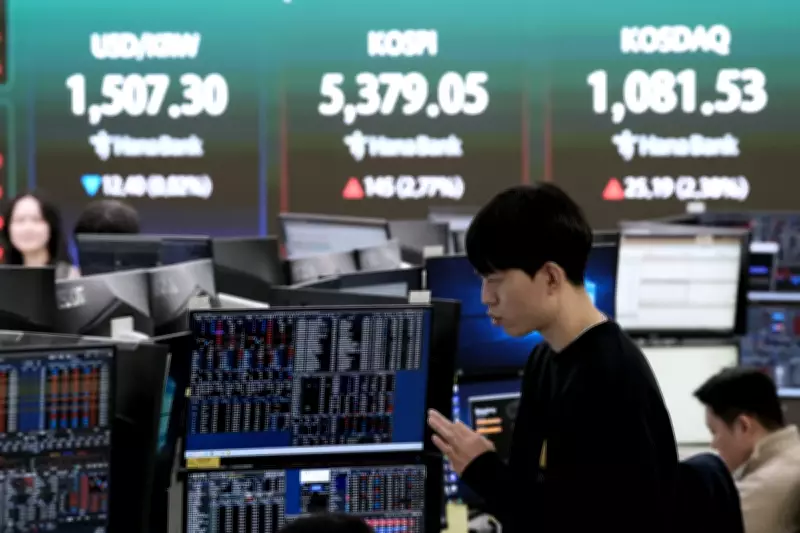
In Asia, the situation presents a nuanced picture. Japan, for instance, depends heavily on access to the Strait of Hormuz for its oil imports and may need to explore alternative routes. Some analysts suggest that Japan and other nations are banking on diplomatic agreements with Iran to facilitate continued transport. Despite these concerns, Japan's benchmark Nikkei 225 gained 0.9% in Friday morning trading, closing at 52,938.62. South Korea's Kospi saw a more robust increase, jumping 2.1% to 5,344.41.
However, not all markets followed this upward trend. The Shanghai Composite index sank 0.5% to 3,899.57. Trading was suspended in several major financial hubs, including Hong Kong, Singapore, Australia, New Zealand, the Philippines, Indonesia, and India, due to the Good Friday holidays, which contributed to thinner trading volumes and heightened caution.
Wall Street Performance and Broader Economic Indicators
In the United States, Wall Street was closed on Friday but concluded its first winning week since the onset of the Iran war. Trading earlier in the week began with declines driven by the surge in oil prices, following U.S. President Donald Trump's late Wednesday vow to continue attacks on Iran without offering a clear timetable for ending the conflict.
Key indices showed mixed results but overall weekly gains:
- The S&P 500 rose 7.37 points, or 0.1%, to 6,582.69, notching a 3.4% gain for the week.
- The Dow Jones Industrial Average fell 61.07 points, or 0.1%, to 46,504.67.
- The Nasdaq composite rose 38.23 points, or 0.2%, to 21,879.18.
Both the Dow and Nasdaq also recorded weekly gains, indicating resilience amid geopolitical uncertainties. In the bond market, Treasury yields remained relatively steady, with the yield on the 10-year Treasury falling slightly to 4.30% from 4.32%.
Currency Movements and Global Implications
Currency trading reflected minor adjustments in response to the market conditions. The U.S. dollar edged up to 159.66 Japanese yen from 159.53 yen, while the euro inched down to $1.1535 from $1.1537. These fluctuations underscore the interconnected nature of global financial markets, where geopolitical events in the Middle East can ripple through oil prices, stock indices, and currency values worldwide.
The ongoing Iran conflict continues to cast a shadow over economic stability, with analysts warning of potential long-term impacts on energy supplies and market volatility. As nations navigate these challenges, the balance between risk and opportunity remains delicate, shaping investor sentiment and policy responses in the weeks ahead.






