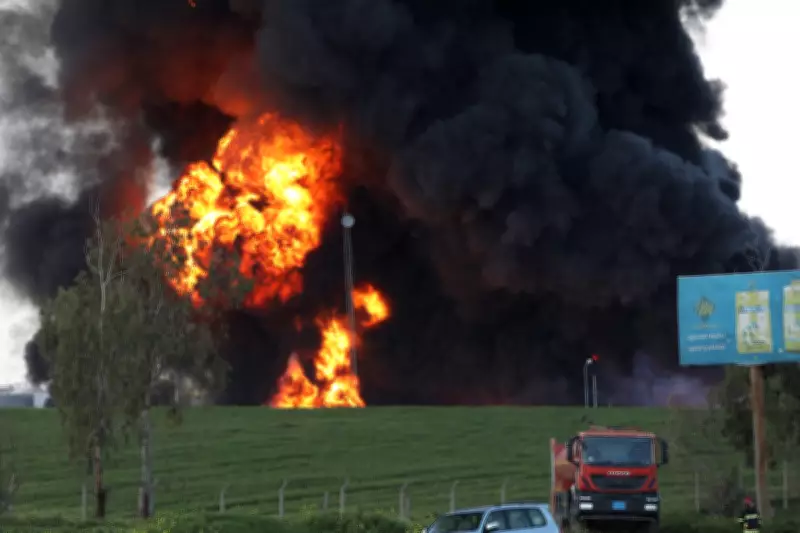
Oil prices experienced a significant surge on Tuesday, driven by mounting investor anxiety as a critical deadline for Iran approaches. President Trump has issued a stark ultimatum, vowing to launch a major assault on Iranian infrastructure if a ceasefire agreement is not secured by 1 am UK time on Wednesday. This looming threat has cast a shadow over global financial markets, prompting cautious trading and heightened volatility.
Market Reactions and Price Increases
Brent crude oil, a key global benchmark, rose by approximately 1.5% to reach 111.4 US dollars per barrel. This represents a staggering 53% increase compared to pre-conflict levels, exacerbating pressures on consumers through sharp hikes in petrol and diesel costs. The ripple effects are being felt across economies, with households and businesses grappling with elevated energy expenses.
Global Stock Market Movements
Financial markets worldwide exhibited a tentative stance in response to the geopolitical tensions. The FTSE 100 index in London opened higher but subsequently declined, reflecting investor uncertainty. Meanwhile, the German Dax index recorded losses, while the French Cac 40 showed modest gains during early trading sessions. These mixed performances underscore the pervasive unease among traders, who are closely monitoring developments for any signs of resolution.

Diplomatic Efforts and Investor Outlook
Despite hopes for a diplomatic breakthrough, recent peace talks have yielded little progress, creating what analysts describe as a 'binary event' for investors. This term highlights the high-stakes nature of the situation, where outcomes are sharply divided between escalation and de-escalation. Traders remain cautiously optimistic but are preparing for potential market disruptions should the deadline pass without an agreement.
The ongoing standoff underscores the fragile interplay between geopolitics and global economics, with oil prices serving as a barometer for international stability. As the deadline nears, all eyes are on diplomatic channels, though the prospect of further conflict looms large, threatening to destabilise markets and escalate energy costs even further.