
Oil prices surged and Asian markets mostly declined on Monday after US President Donald Trump announced a planned blockade of the Strait of Hormuz, following failed ceasefire talks with Iran in Pakistan. The US military confirmed the blockade of all Iranian ports would begin at 5.30 pm local time.
Benchmark US crude jumped 8.7 per cent to $104.95 a barrel, while Brent crude, the international standard, rose 7.4 per cent to $102.23. Oil prices have been climbing since late February, when shipping through the strait stalled due to the war, with Brent rising from around $70 per barrel to over $119 at times.
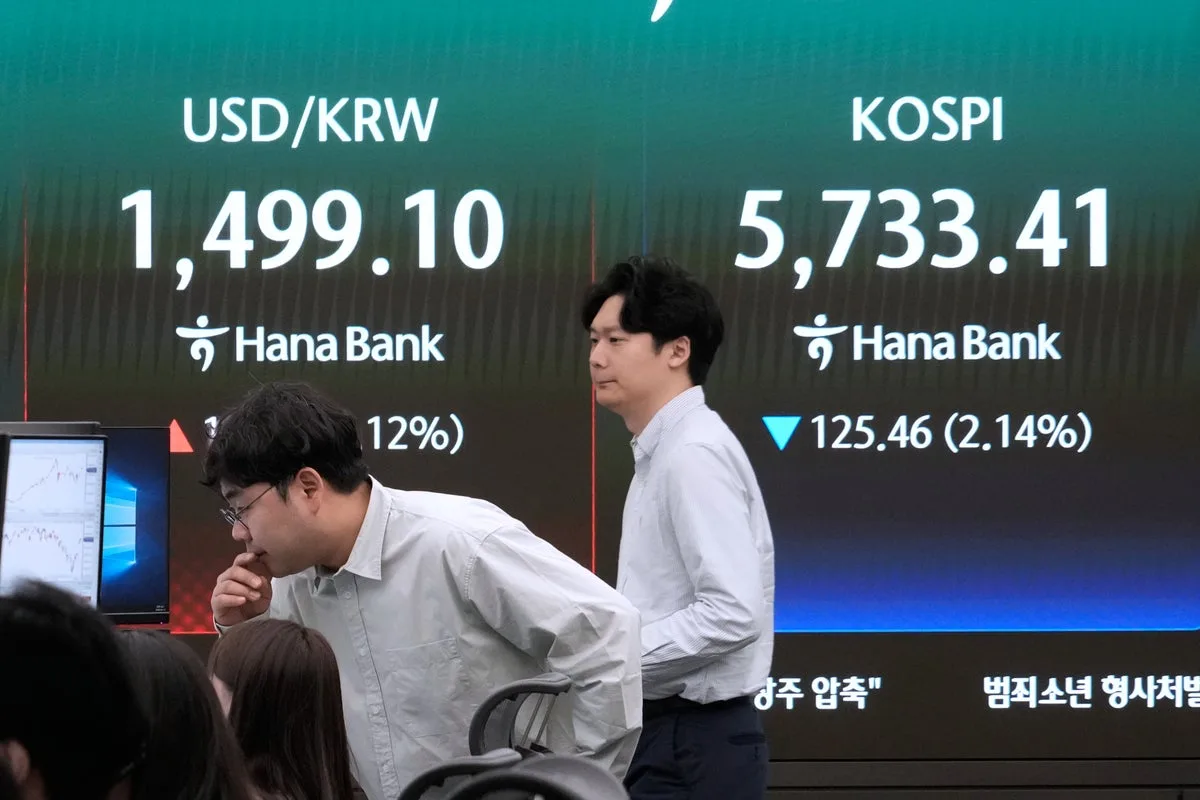
Asian markets reacted negatively, with Japan's Nikkei 225 losing 1.0 per cent to 56,357.40, Australia's S&P/ASX 200 shedding 0.5 per cent to 8,913.50, and South Korea's Kospi dipping 1.1 per cent to 5,795.15. Hong Kong's Hang Seng slipped nearly 1.5 per cent to 25,513.42, while the Shanghai Composite fell 0.2 per cent to 3,976.57.
Analysts expressed concern over the outlook. Neil Newman, Managing Director at Astris Advisory Japan, said: “The outcome of the talks was not really what people were hoping for... As we stand here at the moment, it doesn’t look very nice. Certainly, the oil prices are a big concern.”
Wall Street had ended last week with a second weekly gain, but optimism over the weekend peace talks was shattered by the blockade announcement. The S&P 500 fell 7.77 points to 6,816.89, the Dow dropped 269.23 points to 47,916.57, while the Nasdaq gained 80.48 points to 22,902.89. The yield on the 10-year Treasury rose to 4.32 per cent.
In currency markets, the US dollar strengthened to 159.74 Japanese yen from 159.25 yen, while the euro weakened to $1.1687 from $1.1729.




