Milan Challenges Dubai as Top Destination for Super-Rich Amid Gulf Tensions
Milan Rivals Dubai as Super-Rich Haven with Flat-Tax Regime

Milan Emerges as Premier Destination for Global Elite Amid Geopolitical Shifts

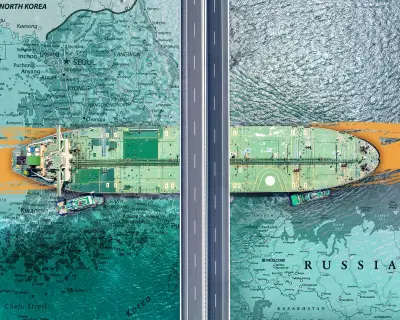
Just over a month ago, Dubai stood as the undisputed destination for affluent Britons seeking a new residence. The city offered the dual allure of tax-free earnings and unparalleled luxury spending across hotels, restaurants, and high-end retail establishments. However, as the United Arab Emirates faces Iranian missile threats, Dubai's carefully cultivated reputation as a sanctuary for the global elite—partly built by emigrant influencers—is beginning to erode. Consequently, super-rich UK nationals are now actively exploring pathways back to Europe, with Milan, Italy's financial powerhouse, rapidly ascending to the top of their relocation lists.

Italy's Flat-Tax Regime: A Compelling Proposition

"Italy offers the most advantageous benefits: a straightforward flat tax combined with an exceptional quality of life," explains Armand Arton, a consultant specializing in assisting multimillionaire and billionaire families with relocation through investment citizenship schemes. "Individuals departing the UAE can readily envision themselves residing in Rome or Milan, both of which function as vibrant, international metropolitan centres."

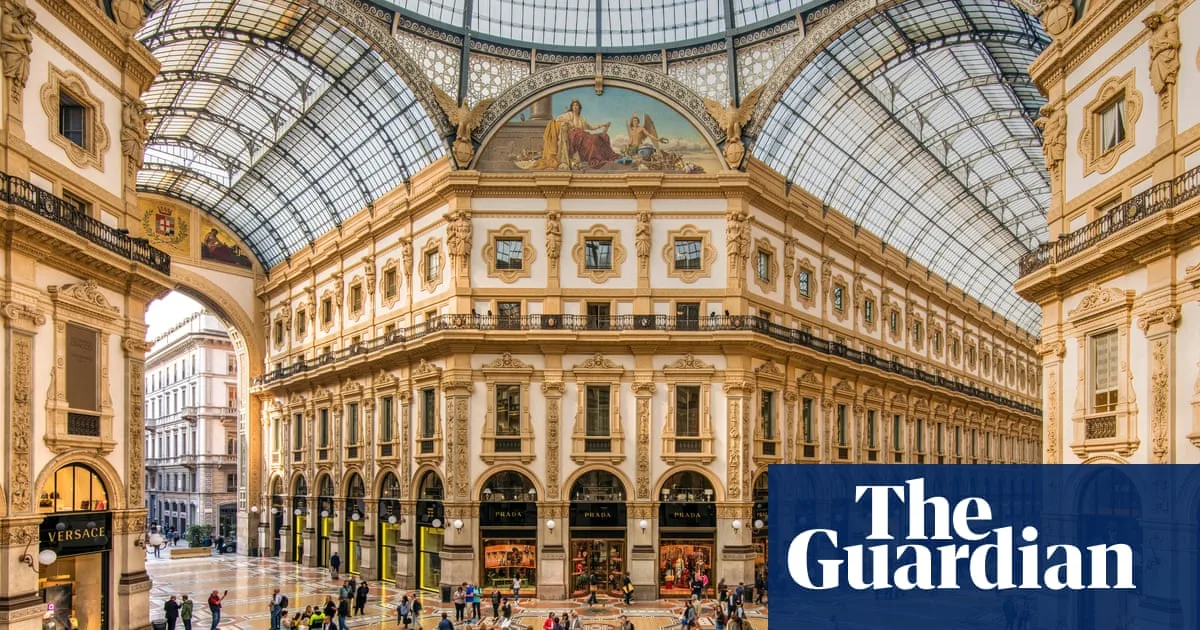
The rationale behind Milan's surging popularity is clear. Already home to some of Europe's wealthiest bankers, lawyers, and investors, the city's appeal has been significantly bolstered by Italy's flat-tax regime. Under this system, foreign residents can opt to pay a fixed annual sum of €300,000 (approximately £259,620) on all overseas income—a negligible amount for the world's ultra-wealthy.

Wide Pickt banner — collaborative shopping lists app for Telegram, phone mockup with grocery list

"Milan has always possessed an international character, but the dynamic is evolving," notes Diletta Giorgolo, who manages Sotheby's residential real estate office in Italy's economic and fashion capital. "Our special tax regime has been in place since 2017, but the UK's decision to terminate its non-dom status triggered a substantial wave of new buyers arriving in Milan."

As a fresh cohort of wealthy migrants directs its attention toward the city, a pivotal question arises: Can Milan establish itself as the new permanent home for the ultra-wealthy?

The 'Empty London' Phenomenon and Italy's Strategic Appeal

The conflict in the Gulf has already prompted an exodus of affluent UK nationals, though not all are inclined to return to Britain. For many Europeans, Italy represents the most strategic alternative. In stark contrast to the UK's increasingly stringent regulations, new Italian residents who have not paid taxes in the country for at least nine of the preceding ten years are exempt from taxation on their foreign income, in exchange for the €300,000 annual flat tax. They are subsequently taxed on Italian income and capital gains from investments within five years of selecting the flat-tax option.

Marc Acheson, of the financial planning firm Utmost Wealth Solutions, observes that Italy's attractiveness has grown proportionally as the UK has become relatively less appealing to the super-rich. The discourse in Milan is so pronounced that the Italian rule is colloquially referred to as "svuota Londra" or "evacuate London."

"Although Italy introduced its flat-tax regime in 2017, initially set at €100,000, it did not immediately attract a flood of applicants," Acheson remarks. "The abolition of the non-dom regime genuinely spurred interest, coinciding with Portugal tightening its own regulations."

"The regime is straightforward and highly favoured," Acheson adds. "Italy is a magnificent country, and Milan boasts a robust financial services sector—many attributes that render London attractive are equally present in Milan."

Roberto Bonomi, a partner at the law firm Withers, further notes that Italy has successfully shed its reputation as a politically unstable destination. Giorgia Meloni, the populist prime minister in office since 2022, initially arrived with overtly far-right policies but has since moderated her ideological stance.

"Initially, there was considerable scepticism," Bonomi states. "However, after nine years, we have demonstrated that it is a stable system. Clients are no longer apprehensive about Italy—and recent global events illustrate that uncertainty is ubiquitous."

Pickt after-article banner — collaborative shopping lists app with family illustration

La Dolce Vita at a Premium: Economic and Social Transformations

Approximately 5,000 individuals have enrolled in Italy's flat-tax scheme to date, according to estimates by Maisto e Associati, an Italian law firm specializing in taxation. Initially, many applicants were Italians previously based in London, explains Marco Cerrato, a partner at the firm.

"They typically worked in banking, insurance, asset management, or for hedge funds. Having spent the past decade in the UK, they sought to return to Italy for both personal and tax-related reasons," he says.

"Subsequently, post-pandemic, more individuals began arriving, leading to an exponential increase, particularly after the Conservative Party announced the abolition of the non-dom agreement."

Another wave of interest is now emerging from the Gulf region, Arton notes. "Italy processes applications swiftly. Consequently, it primarily attracts individuals departing the region who wish to relocate to Europe, desiring both the flat-tax benefit and the enhanced quality of life."

The influx of this new, affluent community is already exerting upward pressure on Milan's property market. Research by the estate agent Knight Frank indicates that property prices have surged by 38% over the past five years.

Milan has recently surpassed Venice as Italy's most expensive city, with an average price of €5,171 per square metre in November 2025, according to the Italian property portal Idealista. Price increases are even more pronounced in highly sought-after districts such as Sant’Ambrogio, Brera, San Marco, or the Cinque Vie near the Duomo.

Giorgolo estimates that the market now hosts between 30% and 40% more international buyers compared to just two years ago.

"Previously, international buyers sought secondary homes in Milan or perhaps Lake Como, but now they are pursuing residency in Italy. They prioritize proximity to reputable international schools and major airports."

Additional Incentives and Future Prospects

Other tax incentives include "Il rientro dei cervelli" ("Return of the brains"), which permits new or returning Italian residents meeting specific criteria to pay tax on only 50% of their income for five years. Some residents may qualify for even more substantial reductions.

However, the critical question remains whether there is a ceiling on Italy's flat-tax regime, Bonomi points out. The rate has escalated from €100,000 in 2017 to €200,000 in 2024, reaching €300,000 at the beginning of this year. "The Italian government expressed its intention to increase the flat tax to foster national development—we aim to avoid unfair competition with other nations."

Questions persist regarding the extent to which Italy can leverage this advantage. Last year, former French prime minister François Bayrou accused Italy of "tax dumping," allegations that Meloni dismissed as "utterly baseless."

Meanwhile, Milan is undergoing rapid transformation. Similar to Dubai, galleries, members' clubs, and luxury hotels are proliferating. The Italian government reduced VAT on sales and imports of artworks from 22% to 5%, one of Europe's lowest rates, prompting galleries like Thaddaeus Ropac to expand their presence in the city. In 2024, the upscale Via Monte Napoleone overtook New York's Upper Fifth Avenue as the world's most expensive shopping street. Although it ceded the top position to London's Bond Street in April, its pedestrianisation in May positions it to reclaim the title this year.

Brands are following this new wave of wealth, including new outposts for private members' clubs Casa Cipriani and Soho House. Similar shifts are unfolding in Rome, Giorgolo adds, with a Rosewood hotel and a Four Seasons hotel scheduled to open in 2026 and 2027, respectively.

"The expatriate community has instigated numerous changes in both Milan and Rome," she says. "Milan has always been an international hub during major events like fashion week, but now it is about expats genuinely residing here and reshaping the city throughout the year."

Nevertheless, whether Milan can ultimately dethrone Dubai as the global elite's central hub remains uncertain.

"I am optimistic that Dubai will recover from the current security-related doubts," Arton concludes. "It may no longer satisfy everyone's criteria, but certain groups will continue to find Dubai highly attractive, as few other global locations offer a comparable blend of opportunity and quality of life."