
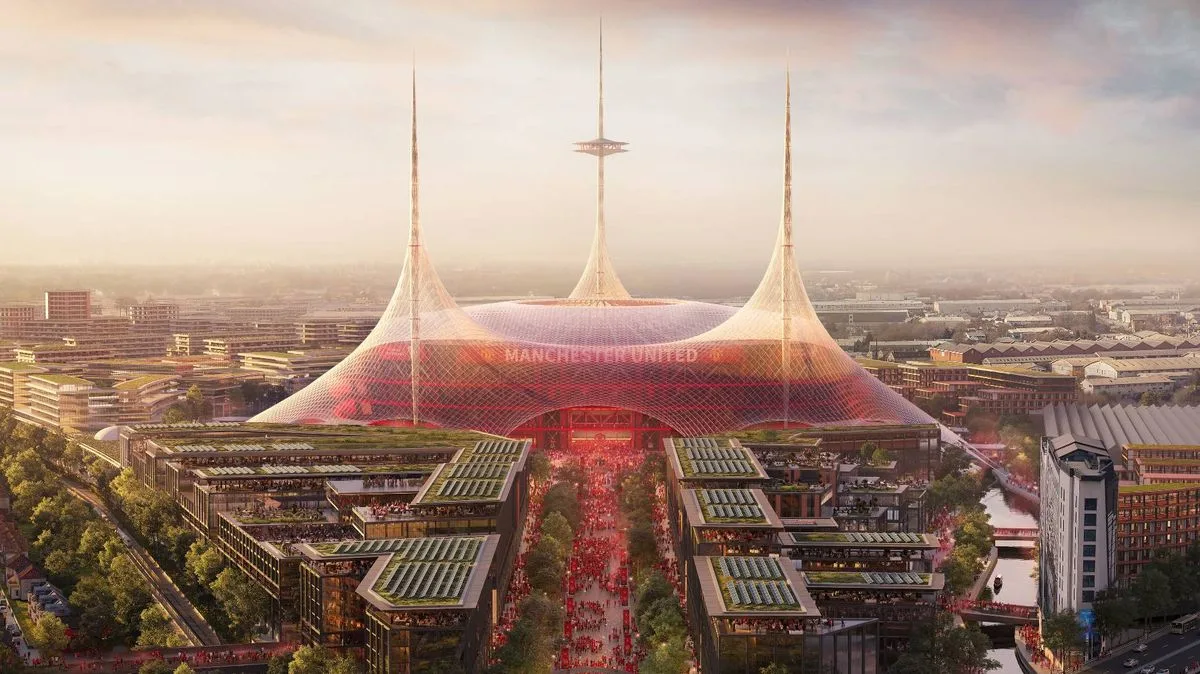
Manchester United have issued a brief update on their plans to build a new 100,000-seater stadium, as the club released its third-quarter financial results. The results showed an operating profit of £37.7 million, a significant improvement from the £3.2 million loss recorded in the same period last year, attributed to cost-cutting measures and improved Premier League performances.
The club stated: 'Work continues behind the scenes on our ambition to build a new 100,000 seater stadium.' However, progress depends on securing a deal to acquire the rail yard surrounding Old Trafford, currently owned by Freightliner, with negotiations stalled.
Despite the positive financial figures, United remain burdened by nearly £1.3 billion of debt, including borrowings on a revolving credit facility, legacy debt from the Glazer takeover, and outstanding transfer fees. The estimated cost of the new stadium is around £2 billion.
Sir Jim Ratcliffe's earlier suggestion of taxpayer funding was rejected by Andy Burnham, and United confirmed two months ago that the project would be privately financed. A spokesperson said: 'Our proposed new stadium will be financed privately, and we continue to have positive conversations with potential investors and all stakeholders.'
United plan to sell naming rights for the new ground, with estimates suggesting a 10-year deal could generate around £150 million. Omar Berrada noted: 'At this stage, all the options are open... the additional revenues will help finance the talent that the fans will see on the pitch.'




