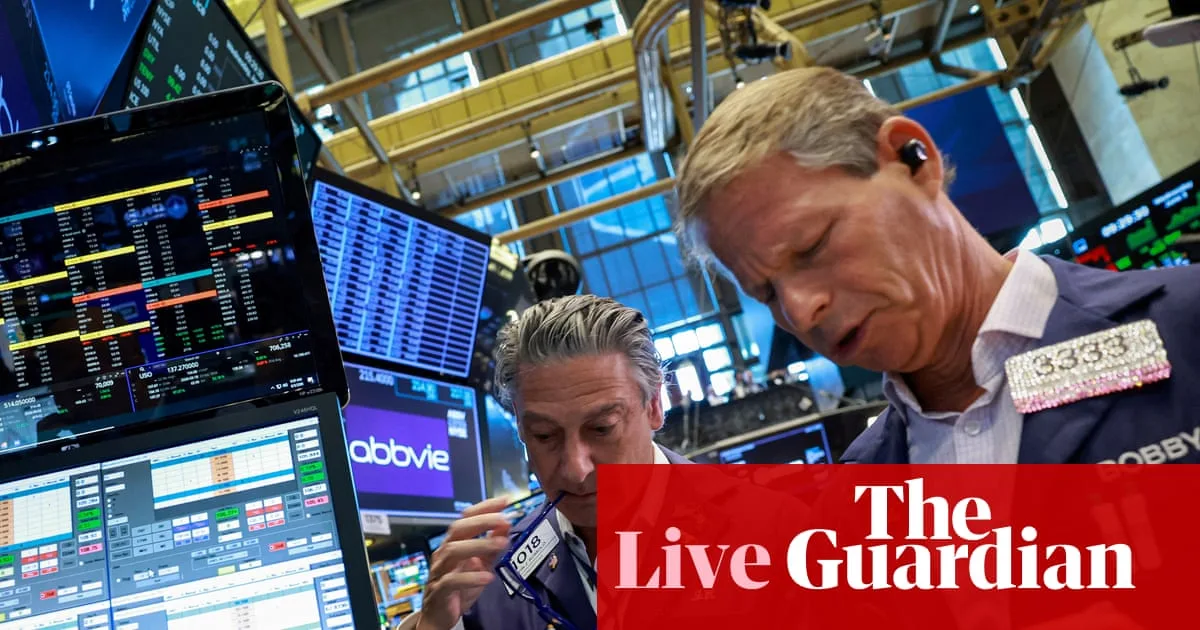
Global Stock Markets Experience Sharp Declines Amid Escalating Middle East Conflict
Financial markets have been thrown into turmoil for a second consecutive day as the war in the Middle East intensifies, triggering a surge in oil and gas prices and causing significant declines in global stock indices. The situation has dramatically reduced expectations for an interest rate cut by the Bank of England later this month, casting a shadow over economic stability.
London and Asian Markets Hit Hard by Economic Uncertainty
In London, the FTSE 100 index plummeted by approximately 280 points to 10,501 on Tuesday morning, marking a 2.6% drop. This decline positions the index for its worst performance in 11 months, reminiscent of the market shock following Donald Trump's tariff announcements in April 2025. Nearly all stocks within the index have fallen, creating a bleak backdrop for Chancellor Rachel Reeves's spring forecast scheduled for 12.30pm GMT.
Asian markets have not been spared from the downturn. Japan's Nikkei index fell by 3.1%, while South Korea's Kospi index experienced a more severe plunge of 7.2%. These declines reflect widespread investor anxiety over the geopolitical tensions and their potential economic repercussions.
Energy Prices Skyrocket, Threatening Inflation Control Efforts
The conflict has led to a sharp increase in energy prices, with Brent crude oil rising by 5.5% to $82.02 per barrel. Meanwhile, the month-ahead UK gas price surged by 30% to 148p a therm, following a 44% increase on Monday. This spike has driven gas prices to almost double their levels from last week, reaching a three-year high.
Economists warn that these soaring energy costs could jeopardise Chancellor Reeves's plans to combat inflation and stimulate sluggish UK economic growth. The rise in oil and gas prices is expected to push UK inflation higher, after it had recently fallen to 3% in January from 3.4% in December.
Interest Rate Cut Prospects Diminish Rapidly
As the conflict expands across the region, with Israel launching new attacks on Tehran and Beirut, financial markets have adjusted their expectations for monetary policy. Money markets now indicate only a 29% chance that the Bank of England will lower interest rates at its next meeting on 19 March, a significant drop from 80% just last week.
This shift is a disappointment for borrowers anticipating cheaper interest rates and poses a challenge for Reeves, who has credited herself with six rate cuts since August 2024 and pledged to address the cost of living crisis. Additionally, UK government borrowing costs have risen, with yields on two-year bonds increasing by 13.5 basis points, 10-year yields by 11 basis points, and 30-year yields by 9 basis points.
Global Economic Impact and Safe Haven Assets
The pound has weakened to its lowest level against the US dollar in nearly three months, falling 0.8% to $1.33. In other markets, Bitcoin declined by 2.5%, and gold, which had surged on Monday as investors sought safe haven assets, dropped by 1.1% to $5,266 per ounce.
Internationally, expectations for US interest rate cuts have also diminished. Swaps markets now price in only 46 basis points of cuts by the US central bank this year, down from 61 points at the end of last week, suggesting fewer than two quarter-point reductions from the Federal Reserve.
Expert Warnings and Long-Term Concerns
Jess Ralston, head of energy at the Energy and Climate Intelligence Unit, highlighted the UK's vulnerability, noting that the energy crisis commission had warned of inadequate preparedness for another energy crisis. She expressed concerns over how homes and businesses, still recovering from previous gas crises, might be affected in the coming weeks.
Jemma Slingo, a pensions and investment expert at Fidelity International, cautioned that persistently high oil and gas prices could have inflationary effects worldwide and disrupt plans for interest rate cuts. The International Monetary Fund added that disruptions to trade, economic activity, and financial market volatility due to the Middle East crisis contribute to an already uncertain global environment, with the ultimate impact dependent on the conflict's duration and scale.






