

FTSE Sell-Off Eases as Middle East Conflict Reshapes Interest Rate Expectations
Stock prices in London closed lower on Monday, but the FTSE 100 steadily pared earlier losses throughout the trading session as investors carefully mulled the profound impact of the ongoing war in the Middle East on global inflation dynamics and future interest rate trajectories.
Market Performance and Key Indices
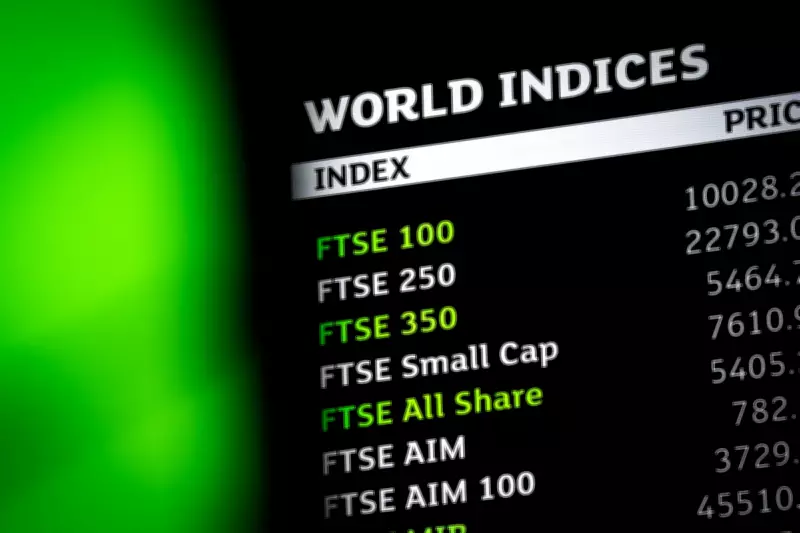
The FTSE 100 index closed down 35.23 points, representing a decline of 0.3%, settling at 10,249.52. The FTSE 250 experienced a more pronounced drop, ending down 357.65 points, or 1.6%, at 22,143.30, while the AIM all-share index closed down 17.46 points, a significant 2.2% decrease, finishing at 767.24.
In European equities on Monday, the Cac 40 in Paris closed down 1.0% and the Dax 40 in Germany ended 0.8% lower, reflecting broader continental concerns. Across the Atlantic, stocks in New York were also lower, with the Dow Jones Industrial Average down 0.8%, the S&P 500 index 0.4% lower, and the Nasdaq Composite down marginally.

Currency Movements and Geopolitical Developments
The pound climbed to 1.3396 US dollars on Monday afternoon from 1.3387 dollars at the equities close on Friday. The euro stood slightly lower at 1.1593 dollars from 1.1597, indicating subtle shifts in currency markets amid the uncertainty.
Developments in the Middle East were sharply in focus on Monday, as Iran carried out retaliatory strikes against oil-producing Gulf nations, escalating regional tensions. Turkey confirmed a second ballistic missile was shot down by NATO defences in Turkish airspace, as Washington urgently urged all of its citizens to leave south-east Turkey over mounting security concerns.
So far, Turkey appears to have been spared direct conflict involvement, according to AFP reports, despite the fact that US troops are stationed at several of its bases. "A ballistic munition launched from Iran and entering Turkish airspace was neutralised by NATO air and missile defence assets in the eastern Mediterranean," Turkey’s defence ministry stated.
Commodity Prices and Inflation Fears
Brent oil was higher at 100.02 dollars a barrel on Monday afternoon from 90.85 late on Friday, though it had traded as high as 119.25 dollars a barrel earlier in the day, showcasing extreme volatility. The panic had eased by Monday’s close, but analysts noted that the underlying reasons for the overnight move remain firmly in place.
Fears of inflation triggered a sharp sell-off in gilt markets, while Ebury analyst Matthew Ryan observed that swap markets have moved from fully pricing in two Bank of England cuts in 2026 to now seeing a "non-negligible possibility of a hike."
"At the very least, we think that additional [Monetary Policy Committee] interest rate cuts are completely off the table for now. Unlike in the euro area, inflation in Britain is already comfortably above target, and the liberalisation of UK markets, the push away from domestic oil production and a limited storage capacity ensure a rapid pass-through from higher oil prices to household energy bills," Mr Ryan said.
"Combine these risks with Prime Minister Starmer’s hesitant and indecisive handling of the Iran conflict, and it may be tough for the pound to sustain its gains versus the euro."
Bond Yields and Corporate Highlights
The yield on the US 10-year Treasury slimmed to 4.13% on Monday from 4.16% on Friday. The yield on the US 30-year Treasury narrowed to 4.74% from 4.78%, indicating a slight easing in long-term borrowing costs.
Back in London, shares in Pearson climbed 0.6% as it announced it has engaged a subsidiary of Morgan Stanley to facilitate the second and final tranche of its £350 million share buyback programme. The London-based education materials publisher launched the buyback in late January, with Citigroup Global Markets Ltd conducting the first half.
Pearson at the time said it expected this first tranche to be completed by May 21, but on Monday, Pearson revealed that it has entered into updated arrangements with Citi, under which it now expects the first tranche to conclude on or before April 2. Pearson expects the second tranche, under which it intends to bring the buyback’s total value to £350 million, to finish on or before May 29.

Additionally, Pearson said it has entered 2026 with momentum and confidence in delivering its outlook for this year and beyond, standing by its outlook as detailed in its 2025 report.
FTSE 250 Performance and Other Commodities
On the FTSE 250 index, Clarkson climbed 3.4%. The shipping services provider said market sentiment has been "positive and trading has been good" so far in 2026 after a tough 2025 which saw sales and profits drop.
The London-based firm reported pretax profit fell 23% to £86.7 million in 2025 from £112.1 million the year prior, as revenue dropped 4.5% to £631.4 million from £661.4 million. Clarkson stated that in 2026 to date, momentum from the fourth quarter of 2025 has continued, and market sentiment has been "positive and trading has been good."
At the end of 2025, the forward order book for invoicing in 2026 was 244 million US dollars versus 231 million dollars at the beginning of 2025. Clarkson said the forward order book reflects new building contracts, long-term time charters and multi-year contract income, "providing a good platform for future earnings visibility."
Gold fell to 5,104.20 US dollars an ounce on Monday from 5,142.35 dollars at Friday’s close, showing a retreat in safe-haven demand as the trading day progressed.
Biggest Movers and Economic Calendar
The biggest risers on the FTSE 100 were:
- Metlen Energy & Metals, up 1.40p at 35.60p
- Shell, up 74.00p at 3,207.00p
- BP, up 11.10p at 510.00p
- BAE Systems, up 45.00p at 2,259.00p
- Babcock International, up 23.00p at 1,391.00p
The biggest fallers on the FTSE 100 were:
- Persimmon, down 71.00p at 1,223.50p
- Intertek, down 190.00p at 3,844.00p
- Segro, down 33.00p at 724.80p
- British Land, down 15.00p at 365.40p
- JD Sports Fashion, down 2.90p at 73.54p
Tuesday’s economic calendar will see Japanese GDP data overnight, before trade balance data for Germany and France and existing home sales figures for the United States. On Tuesday’s UK corporate calendar are full year results for housebuilder Persimmon and thermal energy and fluid technology firm Spirax, among others, which will be closely watched for further market direction.





