

Electric Vehicle Price Reductions Conceal Significant Hidden Costs
Electric automobiles have suddenly never appeared more affordable, with prices being dramatically reduced by thousands of dollars across numerous models. In certain instances, these substantial cuts are eliminating more from the purchase price than the previous $7,500 federal tax credit ever accomplished. This development coincides perfectly with soaring gasoline prices, making the prospect of abandoning traditional fuel pumps more attractive than ever before.
Aggressive Discounts Flood the Market
Tesla is currently offering $1,400 off its popular Model 3, while rival manufacturers are pushing far more substantial incentives. Major automotive brands including Kia, Toyota, and Hyundai are dangling exceptionally attractive deals valued at thousands of dollars. These promotions reach as high as $18,300 in lease support and up to $10,000 in financing incentives specifically designed to capture buyer attention. For consumers contemplating the switch to electric mobility, this appears to be the perfect moment to make that transition.
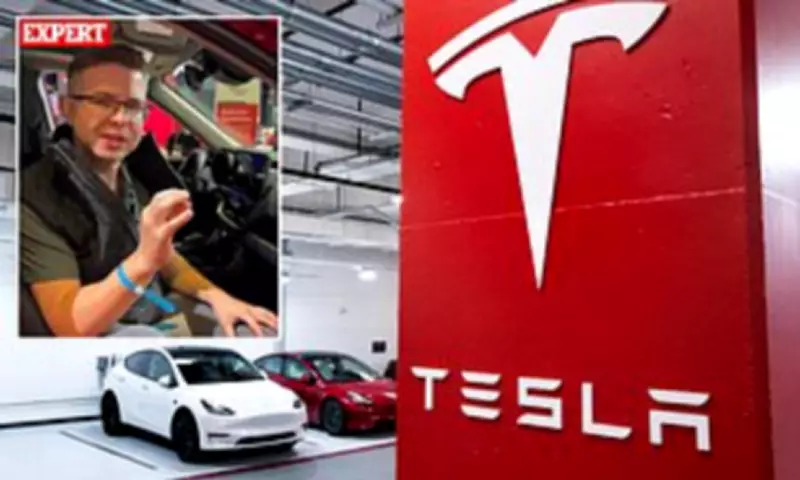
However, one industry expert with extensive insider knowledge argues that this is precisely why potential buyers should exercise extreme caution. According to his analysis, these apparent 'bargains' could ultimately cost purchasers far more than they initially anticipate.

Industry Insider Sounds Alarm Bells
Tomislav Mikula, a 33-year-old automotive specialist, understands the car industry thoroughly after dedicating five years to working at a dealership. He subsequently leveraged that valuable experience in both sales and finance to establish Delivrd, an innovative car-buying service that negotiates favourable deals directly on behalf of consumers. Mikula currently asserts that the genuine value simply isn't present in today's electric vehicle market.
'These cars are fundamentally overpriced - and consequently, nobody is purchasing them,' he explained in an interview with the Daily Mail. 'The only viable method to shift this inventory is through implementing heavy discounts and aggressive promotional offers.'
Mikula specifically cautioned buyers to maintain a healthy wariness, emphasising that these seemingly irresistible 'bargains' might eventually cost purchasers significantly more than they reasonably expect. Once the valuable $7,500 federal tax credit was terminated in December, electric vehicle registrations plummeted by 41 percent in January compared to the same period one year earlier, according to comprehensive data released by S&P Global Mobility.
Understanding the Underlying Market Dynamics
Mikula strongly urged American consumers to carefully consider why electric vehicles are proving so remarkably difficult to sell initially. Many models remain substantially overpriced and suffer from alarmingly steep depreciation rates, effectively wiping out their residual value within just a few short years of ownership. He warned that this problematic situation is frequently reflected in noticeably bloated manufacturer inventories.
'If an automotive company is sitting on a substantial volume of unsold inventory, that actually represents a significant red flag for informed buyers,' Mikula stated clearly. He elaborated that excess supply typically signals fundamentally weak consumer demand, thereby forcing manufacturers to roll out progressively deeper discounts and increasingly stronger incentives simply to move vehicles off their lots.
'That is typically when substantial incentives appear in the marketplace initially,' he added. This economic reality also helps explain convincingly why certain premium brands rarely need to offer promotional deals at all. 'That is precisely why you don't observe meaningful incentives on respected brands like Lexus or Toyota - they are selling consistently well,' Mikula noted. 'The manufacturers offering big discounts are usually those struggling desperately to move their excess inventory.'

Quality Concerns and Market Realities
Mikula identified Chevrolet as a prime example of a manufacturer that pushed electric vehicles to market too rapidly, attempting to align with prevailing industry trends, and is now paying the financial price by struggling intensely to sell their accumulated supply. Unless customers are specifically shopping for luxury electric vehicles, such as those produced by BMW and Lucid, quality will remain a critically hot topic, as some automakers rushed electric models to market amid considerable political pressure and aggressive government incentives promoting green transportation.
'Chevrolet represents a good example of that problematic dynamic,' Mikula observed. 'They pushed electric vehicles out to market extremely quickly, and now they are struggling significantly to sell them effectively.' He explained that the current electric vehicle market constitutes a genuine 'mixed bag' in terms of overall quality and reliability. 'Consumers absolutely must conduct thorough research. Not every electric vehicle is built identically, and certainly not every model is worth the asking price.'
Available data suggests that charging electric vehicles conveniently at home can be approximately half as expensive as filling a traditional car with petrol at the pump, alongside being considerably easier to maintain through routine mechanic visits. However, the seemingly irresistible discounts may not represent the genuine bargains they initially appear to be.
Manufacturer Strategies and Consumer Advice
'When examining manufacturers and incentives like the expired tax credit, there are essentially two distinct camps operating,' Mikula clarified. 'First, numerous manufacturers pre-purchased substantial inventory when that valuable tax credit remained available. Currently, they are applying those financial benefits strategically to lease agreements, because leasing still allows them to structure deals in a manner that effectively mimics that previous credit.'
'The second group - and this constitutes the majority presently - involves vehicles that are simply overpriced fundamentally. Nobody is buying them at those elevated prices, so the only viable method to move that stagnant inventory is to discount them heavily and aggressively.' Now, stuck with a troublesome surplus of unsold inventory, manufacturers are scrambling urgently to move vehicles, offering aggressive incentives across their model ranges.
Dealerships, meanwhile, are largely holding firm on pricing - waiting patiently for manufacturers to intervene with incentives rather than cutting prices themselves independently, since they bear no direct responsibility for production or initial pricing decisions. Consequently, Mikula advises buyers to maintain extreme caution. Electric vehicles lacking strong manufacturer incentives are likely substantially overpriced and not worth purchasing at current levels.
As he succinctly put it: 'If you are not observing strong incentives on an electric vehicle model, I would strongly recommend against purchasing it.'
Alternative Recommendations
Instead of committing to a pure electric vehicle, Mikula suggested that customers will obtain the best value for their money by selecting a hybrid model. 'Hybrids are absolutely worth considering seriously right now - not necessarily plug-in hybrids, but standard hybrid models.' He emphasised that hybrid technology has improved dramatically to the point where, in numerous practical cases, it outperforms traditional gasoline-powered cars in terms of efficiency and overall value.





