
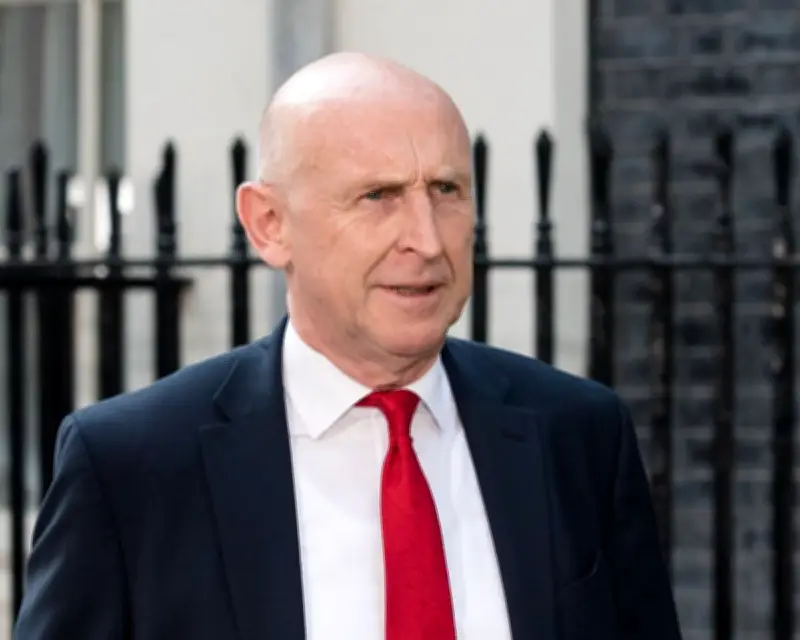
Shares in defence companies have risen sharply after Andy Burnham appointed John Healey as chancellor, prompting hope among investors of increased spending on suppliers to the military.
Market Reaction
Defence stocks were among the biggest risers on the FTSE 100 on Tuesday morning after the former defence secretary was announced as chancellor after markets closed on Monday. Babcock International rose 7%, BAE Systems was up 3% and Rolls-Royce increased nearly 2% on the FTSE 100. On the FTSE 250, QinetiQ rose nearly 4%.
Investors hope Healey will use his new position to increase defence spending – possibly though issuing “war bonds”, a form of borrowing allocated only for the military that he has previously advocated for in government.
Healey's Background
Healey resigned last month in a row over defence spending, accusing Keir Starmer and his chancellor, Rachel Reeves, of putting the country’s security at risk and arguing that a long-awaited investment plan fell well short of what was required.
But Chris Beauchamp, the chief market analyst at the broker IG, said that Healey’s appointment would not necessarily lead to an immediate windfall for defence. He said: “As chancellor, he will have many competing demands, and won’t just be the MoD’s man in No 11. His experience made him an obvious candidate for the role, and he represents a middle way between [Ed] Miliband and [Shabana] Mahmood, but it will not be easy to find lots more cash for defence, especially when the new PM is so busy making broad spending commitments in other areas.”
Broader Economic Impact
UK government bonds were relatively unmoved and sterling was up slightly against the dollar on Tuesday. The yield on the 10-year gilt is about one basis point lower, though crucially still above the 5% level at 5.03%. Bond market investors have been watching Burnham’s statements carefully amid expectations he could run a looser approach to public finances than Keir Starmer and Rachel Reeves.
The new prime minister told reporters in the Downing Street garden on Monday that he could consider utilising “flexibility” in the fiscal rules to bolster public investment, in comments read by some investors as a signal for higher borrowing.
Official figures released on Tuesday showed that the UK government borrowed less than expected in June, easing pressure on the gilt market. Separately, the government announced plans to reduce household electricity bills by an average of £45 a year from October, a policy expected to cost £850m this financial year. Healey is expected to outline more long-term action to bring down living costs at the budget later this year. There has been speculation about reducing the cap on bus fares and temporarily freezing rents in the private sector.




