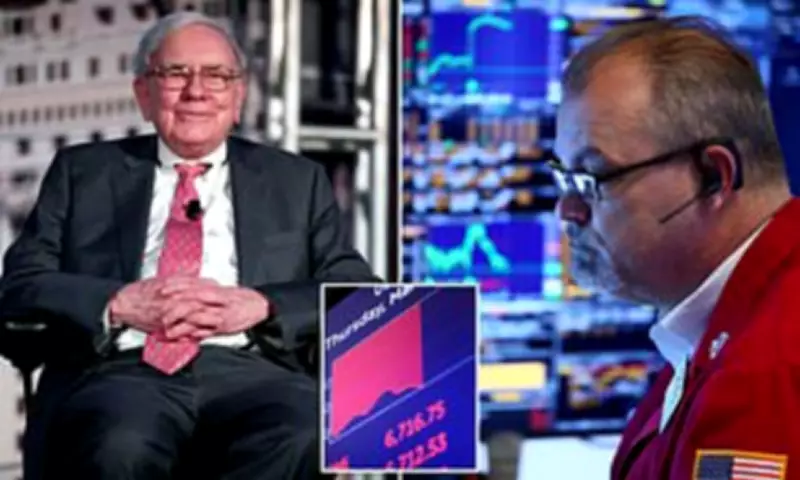
Berkshire Hathaway's Massive $400 Billion Cash Reserve Alarms Analysts
Warren Buffett's Berkshire Hathaway has been accumulating a staggering $400 billion cash pile for an unprecedented 22 months, while quietly selling more stocks than it purchases. This enormous war chest, built under Buffett and his deputies Ted Weschler and Todd Combs, is substantial enough to acquire approximately 480 companies within the S&P 500 index.
Market Vulnerability and Geopolitical Tensions
The conglomerate's massive cash reserve has triggered significant concerns among financial analysts, who interpret it as a signal that Berkshire views current stock prices as overvalued and anticipates potential market vulnerability. These worries have intensified against a backdrop of rising geopolitical tensions with Iran, with JPMorgan CEO Jamie Dimon warning that escalating oil and commodity prices could drive up living costs and maintain elevated interest rates, just as American consumers were hoping for economic relief.
New CEO Greg Abel's Strategic Shift
Greg Abel, who succeeded Warren Buffett as Berkshire Hathaway's CEO at the beginning of this year, has quietly initiated a strategic shift by restarting share buybacks. Rather than seeking external bargains across the broader market, the $1.1 trillion conglomerate—spanning insurance, railroad, and industrial sectors—is choosing to invest in itself through share repurchases.

In an unusual move toward transparency, Berkshire disclosed this buyback activity, marking the first such action since May 2024. The company typically does not announce when it repurchases shares, making this disclosure particularly noteworthy.
Abel's Vision for Share Repurchases
In his inaugural annual letter as CEO, the 63-year-old Abel articulated his perspective on share repurchases as a crucial method for deploying the company's capital, alongside traditional investments in other stocks or corporate acquisitions. He explained that these purchases enable shareholders to 'own an incrementally larger piece of Berkshire's businesses, without deploying any additional capital of their own.'
Earlier this year, Abel separately revealed that he personally purchased $15.3 million in Berkshire shares, telling CNBC he plans to continue this practice annually. This substantial investment, representing most of his expected after-tax earnings, was intended to demonstrate his 'absolute alignment' with shareholders' interests.
'I'm committed to doing this every year going forward,' Abel stated. 'We'll file our 10-K, I'll write the letter. And after the 48-hour cooling-off period, I'll purchase $15.3mn next year, whatever it is, after tax dollars.'
Strategic Implications of Share Buybacks
Share repurchases represent a method to return value to shareholders without undertaking riskier, debt-financed acquisitions. This approach can signal that top management anticipates steady earnings even during economic turbulence. Following a policy revision ahead of Abel's leadership transition, Berkshire Hathaway now permits Abel to initiate buybacks after consulting with Buffett, despite Buffett's announcement last May that he would step aside as chief executive.
Buffett's endorsement of this strategy is particularly significant given his historical discretion regarding buybacks, suggesting he views Berkshire's own stock as a secure investment despite broader market uncertainties.
Buffett's Market Influence and Legacy
Warren Buffett's investment decisions have long been scrutinized by both Wall Street professionals and individual investors, often triggering substantial market movements as capital follows his lead. For instance, when Buffett increased his stake in five Japanese trading houses in early 2025, their stock prices surged dramatically. Similarly, in late 2024, Berkshire's $563 million acquisitions in Occidental Petroleum, Sirius XM, and VeriSign prompted significant price increases.
Conversely, Buffett's divestments have negatively impacted stocks, as demonstrated in February 2025 when filings revealed he sold shares of healthcare company DaVita, causing an immediate 11 percent decline.

In his final annual letter as CEO released in November, Buffett announced he was 'going quiet' after nearly six decades leading Berkshire. Under his direction since 1965, Berkshire Hathaway has dramatically outperformed the S&P 500, cementing his legacy as one of history's most successful investors.