

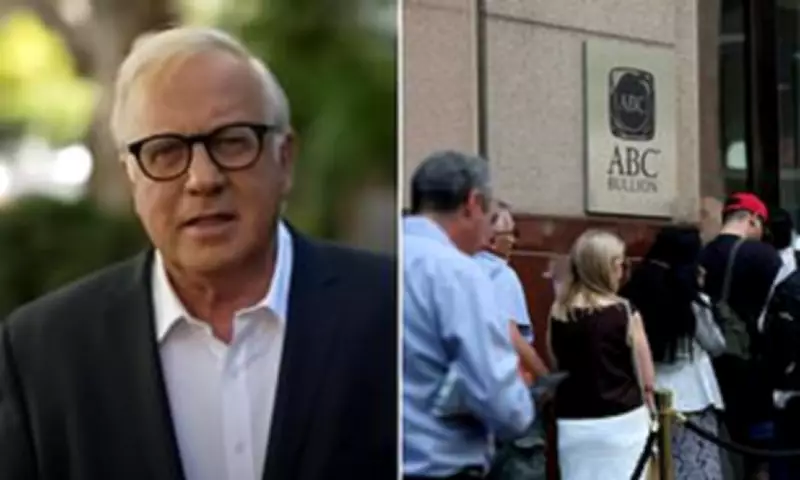
Australian investors who formed lengthy queues outside the nation's largest gold bullion stores earlier this year, eagerly seeking to purchase a single gleaming ounce, are now grappling with severe buyer's remorse. In a harsh market reversal that caught numerous hopeful investors off guard, gold on Monday plummeted to its lowest level in four months, pulling silver down with it as it crashed to a three-month low.
The Painful Numbers Behind the Plunge
The statistics illustrate a distressing scenario. Gold soared to an unprecedented record of $5,595 per ounce on January 29, but is currently trading at approximately $4,417, representing a decline of roughly 21 percent from its zenith. Silver has experienced an even more severe fall. After reaching a peak of $121.64 on January 29, it now hovers near $69, marking a drop exceeding 43 percent from its historic high.
A Rush to Buy at the Peak
Throughout Australia, purchasers lined up outside bullion dealers and coin shops as gold and silver escalated to record levels, driven by anxieties regarding global conflict, persistent inflation, and volatile market fluctuations. However, it now appears many entered the market precisely at its peak.

A Dramatic Shift in Market Psychology
ABC finance commentator Alan Kohler stated that the shocking decline underscores a profound transformation in the psychology of precious-metal markets. He explained that traditionally, gold and silver are perceived as 'safe' assets—investments individuals flock to during wars, recessions, or international crises because they typically retain value when other assets deteriorate.
'In the second half of last year gold and silver became speculative assets which flipped the normal script,' Kohler remarked. 'And now the war in Iran is causing all speculative items to be sold, including gold and silver.'
Expert Analysis on the Factors Driving the Fall
AMP chief economist Shane Oliver noted that gold has decreased 18 percent and silver 40 percent since their January highs. 'Normally they act as safe havens during times of war, but the recent falls reflect several factors: both metals had already surged strongly into January ahead of the conflict, meaning the impact was largely priced in,' he told the Daily Mail.
'Speculative positions had built up and traders have since been taking profits - essentially a case of buy the rumour, sell the fact.' Oliver added that the strengthening US dollar since the war commenced and market expectations of central banks raising interest rates have further pressured gold. 'Both developments typically weigh on gold because it is priced in US dollars and higher rates increase the cost of holding it.'
Future Outlook and Underlying Causes
Oliver also suggested the possibility that Gulf nations are purchasing less gold due to diminished oil export revenues. He views the gold decline as a market correction and anticipates the metal will resume its upward trajectory over the coming year as geopolitical risks and elevated public debt remain prominent concerns.
The collective sentiment among analysts indicates that while the immediate plunge has delivered a sharp blow to recent Australian investors, the long-term fundamentals for precious metals may still support recovery, albeit with heightened caution regarding speculative fervor.






