
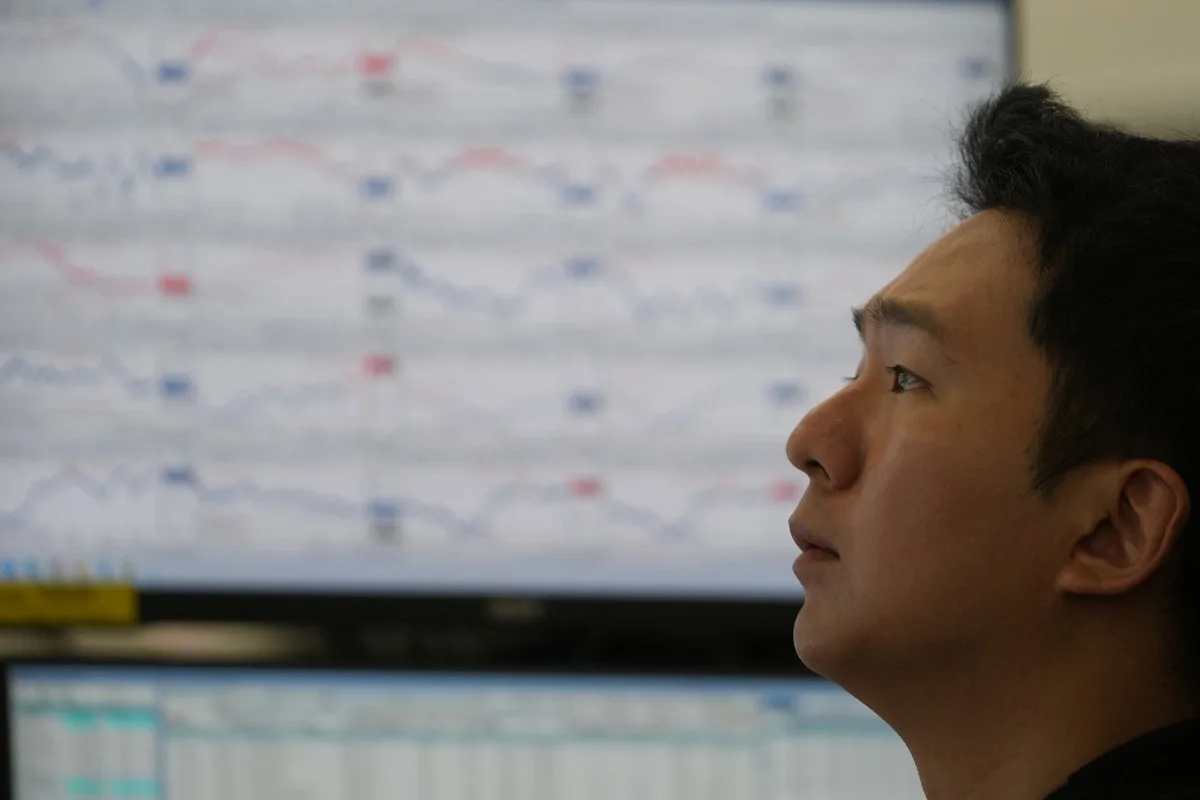
Asian shares were mostly higher on Tuesday after US benchmarks rose at the start of a holiday-shortened week. Tokyo’s Nikkei 225 slipped 0.1% to 50,359.78, while the dollar fell against the yen following warnings from officials about potential intervention if the yen weakened sharply. The dollar traded at 156.03 yen, down from 157.04 yen late Monday.
Hong Kong’s Hang Seng gave up early gains to fall 0.1% to 25,762.64, while the Shanghai Composite edged 0.1% higher to 3,920.16. South Korea’s Kospi added 0.3% to 4,117.15, and Australia’s S&P/ASX 200 jumped 1.1% to 8,795.70. In Taiwan, the Taiex advanced 0.6%, while India’s Sensex was nearly unchanged.
On Monday, the S&P 500 rose 0.6% to 6,878.49, the Dow Jones gained 0.5% to 48,362.68, and the Nasdaq composite added 0.5% to 23,428.83. The Russell 2000 index of smaller companies outpaced others with a 1.2% gain. US markets will close early on Wednesday for Christmas Eve and remain closed on Thursday for Christmas.
The holiday week includes several economic reports: the first of three estimates for third-quarter GDP, weekly jobless claims, and the Conference Board’s December consumer confidence survey. Uber rose 2.5% and Lyft rose 2.7% after announcing plans to bring robotaxi services to London next year. Paramount Skydance rose 4.3% after sweetening its hostile takeover bid for Warner Bros. Discovery with a personal guarantee from Oracle founder Larry Ellison. Dominion Energy fell 3.7% after the Trump administration paused leases for five offshore wind projects, including Dominion’s Coastal Virginia Offshore Wind.
Gold prices rose nearly 1% early Tuesday to $4,512.40, adding to consistent gains on expectations of further interest rate cuts by the US Federal Reserve. Silver rose 1.2%. Oil prices jumped after the US Coast Guard pursued another sanctioned oil tanker in the Caribbean. US benchmark crude fell 23 cents to $57.78 per barrel early Tuesday, after rising 2.4% on Monday. Brent crude declined 22 cents to $61.85, after a 2.6% gain on Monday.
Recent reports show US inflation remains elevated and consumer confidence has faded over the past year. The ongoing trade war has weighed on consumers and businesses, while a slowing job market and weak retail sales have put the Fed in an awkward position. Wall Street largely expects the Fed to hold interest rates steady at its January meeting after cutting rates at its last three meetings.




