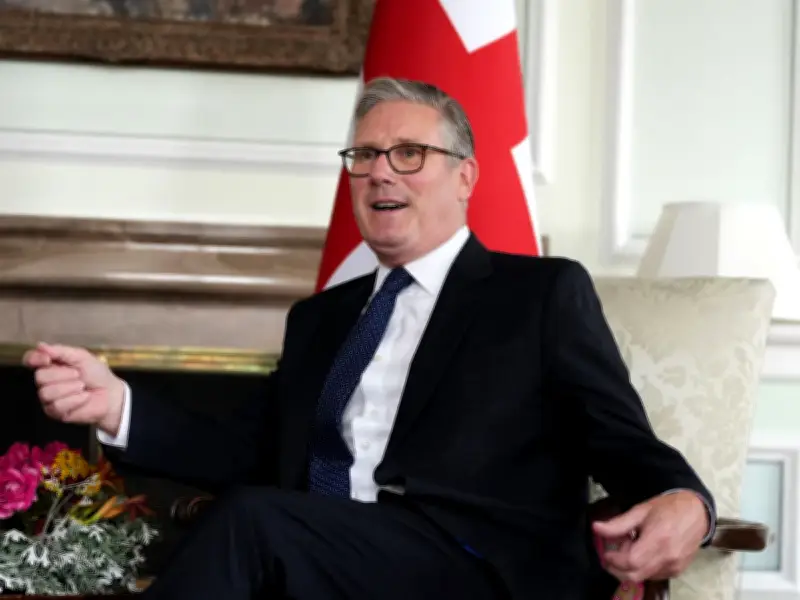
Prime Minister Keir Starmer will announce a £37 billion ($50 billion) joint initiative with a dozen NATO allies to develop advanced long-range precision missiles capable of striking targets up to 2,000 kilometres behind enemy lines. The announcement, set for Wednesday at the NATO summit in Ankara, Turkey, aims to bolster European deterrence as the threat from Russia intensifies and US commitment to the alliance wavers.
Final summit for Starmer as UK defence spending under scrutiny
This summit is expected to be Starmer's last as Prime Minister before he hands over power to Andy Burnham on July 20. He will hold high-level talks on Ukraine, defence, and wider security. Downing Street is braced for possible criticism from US President Donald Trump over the UK's defence investment plan, which has not yet detailed how Britain will meet NATO's 3.5% GDP spending target by 2035. Trump arrived in Ankara on Tuesday night, and allies fear he may push for further reductions in US troop presence and funding as he shifts focus to China and the Indo-Pacific.
US support falters as Iran war depletes stockpiles
Washington has reportedly cooled on a Biden-era plan to send Tomahawk cruise missiles to Germany, while shipments of Patriot Advanced Capability-3 (PAC-3) missiles have been delayed or cancelled due to the US war with Iran depleting its weapons stockpiles. This has left European allies scrambling to plug gaps in their own defences. Long-range missiles have proven critical for Ukraine, enabling Kyiv to strike logistics hubs and degrade Russian forces behind the front line.
UK joins Precision Strike Missile programme
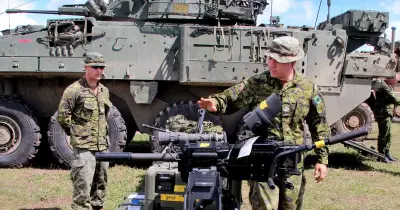
The UK will join the Precision Strike Missile programme with the US and Australia, equipping the British Army with a supersonic ballistic missile capable of hitting targets up to 500 kilometres away. Additionally, the UK has partnered with Germany to accelerate development of stealth and hypersonic missiles with a 2,000-kilometre range by the 2030s. Work is also underway with France and Italy on a successor to the Storm Shadow missile, designed to destroy enemy ships and air defences.
Starmer said: “I am determined to ensure the safety of the UK and our Allies and to do that, we must step up to deliver a stronger, more European NATO. The UK is already working with partners to develop exquisite capability that will give our Armed Forces the ability to defend and deter thousands of kilometres from the front line, but this UK-led initiative will allow us to step up our cooperation, bringing European Allies together to ensure NATO remains safe and secure for years to come.”
Defence Secretary highlights £298bn investment
Defence Secretary Dan Jarvis stated: “We are building the weapons of the future to keep the UK and NATO secure for decades to come, backed by billions of pounds and working with our closest European allies. Our new suite of deep precision strike weapons will give our forces the ability to strike targets hundreds of kilometres away with great accuracy – strengthening NATO and deterring our adversaries. Our £298 billion investment in defence over the next four years is boosting readiness and ensuring our people have the kit and technology they need.”
Russian activity surges around UK waters
Starmer will use the summit to warn of the massive threat posed by Russia. Military activity around UK waters has surged by 30% over the past two years, and NATO fighter jets have been scrambled more than 700 times to intercept Russian aircraft nearing alliance airspace in the same period. The PM will stress that the UK is ready to defend its allies.
Foreign Secretary Yvette Cooper added: “With deep precision strike capability, the UK and our allies will be able to hit high value military targets and the logistical engines that drive armies, deterring any aggressor and strengthening our mutual security. At Ankara we are sending a clear message to President Putin; NATO is stronger, more European and ready to defend our citizens against the long-term threat posed by him and the Russian state.”
British officer to lead NATO command in US
In another sign of UK commitment, Lieutenant General Nick Perry will take up the post of Commander Joint Force Command Norfolk in September 2026, becoming the first British officer to hold the role. Based in the United States, JFC Norfolk commands NATO operations for the Atlantic, UK, High North, and northern Europe.