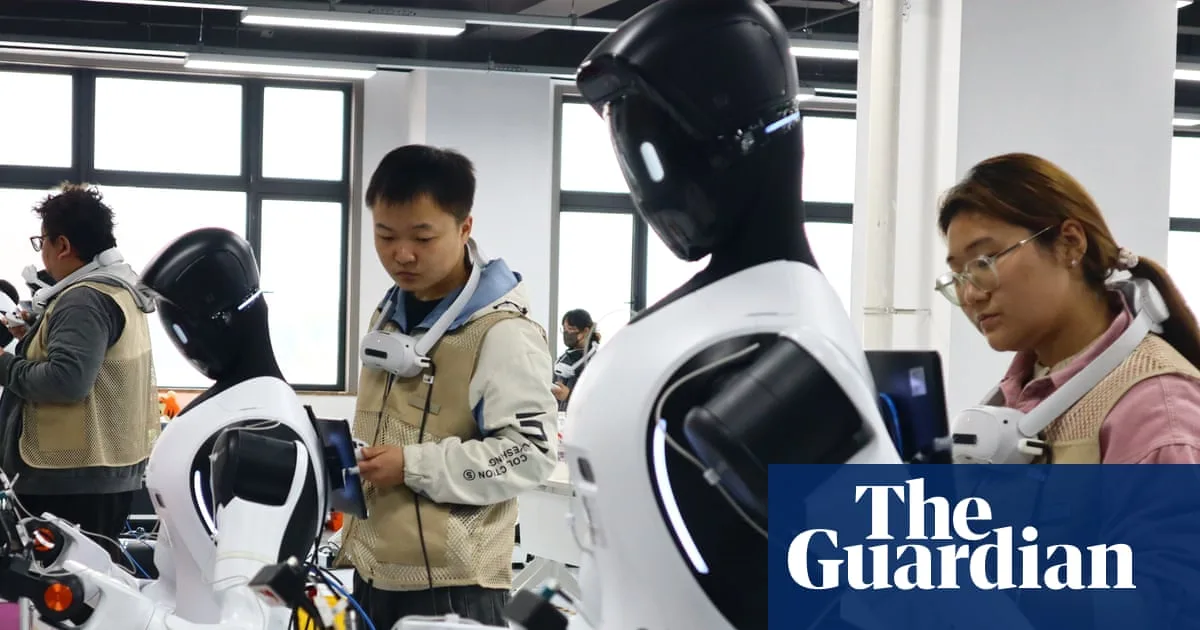
A court in China has ruled that a company must pay compensation to an employee who was dismissed and subsequently replaced by an artificial intelligence system. The landmark decision, handed down by a tribunal in the eastern city of Hangzhou, marks one of the first legal judgments addressing the growing trend of AI-driven redundancies in the country.
Case Details
The plaintiff, a customer service representative identified only as Mr. Li, had worked for a technology firm for over five years before being let go in early 2025. The company argued that the termination was part of a broader restructuring effort, but evidence presented in court showed that Mr. Li’s duties were reassigned to an AI chatbot capable of handling customer inquiries with greater efficiency and lower cost.
Legal Grounds
The court found that the company had failed to follow proper procedures for dismissal under Chinese labor law, which requires employers to provide valid reasons for termination and, in cases of redundancy, to offer alternative positions or severance. The judge noted that while AI adoption is not illegal, companies cannot use it as a pretext to bypass employee protections. The ruling emphasized that workers have a right to fair treatment even when technological changes affect their roles.
Compensation Awarded
Mr. Li was awarded compensation equivalent to 18 months of his salary, totaling approximately 180,000 yuan (about $25,000). The sum includes back pay, severance, and damages for emotional distress. The court also ordered the company to cover legal costs.
Broader Implications
This case is being closely watched by labor rights advocates and business groups across China, where AI adoption is accelerating rapidly. According to a 2025 report by the China Academy of Information and Communications Technology, AI could replace up to 40% of customer service jobs in the next three years. The ruling signals that courts may be willing to enforce existing labor protections in the face of technological disruption.
Legal experts say the decision could set a precedent for similar cases, though each case will depend on its specific facts. Some warn that without clearer legislation, workers may face uncertainty as AI continues to reshape the job market. The Chinese government has promoted AI development as a national priority, but has also pledged to strengthen labor safeguards.
Reactions
Mr. Li’s lawyer hailed the verdict as a victory for workers’ rights, stating that it sends a message to employers that automation cannot be used to circumvent the law. The defendant company has not indicated whether it will appeal. A spokesperson for the firm declined to comment on the ruling but reiterated its commitment to innovation and efficiency.
Labor unions have called for more comprehensive regulations to address the challenges posed by AI in the workplace. Meanwhile, technology industry groups caution that overly strict rules could hinder innovation and competitiveness. The balance between technological progress and worker protection remains a contentious issue in China and globally.