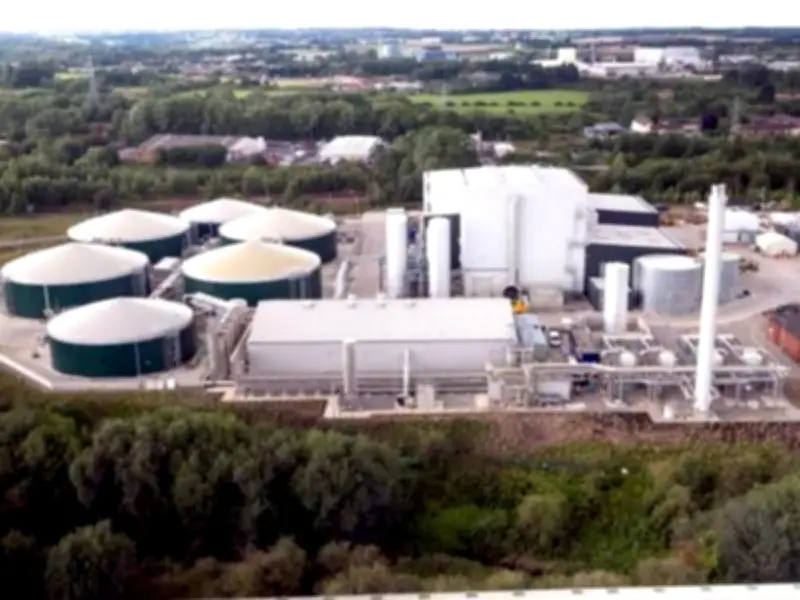
Plans to transform a controversial waste site into a biomethane production facility are expected to be approved, despite concerns over smells. Cheshire West and Chester Council's planning committee is being advised to support the application when it meets this week.
The scheme would convert the former Renescience site in Lostock Gralam into a dedicated biogas plant. Biomethane is the purified form of biogas, produced from the controlled breakdown of organic matter such as food waste, and is widely considered a greener alternative to fossil fuel-derived gas.
Proposal details
The application has been submitted by Northwich Biogas Ltd, a subsidiary of Copenhagen Infrastructure Partners, which bought the site from Ørsted in 2025. The plans include a complete refurbishment to phase out the existing municipal solid waste pre-treatment operation, replacing it with a new digester tank, biomethane upgrading units, and carbon capture technology.
The facility off Griffiths Road would import and process 177,000 tonnes of industrial organic and food waste a year, with the resulting biomethane supplied to the gas grid. The company says the plant will generate enough gas to heat more than 10,000 homes annually. Waste to be decomposed includes industrial food production effluents, wash waters, fat trap waste, and other organic liquids.
Concerns and recommendation
Food waste would be delivered by lorry, with the facility continuing to operate within the HGV cap of 96 movements per day and employing up to 25 staff. During consultation, several surrounding parish councils and Northwich Town Council raised concerns, particularly about odour, noise, and transport.
An officer's report recommending approval stated the development would operate under an odour management plan with specific control measures. It added: "The proposal would extend an existing anaerobic digestion facility, increase its capacity to manage source-separated organic and food waste and enable biogas to be upgraded to biomethane for injection into the national gas grid. It would also produce digestate for use as an agricultural biofertiliser and capture carbon dioxide for commercial and industrial use."
Carbon capture and history
The firm said the plant would capture 28,100 tonnes of biogenic CO2 per year, formed from organic waste, providing sustainable CO2 for food, beverage, and manufacturing industries. The nearly 10-acre site has been controversial in the past; the original Renescience facility was a global prototype but faced criticism from some locals over traffic and smells.
The meeting takes place on Tuesday, October 6, at Ellesmere Port Library.