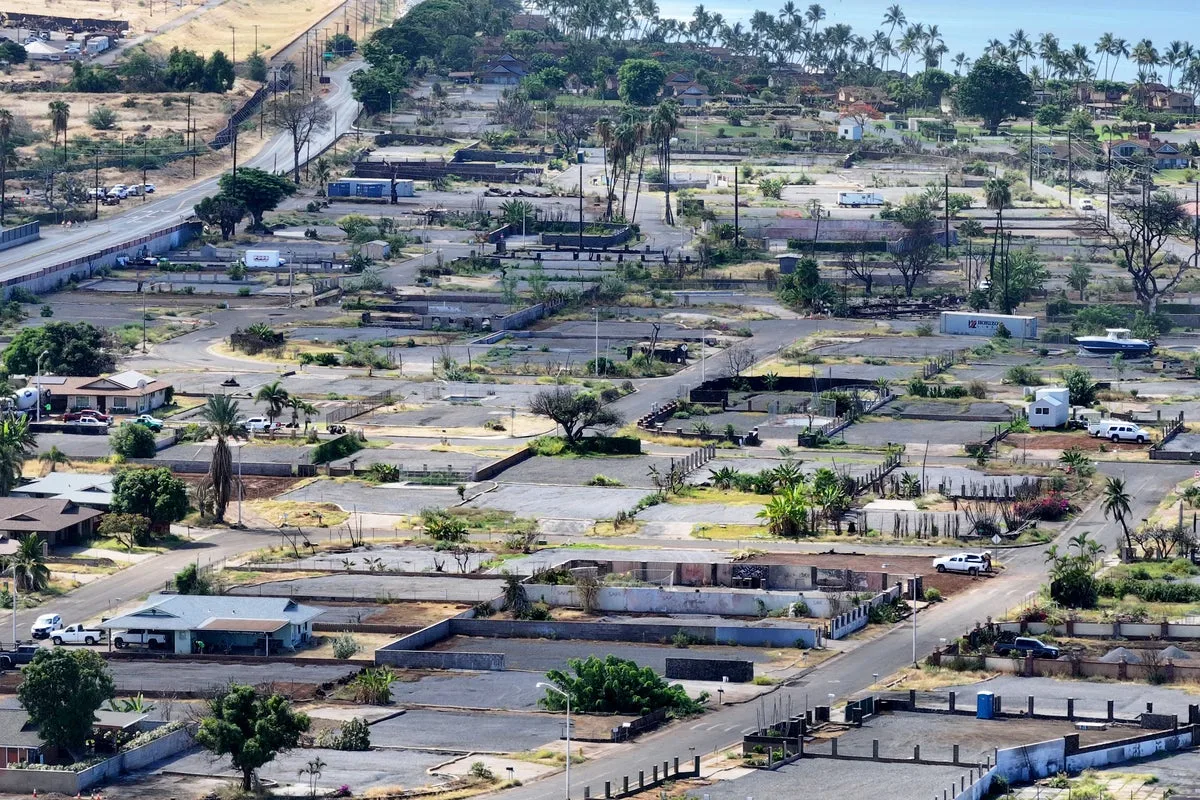
The $4.03 billion settlement intended to compensate victims of the devastating Maui wildfires is poised for distribution, yet many survivors, like Leslie Clark, harbour little hope it will fully cover their profound losses. Clark, 62, whose home near Front Street in Lahaina was destroyed in the August 2023 inferno, expressed a weary resignation, stating that worrying about factors beyond her control 'is not good for your health. It’s not good for anything.'
While settlement cheques could begin flowing as early as June, according to Jake Lowenthal, a Maui lawyer representing plaintiffs, the precise amount each victim will receive remains uncertain. A team of claims administrators is tasked with allocating funds across 10 complex categories, which include whether someone was injured or lost their home. However, a substantial portion of the payout is already earmarked for others. Attorneys are seeking 25% of their clients' awards, a request that has met with scepticism from Maui Circuit Court Judge Peter Cahill. Additionally, insurance companies are set to claim 10% of settlements from insured homeowners.
This complex financial landscape means that for some victims, up to a third of their settlement could be absorbed by legal fees and insurers. A further concern looms: without congressional action to reinstate an expired federal income tax exemption for wildfire settlement money, the federal government could claim as much as 37% from survivors. Sherry Peterson, a fellow with United Policyholders, an insurance consumer advocacy organisation, contends there is simply insufficient money to adequately compensate victims, many of whom lacked comprehensive insurance.
With 21,750 plaintiffs filing a total of 94,816 unique claims across the 10 victim categories, Peterson observed that the most frequent claims involved individuals who were displaced or had to escape the burn zone. She concluded, 'My personal opinion, having sat with many victims of this disaster, is that none of them are going to be made whole by this. No matter how you dice the carrot, there’s just not enough carrot for the soup.'
Maui Circuit Court Judge Peter Cahill has taken a firm stance on legal fees, expressing concern over how to fairly compensate lawyers who undertook extensive investigative work without unduly enriching 'free-riding lawyers who in some cases merely signed up clients after the settlement had already been reached.' Cahill favours establishing a 'common benefit fund' into which all lawyers, including those who did less work, would contribute a portion of their fees. These funds would then be redistributed to the lawyers who performed the bulk of the work on the case.
Property and medical insurers are also awaiting their share of the settlement funds. For medical insurers, the process is straightforward: they can file liens on claims paid to treat fire victims, with administrators deducting these amounts from settlement payouts and forwarding them to the insurer. However, the situation for property insurers is unique to Maui. In other major wildfires, such as those that drove Pacific Gas and Electric Co. into bankruptcy in 2019, insurers typically paid policyholders and then sued the utility directly to recoup their costs.