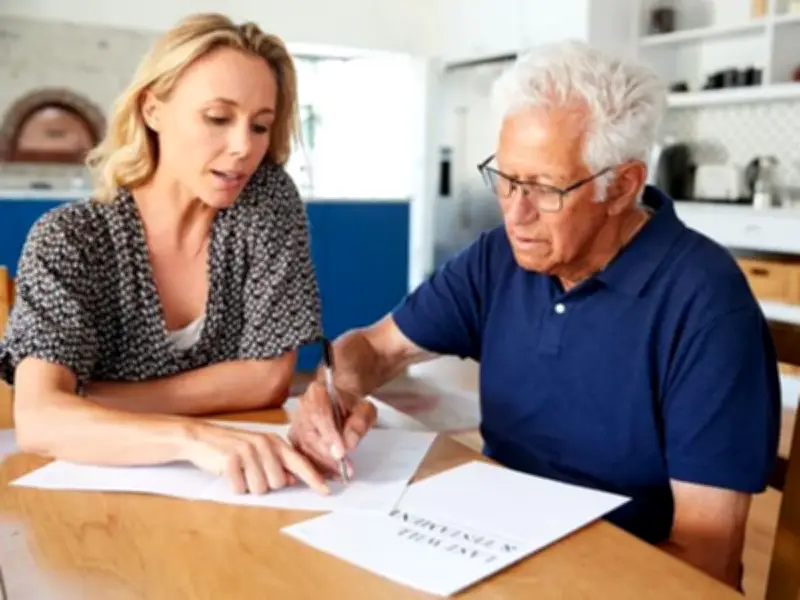
People across Scotland are being encouraged to consider arranging a Power of Attorney after research found widespread misconceptions about the legal authority family members have if a loved one loses mental capacity.
A Power of Attorney (POA) allows someone to appoint a trusted person to make decisions on their behalf, including managing finances, paying household bills and dealing with property matters.
Research reveals misconceptions
Research commissioned by Austin Lafferty Solicitors found 22 per cent of people unlikely to arrange a POA believe they do not need one because they trust close family members to act on their behalf. The Glasgow-based law firm warned spouses, partners and children do not automatically have the legal authority to access bank accounts or manage someone's financial affairs if they lose mental capacity.
The survey of 2,000 UK adults, conducted in October, also found 22 per cent of those unlikely to arrange a POA believe they do not need one because they have no property or assets. A further 22 per cent were concerned about handing over control of their decisions, while 17 per cent did not believe they would lose mental capacity.
The research also found 16 per cent did not see the benefit of arranging a POA and nine per cent did not want to tempt fate.
Scotland leads UK uptake
Despite these concerns, Scotland has the highest reported uptake in the UK, with 17 per cent of adults having a POA compared with a national average of 12 per cent.
John Roberts, Partner and Director of Austin Lafferty Solicitors, said: "Imagine your mother or father has a stroke, loses mental capacity and suddenly needs care at home. They have savings to cover the cost, but you can't access their bank account to pay the carers or even settle household bills.
"Without a Power of Attorney, families may face a lengthy and costly court process to gain the necessary authority, adding considerable stress at an already difficult time.
"There's also a misconception that Powers of Attorney are only for wealthy people or those with substantial assets. In reality, almost everyone has financial affairs that may need managing, whether that's paying the electricity bill, dealing with a pension, or managing benefits."
Types of Power of Attorney in Scotland
A Power of Attorney is a legal document allowing someone to appoint one or more trusted people to make decisions on their behalf. In Scotland, there are three main types:
- Continuing Power of Attorney: Covers financial and property matters, including managing bank accounts, paying bills and dealing with pensions. It can take effect while someone still has mental capacity or when they lose it, depending on the arrangements made.
- Welfare Power of Attorney: Covers decisions about personal welfare, including care arrangements, accommodation and medical treatment. These powers can only be used when someone no longer has the capacity to make the relevant decisions.
- Combined Power of Attorney: Includes both continuing and welfare powers in one document.
A POA must be arranged while the person granting the authority still has the mental capacity to understand what they are agreeing to. Once someone has lost that capacity, their family cannot simply arrange a POA on their behalf. Instead, relatives may need to apply to the sheriff court for a guardianship or intervention order to obtain the necessary authority.
Costs and benefits of arranging a POA
In Scotland, Powers of Attorney must be registered with the Office of the Public Guardian (Scotland) before they can be used. The standard registration fee is £96 for 2026/27, although exemptions may be available for people receiving certain benefits. There may also be additional costs for having the document prepared by a solicitor or another authorised professional.
The research also found people who have arranged a POA, or intend to do so, recognise several benefits. Some 60 per cent said they wanted to reduce stress on their family, while 52 per cent cited peace of mind. Another 47 per cent wanted to choose who would make decisions on their behalf, while 44 per cent wanted safeguards to ensure decisions were made in their best interests.
John Roberts added: "While nobody wants to think about losing mental capacity, refusing to make a Power of Attorney because you don't want to tempt fate is rather like refusing to take out insurance because you don't want to have an accident.
"It doesn't make the risk disappear, it just means you could be less prepared if something does happen. And it's important to note that you can't arrange a Power of Attorney after you've lost mental capacity."
He added: "We would encourage everyone to think of a Power of Attorney in the same way as making a will. It's a sensible precaution, particularly as you get older, that can protect both you and your loved ones from considerable difficulties and complications in the future."
More information about arranging and registering a Power of Attorney in Scotland is available on the Office of the Public Guardian website.