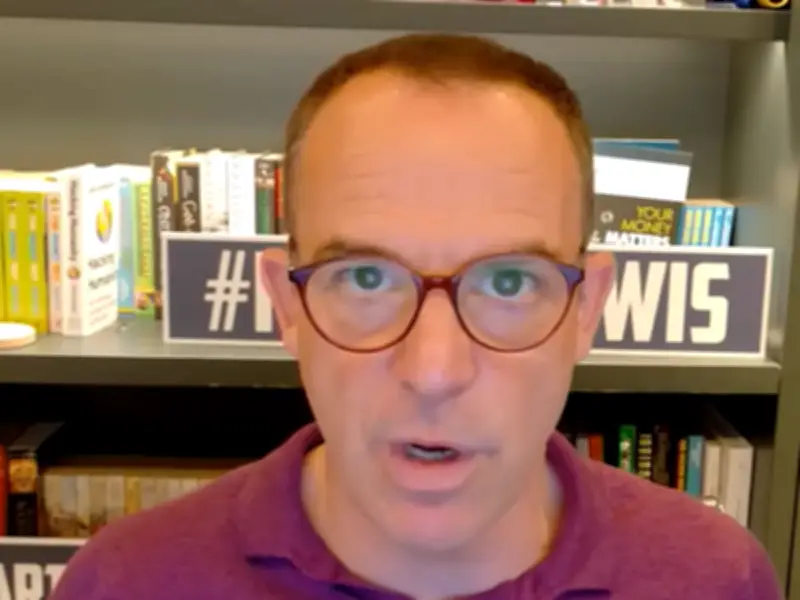
Martin Lewis has explained new rules for state pensioners following changes to the tax-free personal allowance. Last week, Chancellor John Healey announced a significant change for some of the country's poorest pensioners to ensure they are not liable for income tax.
Speaking on his ITV programme, Mr Lewis said there is a 'simple rule' which would see the threshold increase annually. The Chancellor's Budget on Wednesday, 28 October, brought final confirmation that the State Pension will increase by 3.9% next April, bringing the full new State Pension to £13,036.40 per year – exceeding the standard £12,570 tax-free Personal Allowance for the first time.
New Pension Tax Allowance
To prevent this from generating a tax bill for pensioners on the lowest incomes – which the Government had committed to avoiding – a new Pension Tax Allowance (PTA) will be introduced. The measure is anticipated to benefit around 500,000 pensioners in total, with 290,000 paying no income tax as a consequence.
Mr Lewis explained: "The tax free personal allowance is £12,570." He noted the new state pension is rising by 3.9%. He explained: "Now in last year's budget, Rachel Reeves said that if you just got the full new State Pension, you wouldn't pay tax on it. My big question has been, well hold on, what about if you have a tiny little income above, what are they going to do?"
Two Key Rules
The personal finance expert outlined two crucial 'rules' that people need to be aware of - including one relating to £13,036. He said: "Rule number one: if you have total income up to £13,037 a year-note the full new state pension is £13,036.40, so it's slightly higher, that's the accurate figure-you will not pay income tax. Let me be plain: this is whether you're on the new state pension or the old state pension or whatever your total income is. As long as you're of state pension age, if you earn below that, you don't pay any tax."
"And this extra pension tax allowance is worth up to £94 a year. It can't be part of the marriage tax allowance. It's based on what they call your total income, not taxable income. It will be uprated until at least 2030 in line with the state pension. So, it's going to go up each year as the state pension moves up. That's the simple rule."
Tapering System
He also warned of a cliff edge beginning at £13,037: "The second rule is there's a tapering system in effect. So, for each £3 you earn over £13,037, you lose one pound of the pension tax allowance. Let me try and take you through this in a bit more detail. Here we go. So let's take someone at exactly that level. Well, they would normally pay £94 of tax because they're 466 quid above the tax-free allowance, but they get the 94 allowance. Therefore, they don't pay any tax."
Mr Lewis said there is also a consequence for state pensioners who are slightly above the threshold - and it's complex. He said: "Let's say somebody earns £99 above that threshold. There we go. I've chosen £99 because it makes the maths easier.
"So normally they've got £566 quids worth of income above that threshold; for somebody who wasn't a state pensioner, 20% of that is £113 quid. That's the tax that they would pay. Their pension tax allowance, because they're £99 above, we divide it by three and then you get £1 for each of those. That's £33. £94 minus £33 is £61. £113 minus £61 means you would pay £52 of tax. It is worth noting: £99 quid income more, £52 of tax more. That is quite a high marginal rate, isn't it?"
"Once you get to income of £13,319 a year, normal tax would be £150. Well, your pension tax allowance is gone at this point, so you would pay £150. And any income above that, somebody who is of state pension age would pay the same as someone who is of working age."