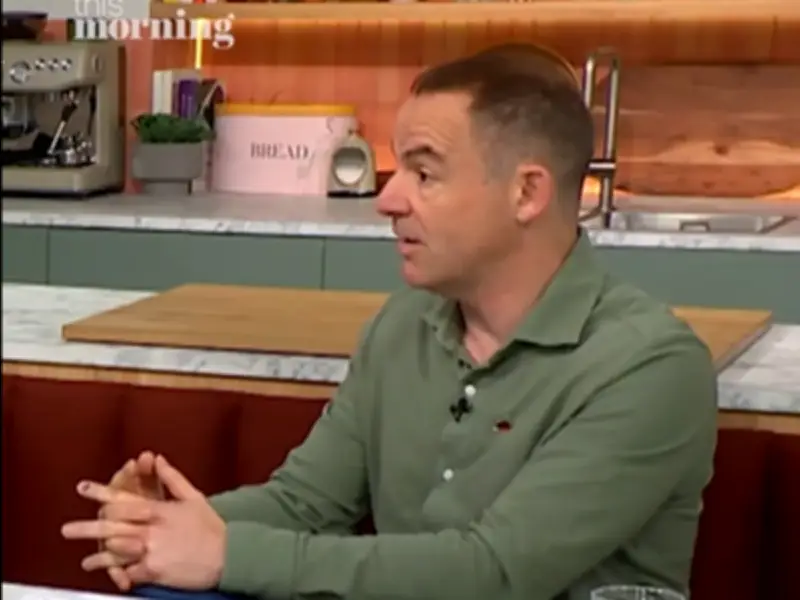
Martin Lewis has confirmed that the cash ISA annual limit will remain at £20,000 for savers of all ages, after a controversial plan to cut the amount for under-65s was dropped.
Appearing on ITV's This Morning, the personal finance expert explained to hosts Cat Deeley and Ben Shephard how the change will help people avoid a big tax increase announced in last week's Budget.
Planned ISA cut dropped
A much-criticised plan to ban people under the age of 65 from putting £20,000 into cash ISA accounts was dropped. Mr Lewis said: "The former chancellor Rachel Reeves was planning that this coming April 2027 to cut the amount you could save in a cash ISA, which is just a tax-free savings account. Let's not overcomplicate it. It's just a savings account where the interest is never taxable, to cut it for under-65s from £20,000 to £12,000."
He added: "Now, her reason for doing that was that I had quite a few meetings with her about this, where she always said it wasn't about raising revenue; it was to get young people to invest. Personally, I disagreed. I think a stick method is the wrong way. I want a carrot method."
New Starter ISA announced
Chancellor John Healey said he was also looking at a new type of account. He said on the ISA change: "The limit will stay at £20,000 per year, tax-free, for people of all ages and to make investment more accessible. I will work with the sector to create a new 'Starter ISA' to reward first-time investors."
Mr Lewis said on the new starter shares investment ISA incentive: "We're nowhere near that happening yet, but he's talking about that." On the ISA savings change, he added: "So, this was very controversial. It's gone. It's gone. Next April, no changes to cash ISA.
"Everybody will be able to put £20,000 in the nicer. Everybody, regardless of age, you got to be 18 to have an adult ISER, will be able to put £20,000 in a cash ISA. Now, also at the same time as this, this they were planning all these sort of anti-avoidance incentives so that you couldn't have a cash ISA by the back door things like you couldn't transfer a shares ISA to a cash ISA and if you had cash in a shares ISA it would be all gone it's just all gone so basically everything that we've been talking about worrying about and putting lots of effort in for the last year because it was going to be a big change to the ISA regime. At the stroke of a pen John has just said none of that works I want to encourage savings we're not doing it which is good news that's great news."
Rise in savings tax rates
ISAs are more important after Chancellor John Healey 'doubled' a previously planned rise. During his speech, Mr Healey spoke of a 'further 2%' for savers - and BBC Radio 4's Moneybox programme revealed that this came on top of an increase already outlined by his predecessor Rachel Reeves.
Basic rate taxpayers (20%) are allowed to earn up to £1,000 in savings interest tax-free annually, higher rate taxpayers (40%) can earn up to £500 in savings interest tax-free each year, while additional rate taxpayers face tax on all savings interest.
The Chancellor did raise tax rates, meaning those with particular levels of savings will experience the financial squeeze. From April 2027, the levy on savings income will rise to 24% for basic rate taxpayers, up from the previously scheduled increase of 22%.
On Radio 4's Moneybox show presenter Paul Lewis said: "Income tax on the interest earned on savings is to rise by 4% from April. So it will be 24& at basic rate, 44% for the growing number of higher rate taxpayers and 49% for people with the highest incomes - just over £125,000 a year."
Chartered financial planner Ray Black and founder of Money Minder said: "There is a starting block of a bright side. Not everybody with savings is going to pay more tax. We've still got the personal savings allowance that's £1,000 for basic rate taxpayers, £500 for higher rate taxpayers, and the ISAs still remain tax free.
"So the people who have got savings of somewhere between £20-25,000 and they're getting top rates of somewhere between 3.5 to 4 per cent - they may not feel the pinch of this extra tax at all. However there is those people that have got more than £1,000 savings interest coming in and it's a 20 per cent increase for them."
Mr Lewis added: "The number of higher rate taxpayers has doubled to 8 million since the threshold freeze started in 2022. They'll be paying 44%. Is there a way of planning for it?" Mr Black said: "First and foremost, you really need to understand how much interest you're making in the bank. So £20-£25,000 if the interest you're getting is under £1,000 per person."