
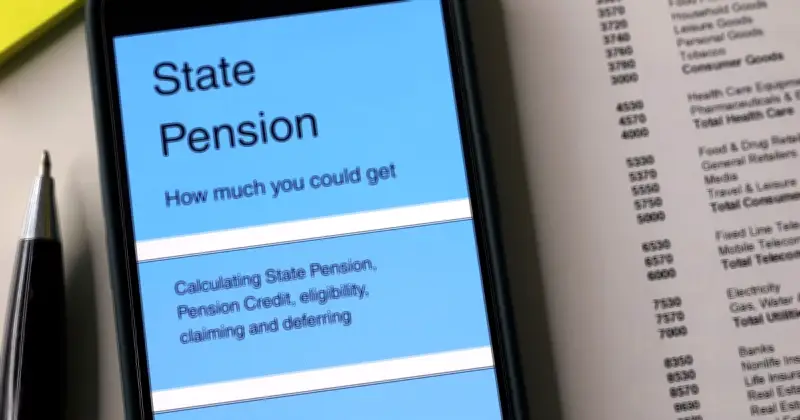
Britons who continue working after reaching State Pension age can increase their take-home pay by stopping unnecessary National Insurance contributions, HM Revenue and Customs (HMRC) has reminded them. Workers no longer need to pay National Insurance on their salary once they reach State Pension age, but the change does not happen automatically.
More than 13 million people across Great Britain are of State Pension age and receiving regular payments. Those who reach retirement age can choose to stop working and claim their pension, defer claiming it, or continue in employment while receiving their State Pension.
How to stop National Insurance payments
Unlike Income Tax, National Insurance is no longer payable on earnings from employment once someone reaches State Pension age. However, older workers who remain in employment may be paying more than necessary if they have not told their employer they have reached State Pension age.
HMRC guidance explains that employees who have reached State Pension age can stop paying National Insurance, but must provide their employer with proof of their age. This can be done by showing a birth certificate or passport. Anyone who does not want their employer to see these documents can ask HMRC for a letter confirming they have reached State Pension age and no longer need to pay National Insurance.
Obtaining proof from HMRC
To obtain the letter, workers must write to HMRC explaining why they do not want to show their employer their birth certificate or passport. HMRC may ask for a birth certificate or passport for verification if it does not already have a record of their date of birth. Certified copies are accepted.
The guidance states: “If you’re self-employed, your Class 2 National Insurance contributions will no longer be treated as paid. You stop paying Class 4 National Insurance from April 6 (start of the tax year) after you reach State Pension age.”
“You only pay Income Tax if your taxable income - including your private pension and State Pension - is more than your tax-free allowances (the amount of income you’re allowed before you pay tax),” the guidance adds.
Tax and pension considerations
The official State Pension age is currently rising from 66 to 67 in a phased process which began in April and is due to be completed by March 2028. The full new State Pension rate for the 2026/27 tax year is £241.30 a week, equivalent to £965.20 every four weeks.
Anyone who continues working and claims their State Pension should be aware that their combined income may be subject to tax. The Personal Allowance – the amount people can earn before paying Income Tax – is frozen at £12,570 until April 2031. This means income above that threshold, including earnings and pension income, may be taxable.
Employees who have continued paying National Insurance after reaching State Pension age may be able to claim back the contributions. Checking payslips and making sure their employer has updated their records could help ensure they are not paying contributions unnecessarily.
There is also another option for people who do not need their State Pension immediately by deferring their claim. State Pension payments increase if a person delays claiming for at least nine weeks. The amount rises by the equivalent of 1% for every nine weeks deferred, which works out at just under 5.8% for every 52 weeks.
The additional amount is then paid alongside the regular State Pension once the person decides to claim it. However, the extra payments may also be subject to Income Tax. Deferred State Pension payments increase each year in line with the September Consumer Prices Index (CPI) inflation rate, rather than whichever measure produces the highest increase under the Triple Lock.
The full new State Pension is available to men born on or after April 6, 1951, and women born on or after April 6, 1953. To receive the full amount, most people need around 35 qualifying years of National Insurance contributions, although those who were contracted out may need more.
Anyone approaching or already beyond State Pension age should therefore check their pension entitlement, tax position and National Insurance record. The key point for older employees is that reaching State Pension age does not mean they have to stop working – but they should make sure they are no longer paying National Insurance on their salary when they are no longer required to do so.




