

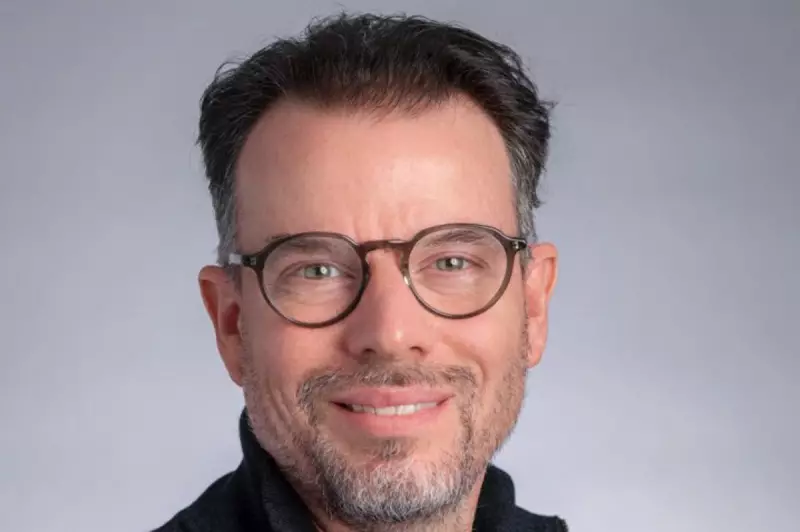
The staggering sum of £477 million was paid to a single individual for one year's work in 2025, reigniting a fierce debate about morality, value, and a financial system critics say is broken. The recipient is Chris Rokos, a 55-year-old macro hedge fund manager based in Mayfair, London, whose firm, Rokos Capital Management, delivered returns of around 21%.
The Man Behind the Half-Billion Pound Payday
Chris Rokos operates in a rarefied world of high-stakes financial speculation, managing over $22 billion for ultra-wealthy clients with a high risk tolerance. His career path is a classic of the financial elite: an Eton scholarship, a first-class maths degree from Oxford's Pembroke College, and stints at Goldman Sachs and Credit Suisse. He co-founded Brevan Howard, earning an estimated $900 million, before launching his own fund in 2015.
His pay is notoriously volatile, mirroring his fund's performance. After a £509 million payout in 2020 and a loss in 2022, the £477 million award for 2025 suggests a powerful comeback. Attempts to ascertain his UK tax contributions or detailed charitable giving were met with silence, though public records show donations to Amnesty International, Water Aid, and significant gifts to his alma maters, resulting in a Rokos Quad at Oxford and a Rokos Yard at Eton.

The 'Bermuda Triangle of Talent' and 'BS Jobs'
The revelation of Rokos's earnings has provoked a stark divide in opinion. While some defend his financial ingenuity, others label the wealth "grotesque," especially when contrasted with the modest salaries of researchers tackling diseases like cancer. This sentiment echoes a broader critique voiced by thinkers like Dutch historian Rutger Bregman, who laments the drain of bright minds into finance, consultancy, and law—the "Bermuda Triangle of Talent."
Bregman categorises such roles as "BS jobs," questioning what societal problems could be solved if this intellect were directed at climate change, poverty, or medical research. This is a direct continuation of the argument made in 2009 by Adair Turner, former Chair of the Financial Services Authority, who famously described much City activity as "socially useless."
Financial experts note that hedge fund trading is often a zero-sum game, where Rokos's monumental gains are necessarily offset by losses elsewhere in the system. "They're monstering public capitalism," one insider commented. "As a society, it's a bit degenerate."
A Financial System 'Beyond the Reach of Ordinary People'
The critique extends beyond individual morality to systemic failure. Analysts point to a worrying trend where private pools of capital—in private equity, hedge funds, and credit funds—increasingly dominate, concentrating the gains of capitalism among a small circle of insiders. "The likes of you or me wouldn't be allowed to invest with him," a financial source explained, highlighting the exclusionary nature of this high-risk world.
This privatisation of profit occurs alongside the socialisation of risk, a dynamic that has drawn criticism since the 2008 financial crisis. Despite calls for reforms like transaction taxes, the hedge fund industry has ballooned to be worth $4.7 trillion. Meanwhile, Rokos Capital Management is planning an expansion into Abu Dhabi and, according to reports, is revising its fee structure upwards, taking a larger cut of future profits.
The story of Chris Rokos's £477 million is more than a tale of extraordinary personal fortune. It is a symptom of a financial system that rewards complex betting over tangible innovation, amplifies inequality, and continues to operate in a moral vacuum, far removed from the everyday economic realities of the British public.






