
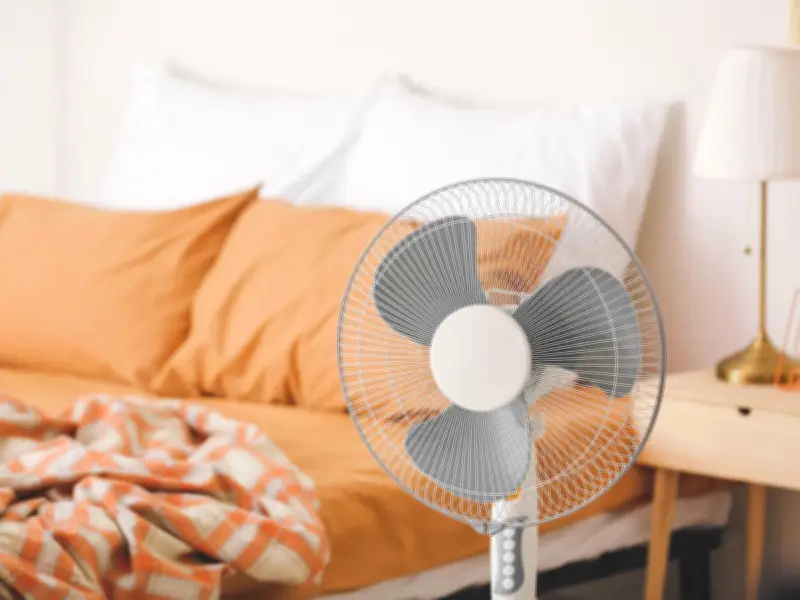
Temperatures are expected to reach 38C in parts of the UK this week, leading millions of households to struggle with sleepless nights. With overnight temperatures remaining high, many are tempted to leave electric fans running from midnight to morning. However, concerns over energy bills and the energy price cap have left consumers wondering about the cost.
According to data compiled by energy experts, running a standard household electric fan overnight is remarkably budget-friendly, costing just pennies per session. Because fans circulate air rather than actively cooling a room, they use far less power than heavy-duty appliances.
Cost Breakdown for an Eight-Hour Night
Based on the current average UK electricity tariff under the energy price cap, the costs are split across three common fan types:
- Desk fans (approx. 30W): The most economical option, costing less than 1p per hour, or 8p for a full night.
- Tower fans (approx. 50W): Popular oscillating units cost roughly 1.4p per hour, adding just over 11p per night.
- Pedestal fans (approx. 60W–100W): Larger models cost between 1.7p and 3p per hour, or 14p to 24p per night.
Even if the heatwave lasts a full week, running a 50W tower fan every night adds less than £1 to a household's weekly bill.
Comparison with Portable Air Conditioning
For those considering portable air conditioning units, experts warn of a stark financial contrast. Portable AC units typically draw 1,000W to 1,500W of power, pushing running costs to between 30p and 45p per hour. Operating one for eight hours overnight can cost up to £3.60 per night, or more than £25 per week for a single unit.
Tips to Maximise Cooling and Minimise Costs
To keep costs low while maximising the cooling effect, electrical experts recommend:
- Lower the speed: Running a fan on its lowest setting can reduce energy consumption by up to 40% while still providing adequate airflow.
- Use ice cubes: Placing a shallow bowl of ice in front of the fan creates a makeshift cool breeze without additional cost.
- Open windows: Open windows on opposite sides of the property in the late evening to release trapped heat before switching on the fan.




