

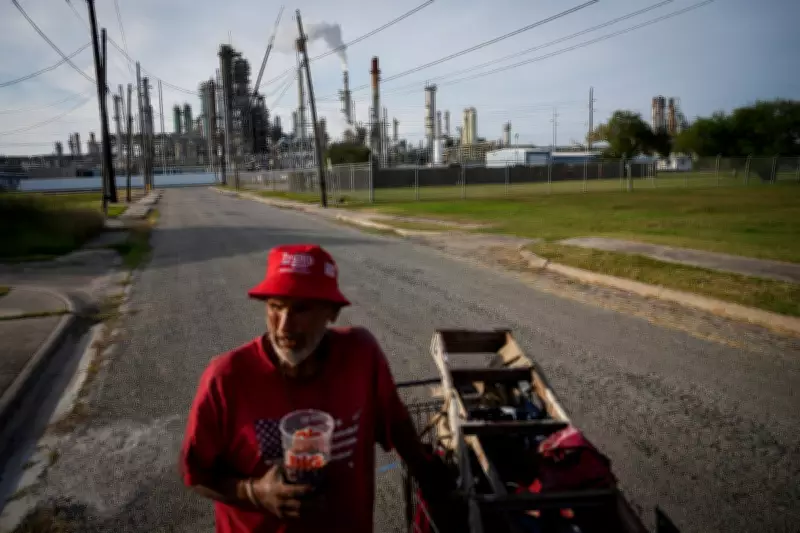
Corpus Christi's Water Crisis Threatens Major US Energy Port Amid Drought
The Texas city of Corpus Christi is grappling with a severe water crisis due to a prolonged drought, posing a significant threat not only to residential water use but also to the refineries and petrochemical plants that operate within its major energy port. This situation has escalated concerns over potential cutbacks and operational disruptions in an area critical to the nation's fuel supply.
Years of Drought Deplete Water Reserves
In parched southern Texas, a yearslong drought has severely depleted Corpus Christi's water reserves, forcing the city to scramble to prevent a shortage. Experts note that the city did not anticipate such an extreme drought, and expected new sources of reliable water have failed to materialise as planned. These challenges have emerged even as the city increased water sales to large industrial customers.
"We just have not kept up with water supply and water infrastructure like we should have. And it's decades in the making," said Peter Zanoni, the city manager since 2019. Corpus Christi, with a population of about 317,000 and serving nearby counties, is deeply intertwined with its oil and gas industry, which produces essential goods like fuel and steel for global markets.

Zanoni emphasised that while it is highly unlikely the city will completely run out of water, without significant rainfall or new sources, residents may face forced cutbacks and industry may have to operate with reduced water allocations. This shortage is particularly impactful as it affects a region responsible for 5% of the U.S. gasoline supply, at a time when geopolitical tensions are already driving up fuel prices.
Infrastructure and Planning Shortfalls
Droughts are common in Texas, but this one has persisted for most of the past seven years, with key reservoirs now at their lowest levels ever. The quickest solution would be a change in weather patterns, with some officials even half-jokingly hoping for a hurricane to bring relief. "We are actively praying for a hurricane," said former city council member David Loeb, highlighting the desperation felt by many.
After a previous drought in the early 2010s, Corpus Christi approved a pipeline extension to draw more water from the Colorado River and promoted conservation efforts, which initially led to reduced water use. However, the city later expanded its industrial base by adding a petrochemical plant and steel mill, increasing demand. Zanoni explained that while city officials had accounted for drought in their plans, they did not anticipate one of this severity, compounded by reservoirs that never fully recovered from the last dry spell.
Complicating matters, a pipeline extension only reached full capacity last year after many years of delays. Additionally, discussions about building a desalination plant, recommended in 2016 as a drought-proof solution, have stalled due to concerns over costs estimated at up to $1.3 billion and environmental impacts. "If the then-city council had followed through on that, we would have had that plant up and running by now," Zanoni lamented.
Current Measures and Public Discontent
Corpus Christi has implemented a staged drought plan, currently at Stage 3, which restricts many outdoor water uses. Residents are frustrated over prohibitions on watering lawns, impending sharp increases in water bills, and potential fines. Isabela Azaiza, co-founder of a grassroots group focused on water issues, noted that many feel industry is not being asked to share equally in the sacrifices.
The city's system allows for extra charges on high water users, but large industrial customers, which consume up to 60% of the city's water, can pay a permanent surcharge to avoid higher fees during droughts. Azaiza criticises this as a bad system that removes incentives for conservation. In response, the city has defended its approach, stating that industry does not get a pass on conservation and that business surcharges have raised $6 million annually.

Bob Paulison, executive director of the Coastal Bend Industry Association, argued that companies are contributing by halting landscaping, recycling water for cooling, and seeking alternative sources. However, the city has yet to impose extra costs, though Zanoni warned that water rates may eventually double as the city invests around $1 billion in infrastructure, a move some say will disproportionately benefit industry and burden residents.
Future Prospects and Emergency Scenarios
The city defines a water emergency as having 180 days before supply cannot meet demand. Officials have modelled various scenarios, with an emergency potentially occurring as early as May, as late as October, or not at all. To avert this, Corpus Christi is tapping into millions of gallons of new groundwater and pinning hopes on the Evangeline Groundwater Project, which involves a pipeline and wells that could provide enough water to prevent an emergency if approved by the state by November.
New water sources come with drawbacks, including water quality concerns and risks of depleting groundwater through over-pumping. If an emergency is declared, mandatory water reductions would apply evenly to all residents and industries, a decision Loeb described as likely to be a "knock-down drag-out bloodbath." Since residents have already reduced usage, future cuts would likely impact industry more heavily.
Don Roach, former assistant general manager of the San Patricio Municipal Water District, warned that cutting cooling water to industries could force shutdowns, calling it an "unbelievable disaster." Paulison acknowledged that fuel, polymer, iron, and steel producers have limited flexibility in reducing water use but expressed optimism that companies can adapt. Zanoni concluded that the city's plans aim to buy time to avoid the worst outcomes, stating, "We are hoping we don’t get there, but we don’t work on hope."





