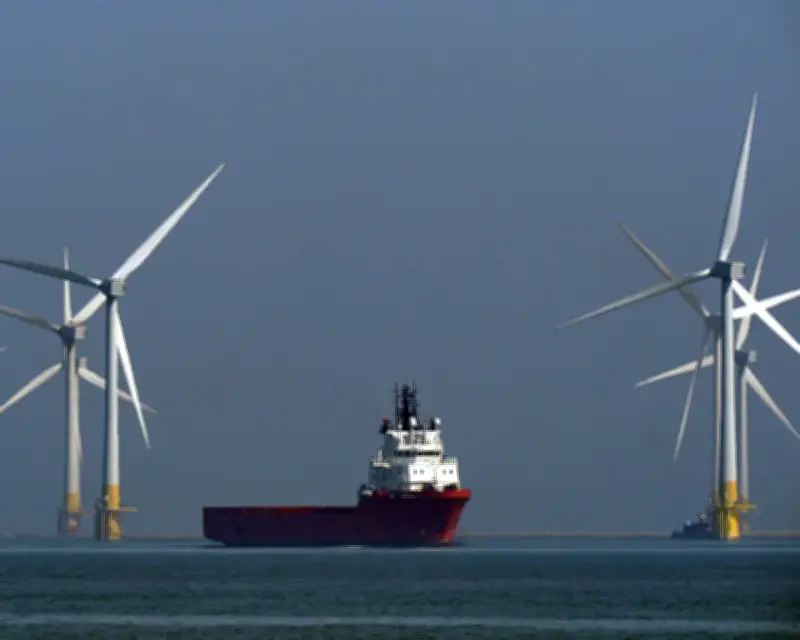
The UK's national wealth fund (NWF) is lending £1bn towards the £12.8bn debt financing for the Vanguard offshore windfarms off the coast of Norfolk, raising questions about whether state backing is necessary for a project led by two wealthy firms.
The two windfarms, developed by German utility RWE, require almost £13bn of debt financing. RWE has sold a 50% share in the schemes to KKR, the US private equity and infrastructure investor. The remaining £12.8bn comes from a consortium of 35 international banks, including the £1bn from the NWF.
Additionality Principle Under Scrutiny
The NWF is meant to provide capital that is "additional" to private investment, ensuring infrastructure is built that might not otherwise be. The fund states: "For each investment we are considering, we test and assess the extent to which impact would not have materialised without us, so we are confident we are delivering financial and non-financial value that would not otherwise be achieved."
However, it seems unlikely the Vanguard windfarms would have been scrapped without the NWF's contribution. RWE is one of Europe's biggest electricity generators, and KKR is a major private equity house, both experienced at raising capital.
De-Risking Through Auctions
Offshore wind projects are de-risked for developers through an auction process that sets a guaranteed inflation-linked price for electricity for 20 years. For Vanguard, the price is £91.20 per megawatt hour in 2024 money, high by historic standards.
If borrowing costs have risen post-auction, RWE and KKR might have to pay more for debt or provide more equity, depressing returns. But this is an everyday commercial risk. The NWF argues its involvement "widens the pool of capital available to offshore wind developers and helps to meet unprecedented liquidity requirements after the success of AR7".
Comparing Other State Loans
The NWF's other large loans, such as billions for Sizewell C and £599m for Rolls-Royce's small modular reactors, are easier to justify as projects that might not have happened without state backing. Offshore wind, by contrast, is an established market with an effective incentive mechanism.
The NWF's capital is not bottomless, and better targets might include electrification, such as heat pumps and electric vehicles, or storage solutions. When a huge private equity firm like KKR gets help because funding conditions are rough, it is fair to ask if the state is achieving the best value for its money.